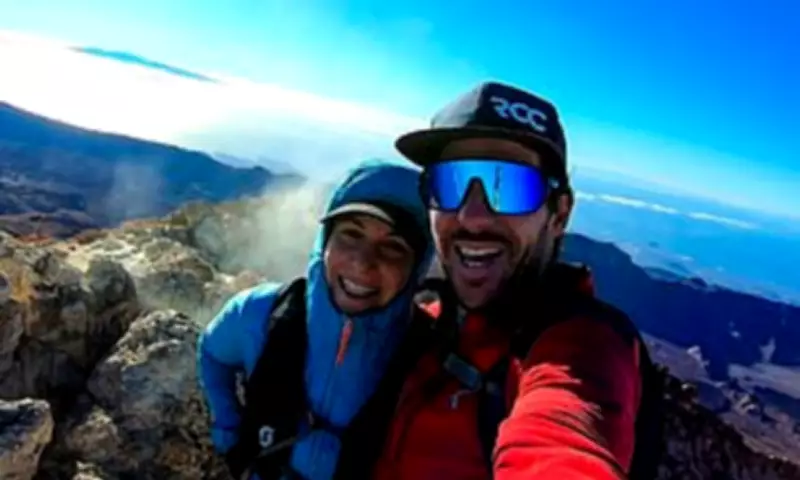
Climber Expresses Remorse as Trial Opens Over Girlfriend's Freezing Death on Austrian Peak
Thomas Plamberger, a 39-year-old mountaineer, told a hushed courtroom in Innsbruck that he is "incredibly sorry" for the death of his girlfriend, Kerstin Gurtner, 33, who froze to death on Austria's highest mountain. Plamberger, blinking back tears during his first court appearance, stated: "I loved her," as he faced charges of negligent homicide in a case that has drawn global media attention.
Tragic Circumstances on Grossglockner Summit
The tragedy occurred in January 2024 just 150 feet below the summit of the 12,460-foot Grossglockner, where temperatures plummeted to a bone-chilling minus 20 degrees Celsius. Prosecutors allege that Plamberger abandoned Gurtner while she was exhausted, hypothermic, and disoriented, ultimately leading to her death from exposure.
Judge Norbert Hofer, an expert in mountain law and avalanche accidents, presided over the packed courtroom, where Plamberger pleaded not guilty to the charge, which carries a maximum sentence of three years in prison. The trial has attracted international media coverage, with onlookers queuing from before dawn to witness the proceedings.

Prosecution's Case Against the Amateur Mountaineer
The indictment details a series of alleged mistakes by Plamberger, including poor equipment choices and failure to call for help despite recognizing the critical situation. Prosecutors claim the couple were inadequately equipped, with Gurtner wearing snowboard boots instead of proper hiking footwear, and that Plamberger scheduled their climb two hours later than advisable.
Investigators examined mobile phones, sports watches, and laptops, concluding that Plamberger made multiple errors. They highlighted that he allegedly did not use emergency equipment like bivouac sacks or rescue blankets, and failed to give distress signals when a police helicopter flew over the area at 10:50 PM.
Defence Arguments and Family Support
Plamberger's lawyer, Kurt Jelinek, argued that a "misunderstanding" with a rescue helicopter pilot contributed to the tragedy, describing it as a "tragic, fateful accident." Plamberger, who appeared in court wearing a suit and white shirt, described himself as a self-taught amateur mountaineer with no specific rescue skills, despite having served in the Austrian army and climbed Grossglockner 14-15 times.
Notably, Gurtner's mother has publicly supported Plamberger and is scheduled to give evidence. She expressed anger at media portrayals of her daughter as naive and criticized what she called a "witch hunt" against Plamberger online and in the press.
Haunting Evidence and Witness Testimony
Webcam images presented in court show the couple's headtorches glowing during their ascent at around 6 PM on January 18, with only one light visible hours later as Plamberger allegedly continued alone. Rescue teams, hampered by hurricane-force winds, could not reach Gurtner until the following day, finding her body just below the summit cross.
Fifteen witnesses, including relatives of both individuals, mountain rescue teams, the helicopter pilot, and a forensic pathologist, are expected to testify. The trial is anticipated to conclude late Thursday with a verdict to follow.
Background of the Couple and the Climb
Plamberger explained that he and Gurtner had been dating for a year, planned to move in together, and frequently went hiking and climbing. He insisted they always planned their climbs jointly and that Gurtner was physically fit, with climbs often being aborted when necessary. Gurtner's social media profiles, filled with climbing photos, described her as a "winter child" and "mountain person."
Prosecutors, however, emphasized that Plamberger, as the more experienced climber who planned the tour, should have accounted for Gurtner's inexperience with high-altitude alpine tours. They noted wind speeds up to 46 mph and temperatures feeling like minus 20 degrees with wind chill, conditions under which they argue he should have turned back earlier.