The acting head of the U.S. Centers for Disease Control and Prevention has sought to calm public fears over a hantavirus outbreak on a cruise ship, which has led to the evacuation of 17 Americans and seven others returning to five states, stating firmly: “This is not Covid.”
Outbreak Details and Response
The outbreak originated on the MV Hondius ocean vessel last month, resulting in three deaths and five additional illnesses. Travelers were evacuated from the ship in Spain’s Canary Islands on Sunday. Global health officials confirmed that none of the 140 passengers who remained on board show symptoms of the virus. Hantavirus is transmitted when people inhale contaminated dust from rodent droppings.
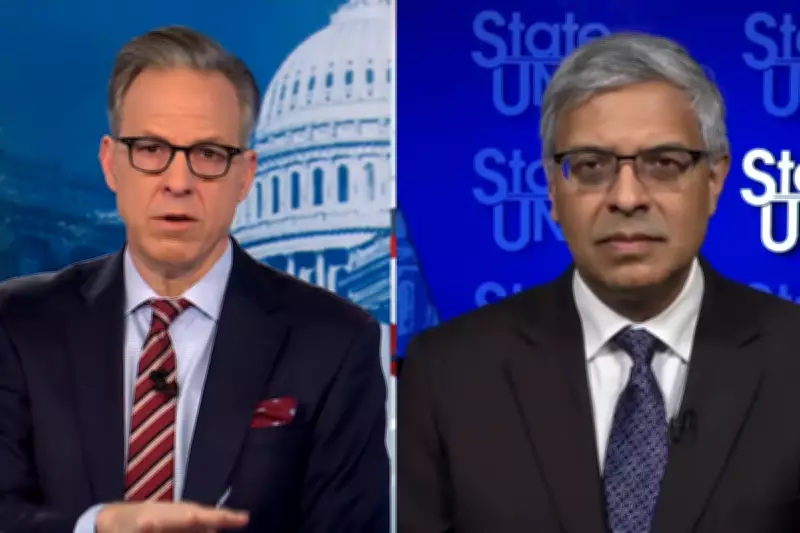
The 17 American passengers from the ship will be transported to the National Quarantine Unit, a secure facility on the University of Nebraska Medical Center campus in Omaha. They will be “interviewed and assessed for risk,” Acting CDC Director Dr. Jay Bhattacharya told CNN on Sunday.

“This is not Covid and we don’t want to treat it like Covid,” he said. “We don’t want to cause a public panic over this. We want to treat it with our hantavirus protocols that were successful at containing outbreaks in the past.”
Bhattacharya, who is serving as the acting head of the U.S. government’s top public health agency, added: “The key message I want to send to your audience is that this is not Covid. This is not going to lead to the kind of outbreak. We shouldn’t be panicking when evidence doesn’t warrant it.”
President Donald Trump also told reporters on Friday, “We seem to have things under very good control,” when asked about the hantavirus situation.
Experts Criticize CDC’s Role
Experts note that the situation has not spiraled because hantavirus does not spread easily, unlike Covid-19, measles, or the flu. However, it has been experts in other countries, not the U.S., who have primarily handled the outbreak over the past week. According to several public health experts, the CDC has been notably absent.
“The CDC is not even a player,” Lawrence Gostin, an international public health expert at Georgetown University, told the Associated Press. “I’ve never seen that before.”
The agency’s minimal involvement in this outbreak indicates that it is no longer a key player in international health, experts told the outlet. Jennifer Nuzzo, director of Brown University’s Pandemic Center, said she did not consider hantavirus a “giant threat to the United States,” but noted that the situation “shows how empty and vapid the CDC is right now.”
Timeline of the Outbreak
The outbreak began last month when a 70-year-old Dutch man became ill with a fever on the cruise ship, which was traveling from Argentina to Antarctica. The man died less than a week later. His wife and a German woman also died from the virus.
Two dozen Americans were on the ship, including seven who disembarked last month and 17 who remained on board. The American passengers who left last month returned to five states: Arizona, California, Georgia, Texas, and Virginia. Officials stated that these passengers had no symptoms and are not considered contagious. They are being monitored by health officials in those states.
The 17 remaining passengers will be flown to the Nebraska facility after disembarking in Spain on Sunday. The CDC has insisted that the risk to the American public is “extremely low” and described the U.S. government as “the world’s leader in global health security.”
Background on CDC Staffing Issues
Hundreds of workers at the Department of Health and Human Services, which includes the CDC and is overseen by Secretary Robert F. Kennedy Jr., were fired last October. The Trump administration sent “reduction in force” memos to 1,000 CDC employees, but over half of those notices were rescinded after officials said they were delivered in “error.”

The chaotic firings and re-hirings came weeks after top CDC officials resigned en masse, including Director Susan Monarez and National Center for Immunization and Respiratory Diseases Director Demetre Daskalakis, among others. Their departures prompted warnings from public health experts that Trump, Kennedy, and other administration officials were endangering the lives of Americans by politicizing public health and crippling its institutions.
“Think about what it’s like to be at CDC,” wrote Daskalakis before his resignation in August. “It’s like living with an abusive partner that attacks and then takes back some of the abuse. That doesn’t make the partner less abusive. … CDC damage is done. Rescinded firings or not. U.S. health security is compromised.”
Among the staff re-hired were the “disease detectives” at the Epidemic Intelligence Service; leadership at the National Center for Immunization and Respiratory Diseases; scientists working on responses to measles and Ebola outbreaks; and the team that compiles the Morbidity and Mortality Weekly Report, according to a federal workers union. Employees who received “incorrect” notifications that they were being fired “were never separated from the agency and have all been notified that they are not subject to the reduction in force,” an HHS official said in a statement to The Independent last year.