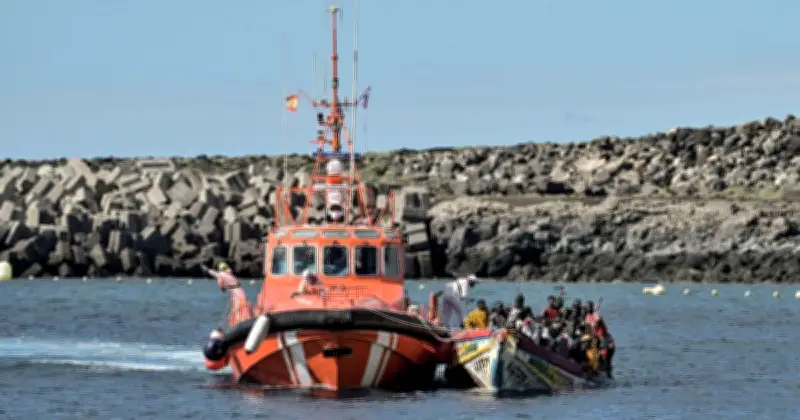
Nearly 2,200 migrants reached Spain's Canary Islands by boat over the past two days, according to Spain's maritime rescue service, days after a migration emergency was declared on the archipelago.
Arrivals and Emergency Declaration
On Sunday, the rescue service said it had assisted 1,324 people aboard 14 dinghies, most of whom reached El Hierro, the southernmost and westernmost of the Canary Islands, which has a population of 12,000. The figure approached the route's daily rescue record of 1,461 people set on November 7, 2020.
Spain declared a migration emergency on the islands on Tuesday following a rise in arrivals in recent weeks, particularly from sub-Saharan Africa. The archipelago, a popular destination for British holidaymakers, is also a major entry point for migrants, mainly from West Africa, attempting the dangerous Atlantic crossing in makeshift boats.
Migration Statistics and Context
According to Spain's interior ministry, more than 13,000 of the just over 28,000 people who arrived in Spain by sea between January and the end of October landed in the Canary Islands.
Migrants were met at the port by Red Cross staff, which provided dry clothes, food and water and registered their arrival, Dacil Leon, the organisation's emergency coordinator in Tenerife, told public broadcaster RTVE.
Deadly Route and Wider Impact
The Atlantic crossing separating West Africa and the Canary Islands is one of the world's deadliest migration routes. The islands are located around 65 miles from the nearest African coast, but many migrants reportedly take longer routes to evade security forces. These journeys can last days or weeks, with most boats departing from Mauritania.
In July, tens of thousands of people crossed from Morocco into Spain's North African territory of Ceuta in just two days, causing chaos and reigniting debate over immigration in Europe and beyond. More than 140 people died making the journey. Most of those who crossed left within days, but up to 15,000 remained.
The country is due to hold an early general election in two weeks, with migration policy, as well as efforts to tackle the cost of housing and living, set to be key battlegrounds.