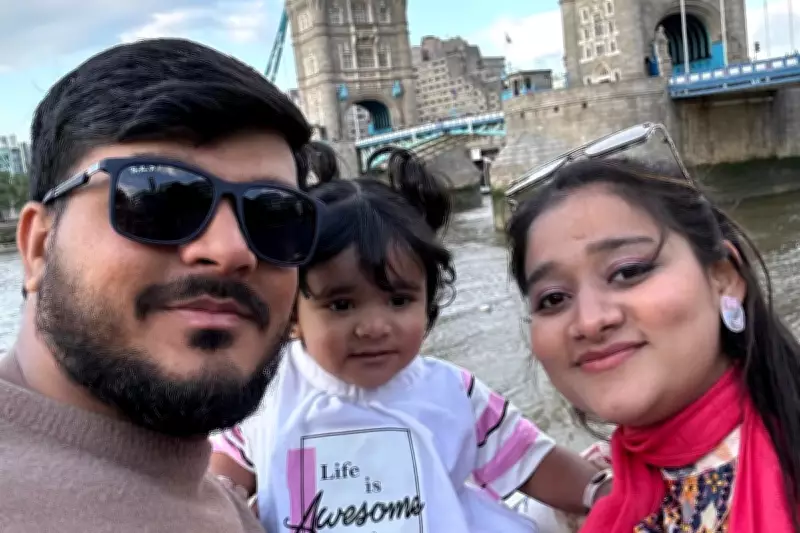
Mohammad Shethwala, a 28-year-old widower who lost his wife and two-year-old daughter in the Air India Flight 171 disaster last June, is now facing the prospect of being forced to leave the United Kingdom. His application for leave to remain on compassionate grounds has been refused, adding another layer of grief to an already devastating tragedy.
A Dream Built on Sacrifice
Shethwala and his wife, Sadikabanu Tapeliwala, moved from India to Britain in 2022 after she secured a student visa for a Master's degree at Ulster University's London campus. The couple funded their move through immense sacrifice: selling all their belongings, borrowing from neighbours, and having both mothers sell their jewellery and life savings. Shethwala's father earned just £78–£118 a month from a small shop, while Tapeliwala's father sold goods door-to-door by bicycle.
Once in Britain, the couple worked tirelessly. Tapeliwala's student visa limited her working hours, so Shethwala took multiple jobs, including delivery work. They spent their first year repaying debts to neighbours and friends, after which they began supporting both families back in India. Initially, they had not planned to settle permanently, but over time, Britain felt less like a stopgap and more like home.

The Crash That Changed Everything
By spring 2025, the family's future seemed bright. Tapeliwala had secured a job related to her studies and was preparing to switch to a Skilled Worker visa, which would have provided a more secure footing. However, a family wedding in India required her and their daughter Fatima to travel ahead, as Shethwala could not get leave from work at the same time.
On 12 June, the day they were due to return, Shethwala spoke to his wife at the airport. She mentioned that family members were urging her to leave Fatima behind in India, but Shethwala was hesitant, as he had already been separated from his daughter for a month. Fatima was crying at the airport, and Tapeliwala promised to call again once seated on the plane. That call never came.
Flight 171, a Boeing 787-8 travelling from Ahmedabad to London Gatwick, crashed shortly after take-off, striking a medical college building on the ground. All 241 passengers and crew were killed, along with 19 people on the ground.
A Father's Grief
Shethwala booked the first available flight to India. Relatives tried to shield him from the worst news, insisting his wife and daughter were safe in hospital. But when he arrived at the civil hospital in Ahmedabad, staff asked for a blood sample. He realised the truth: the sample was needed to identify their bodies. His daughter's remains were handed over on 17 June, and his wife's on 21 June. Both were cremated without him seeing them.
For days, Shethwala could not accept what had happened. 'It was like a nightmare, and at any moment I will wake up and find them both right in front of me,' he said.
The Visa Blow
As he struggled to stabilise, another blow came: his immigration status depended on his wife's visa route, and her death left his own future uncertain. He applied for Further Leave to Remain on compassionate grounds, submitting a psychiatric report detailing his mental health. But on 9 April, nine months after the crash, his application was refused. He was granted temporary immigration bail while expected to leave the country, with no opportunity to appeal.
The Home Office has not publicly commented on the case but reportedly maintained that his circumstances did not meet the threshold for exceptional leave, and that support would be available in India.
Fighting to Stay
Shethwala is now speaking to lawyers about possible recourse. Ayush S Rajpal, case manager at Chionuma Law, described it as 'a genuine humanitarian case' and requested 'fair and kind consideration'. He noted that Shethwala has lived in the UK for four years, built his life there, and is under psychiatric care. Returning to India would be financially and emotionally devastating.
Shethwala says he is not trying to exploit loopholes but simply wants time: time to work, recover, and remain in the place where the future he and his wife imagined briefly felt possible. 'I have already lost them,' he said. 'I want to hold on to the dream at least and fulfil it, to honour the memories I have.'