

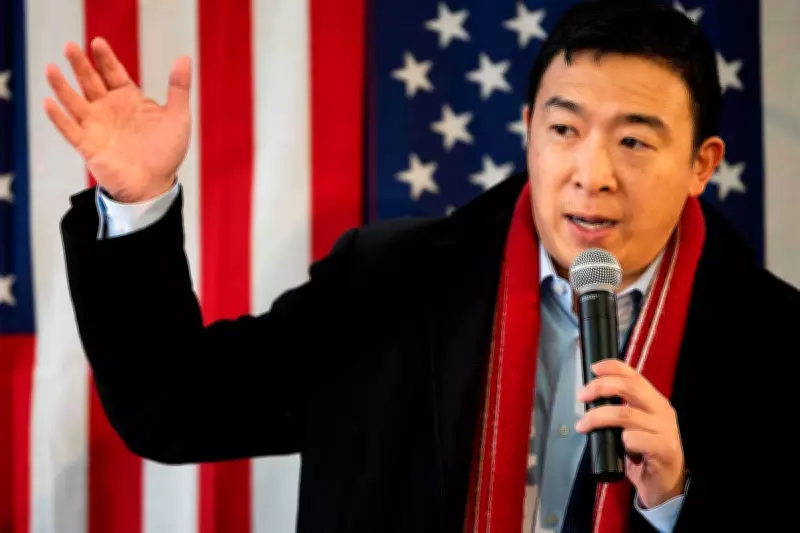
Former Democratic presidential contender Andrew Yang has publicly claimed that he was effectively blacklisted by Kamala Harris's political operation after he called for Joe Biden to step aside from the 2024 presidential race. Yang, who left the Democratic Party in 2021 to become an independent, makes these allegations in excerpts from his forthcoming memoir, Hey Yang, Where's My Thousand Bucks?, which have been shared with The Times.
Allegations of Political Exclusion
Yang states that despite later shifting his support to Harris after Biden's withdrawal, her campaign aides barred him from any engagement following his public urging for Biden to exit the contest. This occurred after Biden's debate performance against Donald Trump. Yang describes this decision by Harris's team as "so dumb," adding a layer of personal reflection to the political fallout.
"I was kind of glad, to be honest," Yang remarked, "because if they'd asked me to do something, I would have felt honor-bound to comply, but I don't know how convincing I would have been." This statement underscores the complex dynamics and perceived slights that can define campaign relationships.

A Pattern of Punishing Dissent
The former candidate suggests that his alleged blacklisting was not an isolated incident but part of a broader pattern within the Democratic Party. He argues that party leaders consistently punished dissent and closed ranks around Biden, even as concerns about his electoral viability grew among some members and observers.
Yang, who competed in the 2020 Democratic primary, positions this as a critique of the party's internal culture, highlighting tensions between loyalty and open debate during a critical election cycle.
Analysing Trump's Campaign Strategy
In his memoir, Yang also delves into an analysis of Donald Trump's political methodology, which he believes was instrumental in securing the White House. He posits that Trump successfully tapped into pro-wrestling tropes, blending "three previously separate modes of communication: politics, pro wrestling, and comedy."
According to Yang, this fusion "simply reach more people across more platforms," creating a powerful and engaging narrative that resonated with a broad audience.
The Wrestling Persona in Politics
Yang elaborates on Trump's adoption of a wrestling-style persona, characterised by self-aggrandising hype and braggadocio. "Trump projects messianic vibes: I'm great, I'm the best, I am one of one," he writes, drawing parallels to his childhood observations of professional wrestling.
"I watched a lot of pro wrestling as a kid, and the wrestlers were often very self-centered and braggadocious in their communication: 'I'm the best damn champion there ever was.'" Yang notes that wrestlers often speak in the third person and adopt grandiose nicknames to emphasise their greatness, a tactic he sees mirrored in Trump's approach.
Critique of Democratic Outreach
The memoir further critiques the Harris campaign's strategy, suggesting it neglected a crucial segment of the electorate: men without college degrees. Yang points out that "about two thirds of Americans don't have a college degree," arguing that this demographic was overlooked, creating a significant blind spot.
He contends that Trump's wrestling-inspired confidence and energy particularly appealed to men, noting that wrestling has long been among the highest-rated television genres. "Democrats have never understood … or had any response to" this style of communication, Yang asserts, framing it as a missed opportunity for broader voter connection.
Future Political Ambitions
The excerpts also hint at Yang's potential return to the political arena. He indicates that "the odds of my running again are high," suggesting he is mulling a bid for the Oval Office in the 2028 election. This prospect adds a forward-looking dimension to his reflections on past campaigns and party dynamics.
As of now, Harris's team has not publicly responded to Yang's account, leaving his allegations unanswered in the public domain. The memoir's release is poised to spark further discussion about campaign strategies, internal party politics, and the evolving nature of political communication in the United States.






