

Virginia's Redistricting Referendum: A Pivotal Vote for Congressional Control
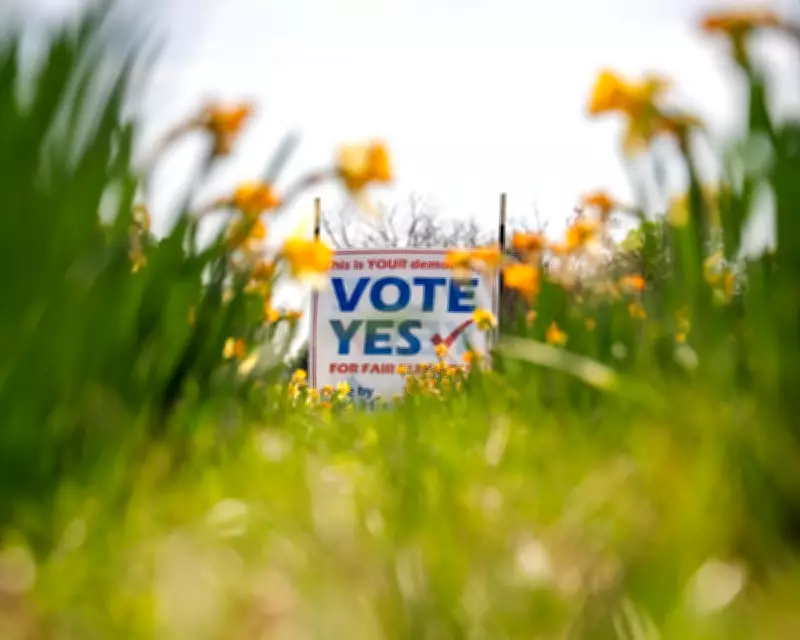
In a high-stakes political showdown, Virginia is holding a special election referendum that could reshape its congressional delegation and influence the balance of power in the U.S. House of Representatives. The vote, set for Tuesday, asks whether to temporarily set aside the state's current bipartisan congressional maps and replace them with new versions that favor Democrats, potentially allowing the party to win all but one of Virginia's 11 House seats in the upcoming November midterm elections.
Partisan Tensions and National Implications
Former Republican Governor Glenn Youngkin has framed this as "the most important election" in Virginia's 237-year history, warning conservative activists that the proposed maps would create "the most partisan, most gerrymandered map in America." However, the debate extends beyond state lines, rooted in a nationwide redistricting war instigated by former President Donald Trump to preserve Republican control of Congress. This has sparked a tit-for-tat between red and blue states, with Virginia's referendum representing the latest skirmish.
Democrats, led by Governor Abigail Spanberger, argue that the referendum is a necessary, temporary response to Republican-led redistricting efforts in states like Texas, North Carolina, and Missouri, which threaten up to seven Democratic-held House seats. With Republicans currently controlling the House by a narrow margin of 217 to 213 seats, every vote counts, and Democrats see this as a way to retaliate against Trump's machinations. Hakeem Jeffries, the Democratic House minority leader, emphasized that a yes vote "has national and international implications" and could "cut Donald Trump's presidency in half, legislatively."

Voter Sentiment and Political Dynamics
Polls indicate a tight race, with recent surveys showing about 52% of voters backing the new maps and 47% opposed—a much narrower margin than Spanberger's landslide victory last November. Mark Rozell, dean of George Mason University's Schar School of Policy and Government, notes that "Virginia remains a purplish state" prone to swings between parties, and the issue has "energized the Republican base," posing a danger for Democrats.
Some voters are focusing less on Trump and more on Spanberger, whose popularity has dipped amid Republican accusations that she deceived voters about her political moderation. Republicans have seized on her support for redistricting to portray Democrats as lurching too far left, particularly energizing right-leaning rural voters who see an "existential threat" to their representation.
Map Changes and Constitutional Concerns
Under the proposed maps, four Republican-held districts would become blue-leaning by incorporating heavily Democratic areas in northern Virginia and elsewhere. One district has drawn scrutiny for resembling a lobster shape, highlighting concerns about gerrymandering. This move would override a constitutional amendment approved by voters in 2020, intended to end partisan gerrymandering through a bipartisan commission. When that commission deadlocked, maps were drawn by court-hired experts, a process that would be set aside through the 2030 census if the referendum passes.
Brian Cannon, a Democrat who campaigned for the voter-approved redistricting process, opposes the referendum, arguing it undermines democratic norms. He contends that Democrats could win eight seats in Virginia without changing the maps, questioning whether "extra two seats matter towards the bigger picture of taking back the House." In contrast, James Abrenio, a Democratic appointee to the bipartisan commission, argues that states like Virginia are at a disadvantage due to their more convoluted redistricting processes, making it harder to respond to inappropriate behavior by other states.

Financial Backing and Legal Challenges
Campaign finance records reveal significant spending, with pro-referendum groups receiving over $64 million in contributions and anti-referendum groups around $30 million. Ads featuring former President Barack Obama have been deployed to sway voters in a state that backed Kamala Harris in 2024. Even if the referendum passes, it faces a legal challenge before the Virginia Supreme Court, which could overturn the result. Additionally, Florida Governor Ron DeSantis has called a special session to review redistricting maps, indicating this issue will persist beyond Virginia.
Forecasters suggest Republicans might gain at most three more seats from Florida, but Virginia's vote remains a critical step in the broader battle for congressional control. As voters weigh partisan gains against democratic principles, the outcome could set a precedent for future redistricting efforts across the United States.





