
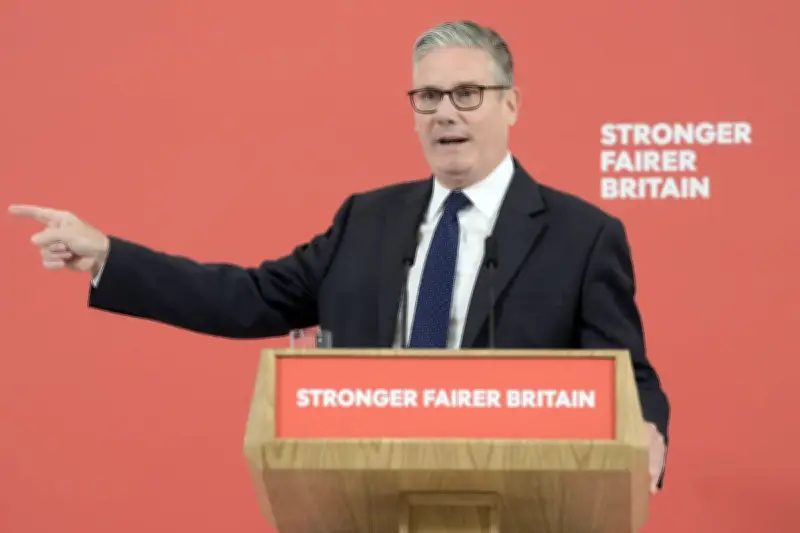
Prime Minister Sir Keir Starmer has published the long-delayed defence investment plan (Dip), worth £15 billion, acknowledging that other government spending areas, including road and energy projects, will be slashed to fund the military. Speaking at a drone company in Berkshire, Starmer said: “When the world is arming and aggression is rising, the best way to avoid war is to prepare for it. The best way to defend is to deter, to have the strength to make your adversaries think again before they act. And that is what we are doing.”
Funding and Spending Increases
Annual defence spending will increase from £54 billion when Labour came to power to £80 billion by 2029, reversing what Starmer called the “corrosive hollowing out” of the armed forces. Chancellor Rachel Reeves, also present at the event, confirmed the extra money came from “reprioritising spending” across government, specifically by raiding Whitehall capital budgets. Starmer emphasised that the Dip would not take resources away from day-to-day spending on frontline services such as health and education, but rather from capital projects that are “important but not immediately vital,” such as roads and energy.
Political Context and Delays
The Dip, originally due last year after the strategic defence review, was repeatedly delayed by Whitehall wrangling. Former Defence Secretary John Healey quit earlier this month, claiming only £13.5 billion was offered. His successor Dan Jarvis appears to have secured the additional £1.5 billion, though defence experts still consider the sum insufficient. The announcement may be one of Starmer's final acts as prime minister, as Andy Burnham is expected to be the only candidate to replace him. Starmer expressed confidence that his successor will build on the defence spending increases.
Nato Commitments and Spending Breakdown
The UK has committed to the Nato target of spending 3.5% of GDP on defence by 2035. The Dip will bring spending to 2.7% in 2027-28, which officials claim puts the government on track to meet the goal. Over the next four years, total defence investment will reach £298 billion, including the extra £15 billion announced Tuesday. However, this falls short of the £28 billion military chiefs reportedly requested. Key measures include: £64 billion for renewing the UK’s nuclear deterrent, including new submarines and F-35A fighters; over £8 billion for the global combat air programme (Gcap) with Japan and Italy; around £5 billion for a “drone transformation” of the armed forces; and £11 billion for munitions and weapons to build stockpiles.
Expert Reactions
General Sir Richard Barrons, co-author of the 2025 strategic defence review, told BBC Radio 4’s Today programme that the plan is “not going to crack the issue” of properly funding the armed forces. “We’re not keeping up with our allies, we’re certainly not keeping up with our enemies, and we know that the US is no longer going to come and save European security,” he said. Andrew Fox from the Henry Jackson Society warned of a “real danger” that the government is learning the wrong lessons from Ukraine by focusing on drones. “Drones complement tanks, warships, combat aircraft, air defence, logistics and industrial capacity – they do not replace them,” he said, cautioning that using drones as a justification for avoiding hard decisions on conventional military strength would leave the armed forces less prepared.




