

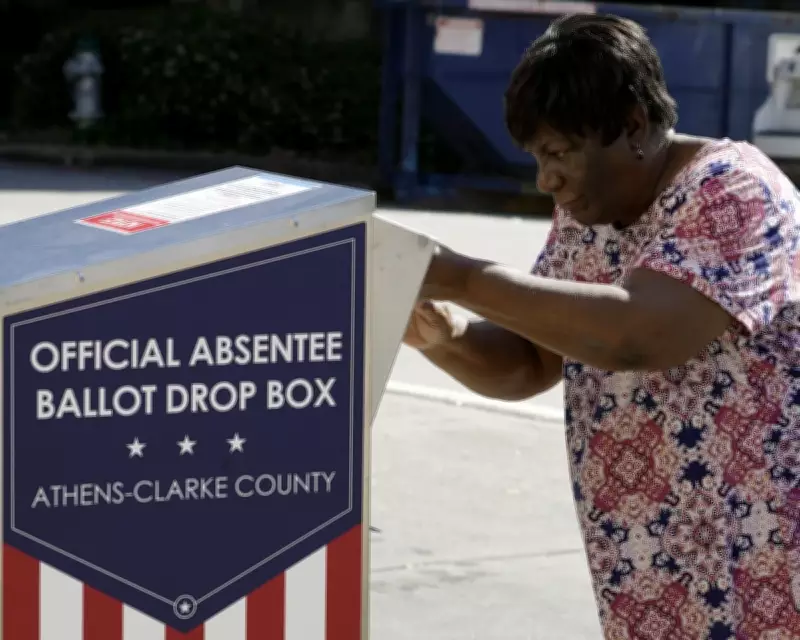
Trump Signs Executive Order to Restrict Mail-In Voting
President Donald Trump has signed an executive order directing his administration to compile a national voter file and impose restrictions on the use of mail-in ballots. This unprecedented move, announced in the Oval Office on Tuesday, is widely expected to face legal challenges and is probably unconstitutional, according to experts.
Details of the Executive Order
The order mandates the Department of Homeland Security to collaborate with the Social Security Administration to create a list of verified US citizens eligible to vote in every state. Additionally, it instructs the United States Postal Service to initiate rule-making that would require states to notify the agency of voters intending to receive mail-in ballots. Under this proposal, voters would only be allowed to receive such ballots if they are included on a USPS-approved list of eligible voters.
During the signing ceremony, Trump repeated false claims about mail-in voting, asserting that cheating was "legendary." However, numerous studies and investigations have consistently shown no evidence of widespread voter fraud, including in mail-in voting. Notably, Trump himself voted by mail earlier this month.

Constitutional and Legal Concerns
David Becker, executive director of the Center for Election Innovation and Research, a non-profit organization, stated, "There's not a single provision in here that will withstand judicial review. This is a wholly unconstitutional EO." The US Constitution grants no authority over elections to the president and explicitly allows states to set their own election rules. This order follows a similar attempt last year by Trump to impose citizenship requirements and mail-in voting restrictions, which was subsequently struck down by the courts.
Implementation Challenges
Several key details in the order remain unclear, highlighting potential difficulties in implementation. For instance, the administration is required to provide a verified citizenship list within 60 days of an election, but federal law permits states to cut off voter registration no earlier than 30 days before election day. This discrepancy raises questions about what would happen to eligible voters who register after the cutoff and are not included on the list.
Furthermore, it is uncertain how the Trump administration will accurately determine voters' state residency based on data from the Department of Homeland Security and the Social Security Administration. This ambiguity may explain why the Justice Department has been pressuring states to surrender their voter rolls, including sensitive information such as the last four digits of social security numbers and driver's license details. To date, the department has lost all lawsuits filed to obtain this information, including three recent defeats.
Immediate Legal Backlash
Immediately after Trump signed the order, Democratic elections officials in at least two states with popular mail-in voting systems announced plans to sue. Adrian Fontes, the Arizona secretary of state, accused the administration of executive overreach, warning that the order represents a continued effort to access sensitive voter data. "This move is nothing more than a push to weaponize the sensitive personal information of voters in this country, an effort my office will continue to fight unrelentingly," Fontes said in a statement, vowing to challenge the order in court.
Similarly, Tobias Read, the Democratic secretary of state in Oregon, declared, "My message to the President: We'll see you in court." In the Senate, Democratic leader Chuck Schumer pledged legal action against the measure, posting on social media, "See you in court. You will lose."
Broader Implications
This executive order adds to ongoing tensions over voting rights and election integrity in the United States. Critics argue that it could disenfranchise voters and undermine public trust in the electoral process, while supporters claim it aims to prevent fraud. As legal battles loom, the order's fate will likely be determined by the courts, setting a precedent for future election-related policies.






