
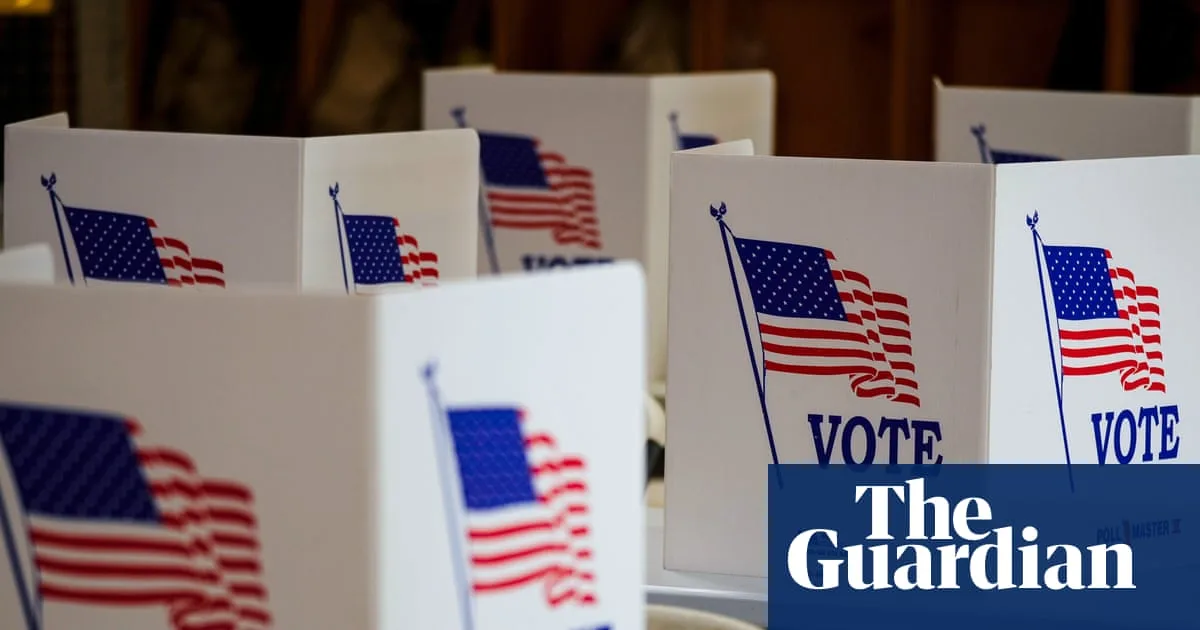
Donald Trump has sparked controversy by suggesting that Republican state officials should “take over” and “nationalise” elections in 15 states to prevent noncitizen voting, a claim that has been repeatedly debunked. The former president made the remarks on a conservative podcast released on Monday, framing the proposal as a way to protect the party from being voted out of office.
Trump’s comments come less than a week after FBI agents executed a criminal search warrant to obtain nearly 700 boxes of ballots and election materials from Fulton County, Georgia, a location long targeted by Trump’s false claims of election fraud. Additionally, the Guardian exclusively reported that Tulsi Gabbard, the director of national intelligence, is conducting her own review of the 2020 election with Trump’s approval, separate from a justice department investigation.
Democrats have condemned Trump’s suggestion. Senator Mark Warner of Virginia said the statement “makes clear that this threat to our election security … is forward looking, to 2026, to 2028”. He warned that such tactics could be used to disrupt free and fair elections in the future.
Meanwhile, Trump signed legislation to end a government shutdown that began after midnight last Friday. The Republican-controlled House approved the $1.2tn appropriations measure by a narrow 217-214 vote, with all but 21 Republicans voting in favour. Democrats have warned they will block further funding to the Department of Homeland Security unless their demands for restrictions on Trump’s mass deportation campaign are met.
In other news, New York’s attorney general Letitia James announced the creation of a team of legal observers to monitor immigration enforcement officers. UK police have launched a criminal investigation into allegations that Peter Mandelson leaked emails and market-sensitive information to Jeffrey Epstein. Spain has proposed a ban on social media use for under-16s, prompting criticism from Elon Musk.




