Swindon's Bellwether Status Signals Labour's Growing Crisis as Voters Flee to Reform
For nearly four decades, the voters of Swindon have consistently elected MPs from the party destined to govern the United Kingdom. As local elections approach on 7 May 2026, this bellwether town reveals a stark reality: widespread resentment towards the Labour Party and its leader, Sir Keir Starmer, is driving a seismic shift in political allegiances.
From Campaign Promises to Voter Disillusionment
In 2023, Sir Keir Starmer launched Labour's local election campaign in Swindon with bold pledges, including a council tax freeze, energy bill reductions, and high street revival. Soon-to-be chancellor Rachel Reeves even assured voters there were no plans to increase capital gains tax. Fast forward three years, and the political landscape has dramatically changed. Labour's once-commanding 17-point poll lead has evaporated, replaced by a critical struggle to maintain government stability and UK-US relations amid Middle East conflicts.
Now, Swindon—which has mirrored national voting patterns since 1983—is drawing battlelines for a local election that could foreshadow Sir Keir's political future and the rising influence of Reform UK and the Green Party.
Voices from the Ground: "It Can't Get Any Worse"
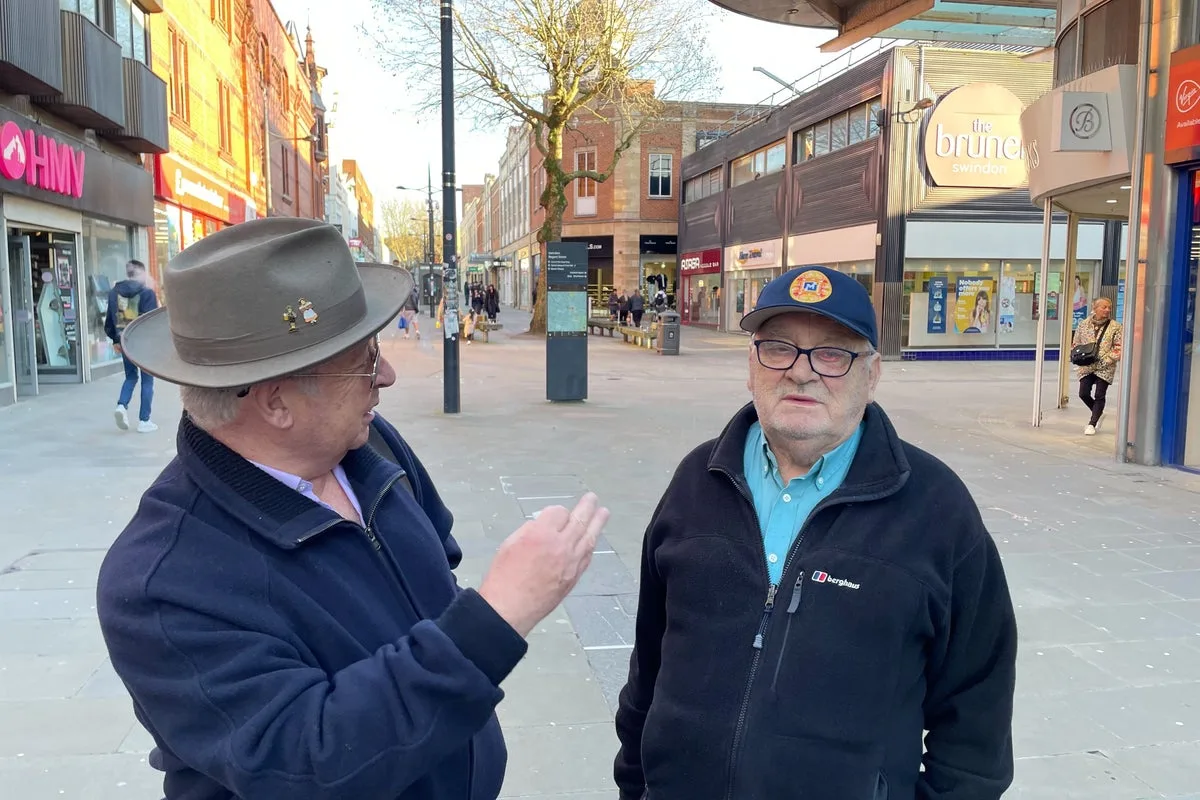
During a recent visit to Swindon, The Independent found a bleak outlook for Labour. Pensioner John Doult, an 86-year-old former car industry worker and lifelong Labour voter, declared his switch to Reform. "I'll be voting for Reform – it can't get any worse," he said, criticising the "terrible" state of the town centre after closures of Debenhams and Marks and Spencer. He also attacked Reeves' freeze on income tax thresholds, calling it a "two-tier" pension system that penalises savers.
Immigration, a frequent topic among residents, was described as "out of control" by Doult. Nearby, Eddy, sitting near boarded-up shops, echoed this sentiment, stating, "You can't do any worse than what we're getting today." He lamented that both Conservative and Labour governments had failed to address potholed roads and a declining town centre, calling for "new ideas, new people."
Labour's Erosion: From Dominance to Defection
In six hours of interviews, not a single person pledged to vote for Labour, though alternatives varied. Jennifer Selwood and her husband Antony, unhappy with tax policies, NHS waiting times, and housing shortages, said they might abstain or consider other options. "This is the first time I won't vote for Labour, or not at all even," Selwood noted, describing the town centre as "tired and old."
Labour's grip on Swindon has weakened since winning 41 of 57 council seats in 2024, with numbers dropping to 34 after four councillors defected to the Green Party last year. In February, Swindon South MP and transport minister Heidi Alexander launched Labour's local election campaign, dedicating half of her social media plea to attacking Reform as "a bunch of cranks and pound shop nationalists."
Swindon's Struggles: A Microcosm of National Issues
The town centre, a focus for Labour-controlled councils, shows mixed progress. While a new transport gateway and artwork have been completed, and plans for an entertainment venue and affordable homes are in development, significant challenges remain. The huge former Debenhams store has been abandoned for six years, and Regent Circus shopping complex sits largely empty apart from a Nando's restaurant. A council report last year admitted the centre needs "reinvention."
Beyond the centre, the former Oasis Leisure Centre has been shut for five years, and the old speedway and greyhound track on the northern outskirts is slated for housing. Out-of-centre retail parks like Orbital Shopping Park and Greenbridge Retail and Leisure Park remain busy, and regeneration efforts are ongoing at the former Honda plant, which closed in 2021 with thousands of job losses.
Carol Richardson, who moved from Reading to Swindon, summarised the sentiment: "Everyone is feeling it, everywhere in the country." She cited cost-of-living pressures, poorly planned housing, and town centre decline as failures of political promises.
Political Shifts and Electoral Implications
Reform UK, led by Nigel Farage, brought its national campaign tour to Swindon, capitalising on voter disenchantment. The Green Party, emboldened by by-election successes, is also gaining traction, with leader Zack Polanski expressing confidence in attracting ex-Labour voters. Jeremy Corbyn's Your Party will also contest the election.
Leading pollster Robert Hayward highlighted Swindon's lack of party loyalty, making it a prime target for Reform. At the last election, the Conservatives lost 25-27% of their vote share in Swindon's constituencies, with Labour gaining only 8-10%. Hayward explained, "Swindon is that sort of area that became disenchanted with the Conservatives which didn't necessarily vote for Labour... So you've got people who are disenchanted with politics."
If Labour loses council control, Hayward cautioned it would be too early to predict the next general election but warned it would "confirm the problem that Labour have got with their white working class voters." This bellwether election may thus serve as a critical barometer for Labour's future and the evolving political landscape in the UK.






