

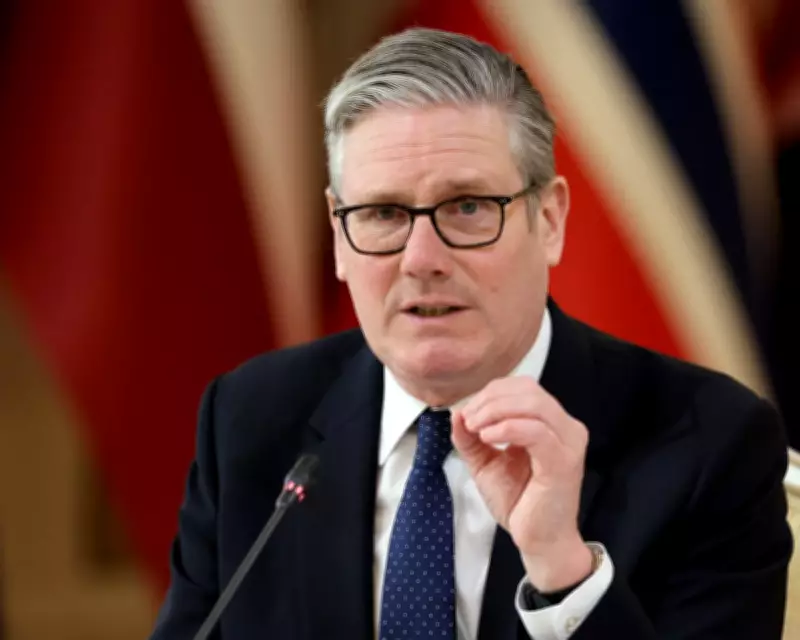
Senior figures within Keir Starmer's Labour Party have openly acknowledged that the upcoming local elections are likely to result in sweeping and significant losses for the party. This admission comes as the Prime Minister prepares to launch the official campaign with a renewed focus on the cost of living crisis and international stability.
Campaign Launch with New Slogan
Keir Starmer is set to launch Labour's local elections campaign at a rally in the West Midlands, accompanied by Deputy Leader Lucy Powell and other cabinet ministers. The campaign will be unveiled under a new slogan: "Pride in Britain." Starmer will urge voters to maintain their support for Labour, arguing that Britain's core values are being rigorously tested in an increasingly volatile global environment.
Focus on Economic and Global Issues
In his address, Starmer will emphasize government actions aimed at alleviating the cost of living pressures. He will highlight measures such as interventions on energy bills, adjustments to the two-child benefit cap, increases in the living wage, and enhancements to pensions. Additionally, he will cite the ongoing conflict with Iran as a critical reason for voters to stick with the current government rather than risking a change in leadership.

"We are going to fight to earn every single vote. We will fight for our values and for the country we are building together—a Britain that is built for everyone," Starmer will declare. "In the context of everything unfolding in the world today, those values of fairness that we champion have never been more crucial. The volatile world we inhabit tests not only our security and strength on the international stage but also our fairness at home and our national unity."
Predicted Electoral Setbacks
Party chiefs have conceded that the polls are pointing towards substantial losses for Labour across multiple regions. These potential setbacks could include losing power in Wales after an uninterrupted 27-year reign, with current polling indicating Labour trailing behind both Plaid Cymru and Reform UK. In Scotland, the Scottish National Party appears poised to block Labour's Anas Sarwar from securing victory in Holyrood. Furthermore, numerous Labour-controlled councils in England are at risk of falling to the Greens and independent candidates.
Targeting Opposition Parties
Starmer will also attempt to draw attention to what he describes as poor judgment from opposition figures. He will reference early support from Kemi Badenoch and Nigel Farage for US-Israeli strikes against Iran—actions that the government did not endorse. "Do not forget that the Conservatives and Reform UK would have rushed us into this conflict without considering the consequences, including the impact on the cost of living. It is utterly reckless," he will assert.
Labour has indicated that it held approximately 7,000 local campaign events over the past weekend, with around 30 cabinet visits scheduled for the first week of the campaign. This intensive effort underscores the party's determination to mitigate anticipated losses.
Strategic Shifts and Regional Concerns
Previously, Labour attempted to draw an equivalence between Reform UK and the Greens in its campaigning—a strategy that faced backlash from some Labour MPs. Party strategists have now suggested they will abandon this framing. Instead, they plan to criticize the Greens' Zack Polanski for what they term poor judgment.
Starmer will state, "While Reform UK has repeatedly demonstrated it is not on the side of working people, and the Greens offer the wrong answers for Britain, this Labour government remains firmly focused on the pounds in people's pockets. Labour has made the fair choices necessary to support families across Britain by expanding government-funded childcare, rolling out free breakfast clubs for children, and widening access to free school meals."
Specific Regional Vulnerabilities
Labour is bracing for heavy losses to Reform UK in its former heartlands, including the north-east of England, West Yorkshire, and Greater Manchester. Particular concern is focused on Birmingham, where a protracted dispute over bin collections has exacerbated local tensions. In London, where Labour currently holds 21 out of 32 councils, significant Green gains are expected in boroughs such as Newham, Hackney, and Lewisham.

The local elections campaign thus unfolds against a backdrop of internal party admissions of likely defeats, strategic recalibrations, and a concerted effort by Starmer to pivot voter attention towards economic stability and global prudence as defining reasons to sustain Labour in power.





