

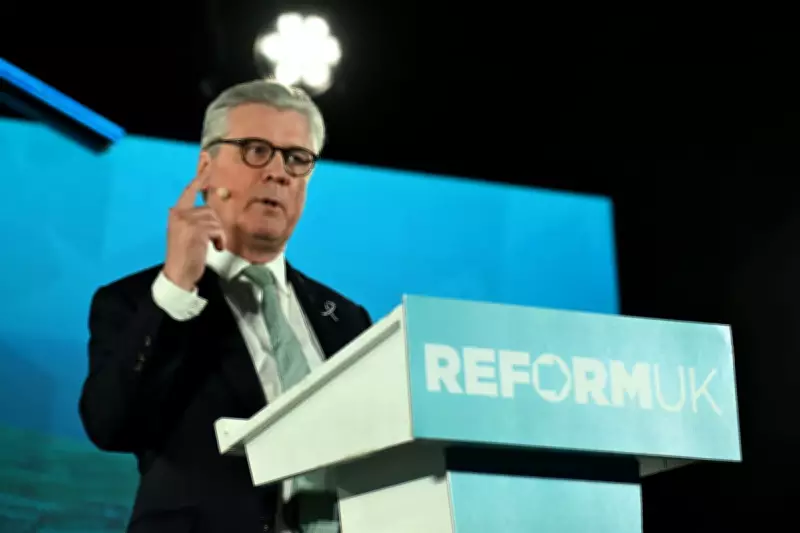
Reform UK has issued a direct appeal to Scottish Labour leader Anas Sarwar, urging him to back their Scottish leader Malcolm Offord for the position of first minister. This call comes in the wake of a significant poll indicating that unionist parties might secure a majority in the Scottish Parliament after the upcoming election on May 7.
Poll Suggests Unionist Majority Could Oust SNP
A major poll conducted by More in Common, released on Monday, has stirred the political landscape in Scotland. The multi-level regression with post-stratification (MRP) poll surveyed over 5,000 Scots between February 4 and April 10. It projects that unionist parties could collectively hold a majority in Holyrood, potentially enabling a cross-party coalition to displace John Swinney from Bute House.
According to the poll results, the SNP is forecast to secure 56 seats, while Reform UK is placed second with 22 seats. Scottish Labour follows in third place with 17 MSPs. This data has fueled Reform's confidence in their electoral prospects and their push for leadership.

Offord's Bold Statement and Momentum Claim
In a statement released on Monday, Malcolm Offord asserted that Reform UK MSPs would not support any attempt by Anas Sarwar to become first minister. Instead, he pressed the Labour leader to endorse his own bid for the top role. Offord emphasised the party's growing momentum, stating, "This poll reflects exactly what Reform is picking up on the doors – momentum. We are now Scotland’s only challenger to this rotten SNP Government."
He posed a critical question to other unionist parties: "Will they back a Reform-led Government or stick with failure under the SNP?" Offord made it clear that Sarwar's path to first minister would require unanimous support from all unionist parties, which Reform categorically rules out due to disagreements over Labour's policies on workers' rights and prosperity goals.
Labour and Lib Dems Dismiss Reform's Proposal
Scottish Labour deputy leader Dame Jackie Baillie responded sharply, labelling Offord's move as a "laughably desperate bid for attention." She argued that Scottish Labour is the only party capable of defeating the SNP, with Anas Sarwar as the sole candidate to replace John Swinney. Baillie criticised Reform's stance on workers' rights and minimum wage cuts, accusing them of a "flimsy con act."
Adding to the rejection, Scottish Lib Dem leader Alex Cole-Hamilton has explicitly ruled out any collaboration with Reform. This stance effectively undermines Offord's chances of reaching Bute House based on the current poll projections, as it limits potential coalition options.
Acrimonious Relations and Past Controversies
The public relationship between Reform and Scottish Labour has been notably strained over the past year. Tensions escalated during a Holyrood by-election when Reform ran advertisements described as "racist" targeting Anas Sarwar. Further controversy arose when Offord claimed that Sarwar approached him at a TV appearance last year, suggesting they would need to "work together" to oust the SNP.
Sarwar dismissed this claim, branding Offord a "liar" during a televised debate last week. These incidents highlight the deep-seated animosity between the parties, complicating any potential alliances.
SNP Response and Campaign Strategy
SNP campaign director Angus Robertson weighed in on the situation, asserting that only the SNP is strong enough to counter Reform across Scotland. He accused Labour of plotting a "grubby deal" with Nigel Farage's party post-election. Robertson warned, "Reform are too dangerous to be allowed any influence in Scotland’s Parliament," and called for unity behind the SNP to secure independence and block Farage from power.
As the election approaches, the political dynamics in Scotland remain volatile. Reform's bold appeal to Labour underscores the shifting alliances and fierce competition among unionist parties. With polling data suggesting a possible majority for unionist forces, the outcome could hinge on whether parties like Labour and the Lib Dems are willing to engage with Reform or maintain their distance, shaping the future of Scottish governance.






