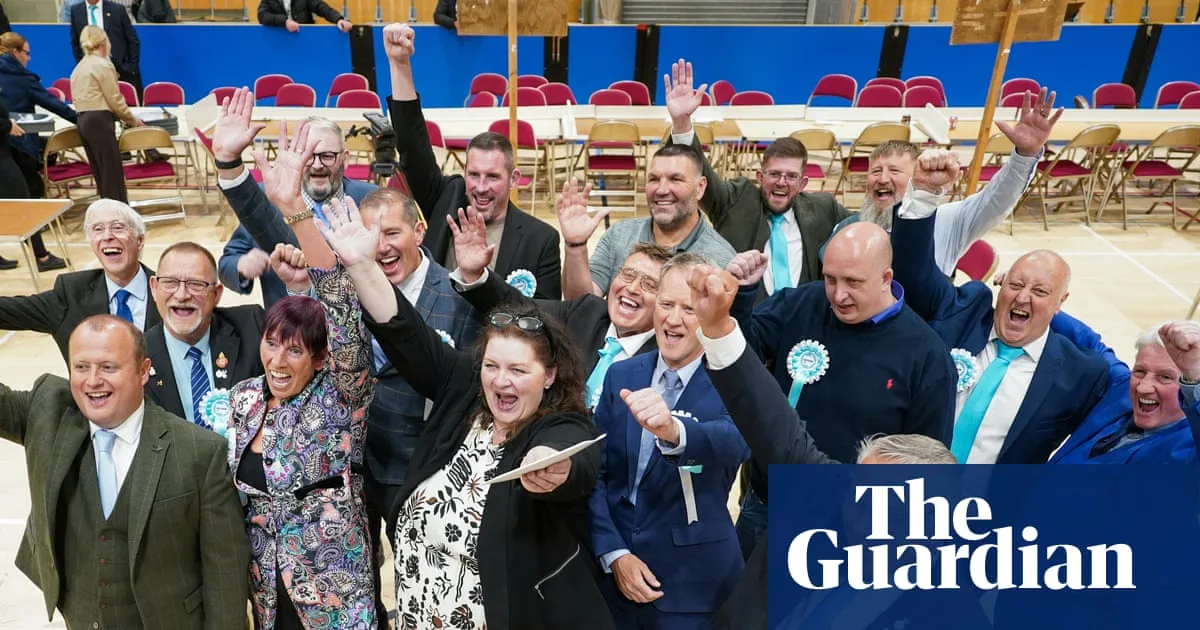
Pollsters Warn Reform UK Surge Creates Most Fragmented Scottish Election Since Devolution
Reform UK Surge Creates Most Fragmented Scottish Election Since Devolution

Pollsters Warn Reform UK Surge Creates Most Fragmented Scottish Election Since Devolution

Support for Reform UK is delivering a significant boost to the Scottish National Party in what pollsters describe as the most fragmented election since the establishment of the Scottish Parliament. Luke Tryl, UK director at the polling firm More in Common, has highlighted that substantial uncertainty remains regarding next month's Holyrood election, with pro-Union tactical voting potentially playing a decisive role.

Latest Polling Data Reveals Tight Race

The most recent detailed survey from More in Common indicates that the SNP and Scottish Greens are projected to fall just short of securing a pro-independence majority. The full results published today show the SNP leading with 33 percent on the constituency vote, followed by Reform UK at 21 percent, Labour at 18 percent, with both the Liberal Democrats and Conservatives tied at 12 percent, and the Greens at one percent.

On the regional list vote, the SNP maintains a lead with 29 percent, while Reform UK stands at 19 percent, Labour at 16 percent, the Lib Dems and Tories both at 12 percent, and the Greens at 10 percent.

Wide Pickt banner — collaborative shopping lists app for Telegram, phone mockup with grocery list

Unprecedented Electoral Fragmentation

Mr Tryl stated: 'Holyrood has traditionally been more fragmented than Westminster, but this election is on course to be even more fragmented due to the rise of Reform UK and the stronger performance of the Scottish Greens. The effective number of electoral parties, which measures fragmentation, is at its highest since devolution began.'

He explained that while the SNP is still likely to emerge as the largest party, the unionist vote is highly divided with the emergence of Reform UK. Additionally, the SNP may have to share more of its vote with groups like the Scottish Greens. First Minister John Swinney is reportedly receiving a substantial boost from this fragmentation of the unionist vote.

'Since 2007, the SNP has dominated the share of voters who support independence, but that looks set to be lower at this election. So the SNP are not immune to that fragmentation either,' Mr Tryl added.

Seat Projections and Marginal Constituencies

The current More in Common projection, based on a multi-level regression with post-stratification poll of 5,000 voters, predicts the SNP would win 56 seats, Reform UK 22 seats, Labour 17 seats, the Lib Dems 14 seats, the Tories 12 seats, and the Greens eight seats.

Mr Tryl highlighted that the Conservatives are projected to hold a handful of constituency seats but by the smallest margins. Overall, 39 of the 73 constituencies across Scotland are considered marginal, with the leading party ahead by less than five percentage points.

'It is a very, very close election because of the level of fragmentation, and the truth is those seats could go either way,' he said.

Impact of Reform UK's Rise

The More in Common data shows that Reform UK is polling above 25 percent in 20 constituencies but is only ahead in two of them. When asked whether the rise of Reform UK and the fragmentation of the pro-Union vote is helping the SNP avoid greater losses, Mr Tryl responded: 'That is very definitely the case. Fragmentation is making a difference. It is very definitely the case that fragmentation of the Unionist vote is benefiting the SNP, who themselves look very likely to lose votes.'

He pointed to Tory-held seats in the borders and Labour targets in areas like East Lothian as potential gains for the SNP.

Tactical Voting Complications

Regarding the potential impact of pro-Union tactical voting, Mr Tryl noted: 'That is an added complication. In Scotland, there has always been this big element of who is the best-placed unionist or nationalist vote, particularly on the Unionist side regarding how to stop the SNP. Now you've got this other axis, particularly on the left, of who is best placed to stop Reform? I think that could make a significant difference.'

He indicated that small amounts of tactical voting suggest no certainty about who will secure second place, emphasizing that there is still much to play for in the election.

Pickt after-article banner — collaborative shopping lists app with family illustration

Political Reactions to Poll Findings

Following the publication of the poll, Lord Malcolm Offord, Scottish leader of Reform UK, stated: 'We are now Scotland's only challenger to this rotten SNP Government. There is now a key question for Scotland's other unionist parties - will they back a Reform-led Government or stick with failure under the SNP?' He was previously accused of arrogance for demanding other pro-Union parties declare their support.

Scottish Conservative deputy leader Rachael Hamilton responded: 'Lord Offord's arrogant remarks prove yet again that Reform are completely relaxed about John Swinney and the SNP staying in power. He's got some brass neck urging pro-UK voters to back him when his party are fielding pro-independence candidates and Nigel Farage says it would be reasonable to have another referendum. A vote for Reform only increases the chances of the SNP winning - that's why John Swinney talks them up at every opportunity.'

Scottish Labour deputy leader Jackie Baillie added: 'This is a laughably desperate bid for attention from a party that has already admitted it can't win this election. Scottish Labour is the only party that can beat the SNP and Anas Sarwar is the only person who can replace John Swinney.'




