

Reform UK Projected as Scotland's Second-Largest Party in Holyrood Elections
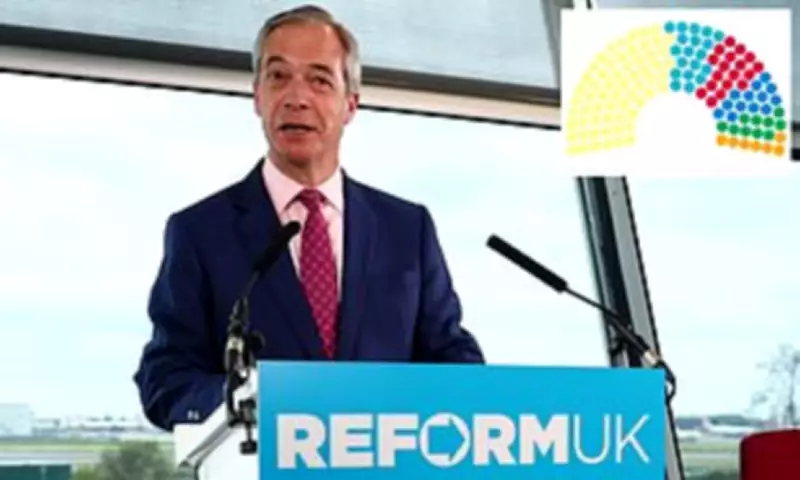
A new poll conducted by Survation for the Diffley Partnership has revealed that Reform UK is on track to become the second-largest party in the Scottish Parliament following the elections scheduled for 7 May. The survey, which involved more than 1,000 Scottish voters, forecasts that Nigel Farage's party will secure 19 seats at Holyrood.
Seat Projections and Party Rankings
According to the research, this outcome would position Reform UK ahead of Labour, which is projected to win 18 seats, the Conservatives with 13 seats, the Scottish Greens with 10 seats, and the Liberal Democrats with 7 seats. The poll also projects that the SNP will win 62 seats, leaving the nationalist party three seats short of achieving a majority in the Scottish Parliament.
The survey, which polled 1,068 individuals between 16 and 23 March, indicates that the SNP holds 35 per cent support in the Holyrood constituency vote and 32 per cent in the regional list. Reform UK is expected to receive 19 per cent of the constituency vote and 18 per cent of the list vote. Labour follows closely behind with 19 per cent backing in constituencies and 17 per cent in regional votes.

Leadership Popularity and Voter Sentiment
The poll further examined the favourability ratings of key political leaders in Scotland. SNP leader John Swinney remains the most popular, albeit with a net favourability rating of minus 10 per cent. This contrasts sharply with Prime Minister Keir Starmer, who has a rating of minus 47 per cent, and Scottish Labour leader Anas Sarwar, who stands at minus 25 per cent.
Nigel Farage himself has a minus 31 per cent rating in Scotland, while Reform's Scottish leader, Malcolm Offord, has a minus 15 per cent rating. Notably, 55 per cent of respondents expressed no opinion of Lord Offord, suggesting a degree of unfamiliarity among the electorate.
Historical Context and Current Political Landscape
In the previous Scottish Parliament elections held in 2021, the SNP won 64 seats, the Conservatives secured 31 seats, and Labour obtained 22 seats. Although the SNP fell one seat short of a majority at that time, they entered into a power-sharing agreement with the Scottish Greens. That deal has since collapsed, but the SNP has continued to govern as a minority administration.
Reform UK currently holds one seat at Holyrood, following the defection of former Tory MSP Graham Simpson in August. The potential for Reform to gain significant ground has sparked considerable debate and speculation about the future political dynamics in Scotland.
Political Reactions and Campaign Dynamics
SNP campaign director Angus Robertson asserted that the Survation poll demonstrates a Holyrood majority is "within touching distance." He emphasised that an SNP majority would not only advance independence but also prevent Nigel Farage from gaining power, warning of potential "grubby, backroom deals" between Labour and Reform.
In response, Scottish Labour deputy leader Jackie Baillie characterised the election as a "straight fight" between John Swinney and Anas Sarwar. She dismissed Reform as a credible party, arguing that they merely generate noise and could inadvertently help prop up the SNP for another term, which she described as detrimental to public services like the NHS.
Baillie stressed that Scottish Labour is the only party campaigning with the ambition to remove the SNP from power after 19 years and install Anas Sarwar as First Minister, presenting voters with a clear choice between continued SNP governance or a new direction with Labour.
Increased Voter Engagement and Critical Assessment
Mark Diffley, founder of the Diffley Partnership, noted that the poll indicates heightened voter engagement as the election approaches. He observed a decline in the number of respondents answering "don't know" when asked about political leaders, suggesting increased interest in the Holyrood elections.

Diffley explained that while the SNP remains in a strong position, support for other parties is broadly dispersed, meaning even small shifts during the campaign could significantly alter the final seat distribution. He also highlighted that favourability ratings have softened for nearly every leader, indicating that voters are becoming more critical as they pay closer attention to the campaign.
With several weeks remaining before the election, there is considerable scope for both voting intentions and perceptions of leaders to evolve further, making the outcome highly unpredictable and closely watched by political analysts across the United Kingdom.





