

The political landscape in South Australia is bracing for a significant test as Pauline Hanson's One Nation party prepares to contest every seat in the upcoming March state election. Riding a wave of national polling success that shows the party commanding a substantial primary vote, the real question remains whether this support will materialise when voters enter the ballot booth.
A Coalition of Discontent Finds Political Expression
Political commentator Tory Shepherd observes that what she describes as "the anti-woke, anti-Islam, anti-immigration, anti-multiculturalism, anti-renewables mob" has discovered its political voice through two distinct channels: the March for Australia protest movement and the formal political apparatus of One Nation. This coalition of discontent represents a significant undercurrent in Australian politics that mainstream parties have struggled to address effectively.
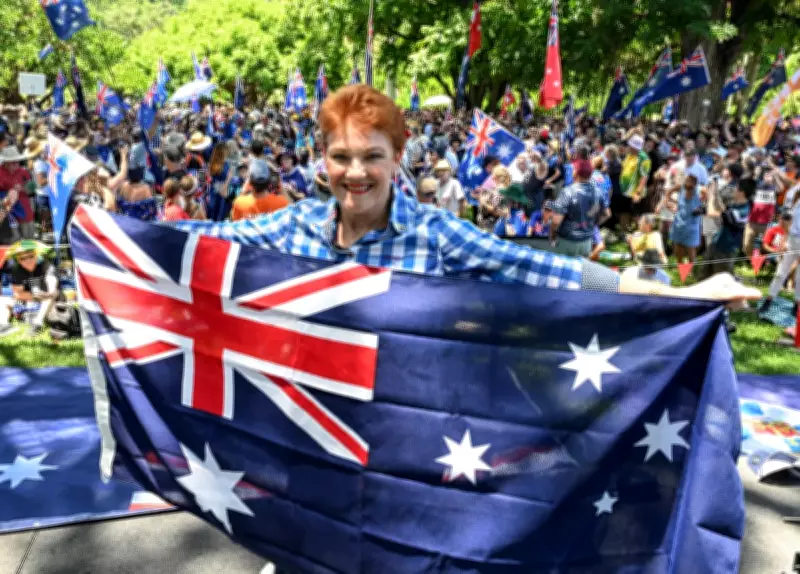
The movement gained visible momentum during a recent rally in Brisbane where Pauline Hanson addressed supporters, with the scene captured in photographs that circulated widely. The imagery of Australian flags and orange One Nation apparel has become increasingly familiar at political gatherings across the country.

The South Australian Crucible
South Australia's March election represents the first genuine electoral examination of One Nation's growing vote share, which appears to be benefiting from ongoing turmoil within the federal Coalition. The party's recruitment of former Liberal senator turned Sky News commentator Cory Bernardi has added considerable weight to their campaign efforts in the state.
At a recent Adelaide rally, enthusiastic supporters greeted Hanson and Bernardi with chants of "prime minister," reflecting the palpable optimism within party ranks. This confidence stems directly from polling data showing One Nation achieving approximately 22% of the primary vote nationally, though whether this translates to South Australian support remains uncertain.
Historical Patterns and Present Realities
Historical analysis reveals Hanson has traditionally inspired intense loyalty among followers, though this devotion has frequently been followed by rapid disillusionment, organisational chaos, candidate disqualifications, and accusations of authoritarian leadership. The question facing South Australian voters is whether these patterns will reassert themselves or whether the party has matured into a more stable political force.
Retired ABC election analyst Antony Green has mapped One Nation's federal polling performance, identifying 25 key seats to monitor. Of these, twelve are located in Queensland with just a single South Australian constituency – Barker, currently held by Liberal Tony Pasin – making the list. This geographical concentration suggests the party's national surge might not directly correspond to South Australian electoral success.
The Electoral Mathematics
October polling positioned state Labor with a commanding two-party preferred lead of 66% against the Liberal party's 34%, suggesting Premier Peter Malinauskas is heading toward a substantial victory. However, the political landscape has shifted since those numbers were recorded, with opposition leader Vincent Tarzia stepping aside in favour of moderate rising star Ashton Hurn – a change that could potentially alter voting intentions.
Bernardi and Hanson have expressed optimism about securing lower house seats, citing several factors that could work in their favour:
- Improved financial backing compared to previous campaigns
- More sophisticated campaigning techniques
- Higher quality candidate selection
- A shifting political mood that creates unpredictable three-way contests
Nevertheless, their most realistic ambition appears to be securing one or two positions in the state's upper house, where both hope to establish themselves as the effective opposition voice.
The Opposition Ambition
"Whether we have one seat, we have five seats or 22 seats, we will be the strongest voice of opposition that this government has ever faced," Bernardi declared during campaign appearances. He emphasised their comprehensive approach: "We're going to contest every seat. We're going to have a full ticket in the upper house. We're going to work very hard for our candidates, and I hope they're all rewarded."

Bernardi acknowledged the ultimate ambition while tempering expectations: "To be honest, I'd love to be the official opposition in this state. But you know what? Even if we don't have the most numbers of seats, I promise you, we will have the strongest, the most effective voice."
A Crowded Field of Conservative Alternatives
The upper house contest presents particular complexity, with eleven seats available and numerous candidates espousing views that align closely with One Nation's platform. Bernardi isn't the only former Liberal seeking election through alternative conservative channels.
The political landscape includes several significant figures:
- Former Liberal member turned Family First senator Bob Day, who will field candidates in both houses under the Australian Family Party banner
- Day's former chief of staff Rikki Lambert, now running for the Nationals
- Former Liberal candidate Deepa Mathew, standing as the Family First candidate
- Jing Lee, who left the Liberals following controversy surrounding a right-wing abortion bill, now campaigning as an independent
This fragmentation of the conservative vote creates additional uncertainty about how preferences will flow and which candidates might benefit from complex preference deals.
The Polling Paradox
A crucial uncertainty surrounds whether voters expressing support for One Nation in opinion polls will actually mark their ballot for the party when entering voting booths. Historical patterns suggest some respondents might hesitate when faced with the actual decision, particularly as campaigning intensifies and scrutiny increases.
This dynamic became visible during a recent press conference when Hanson faced difficult questioning from Guardian Australia's Sarah Martin regarding undeclared flights on billionaire Gina Rinehart's private jet. As Hanson struggled to provide coherent responses, her supporters erupted in anger toward the press corps.
Supporters shouted "Who cares?" and "Did you have something for breakfast?" while One Nation state president Carlos Quaremba repeatedly demanded to know the reporter's "agenda." Most disturbingly, one individual in the crowd was heard saying "She's going to get lynched" in reference to the journalist – a comment that highlights the volatile atmosphere surrounding some One Nation events.
The Ultimate Test
As South Australia approaches its March election, One Nation faces its most significant electoral examination since its resurgence in national polling. The party must demonstrate it can convert anti-establishment sentiment and protest movement energy into tangible parliamentary representation. With former Liberal heavyweight Cory Bernardi now part of their team and substantial financial resources at their disposal, the conditions appear favourable for electoral breakthrough.
However, historical patterns of voter behaviour, the crowded field of conservative alternatives, and the potential gap between polling sentiment and actual voting decisions create substantial uncertainty. The South Australian election will reveal whether One Nation has evolved into a stable political force capable of sustained electoral success or whether it remains vulnerable to the volatility that has characterised its previous incarnations.
The results will have implications far beyond South Australia's borders, potentially reshaping the conservative side of Australian politics and testing whether protest movements can successfully transition into governing alternatives.





