

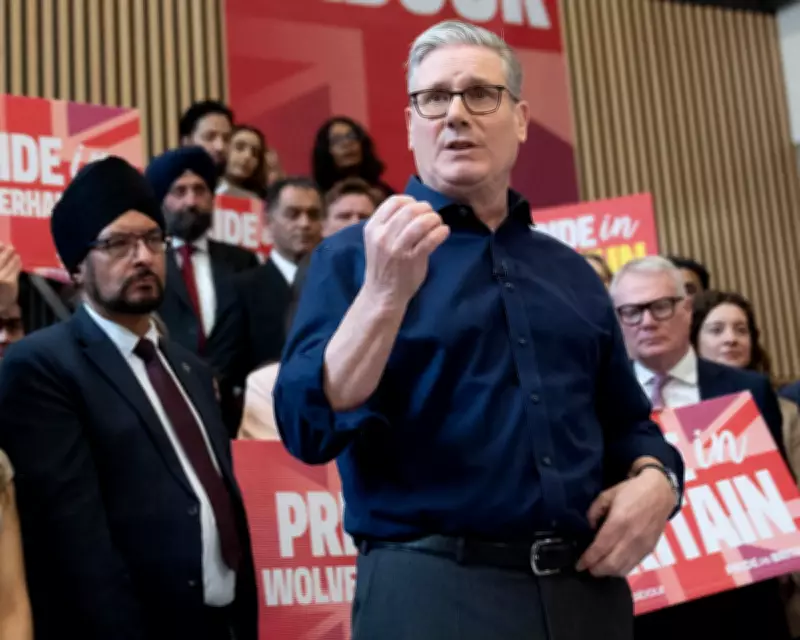
Labour Navigates Complex Local Election Landscape
Prime Minister Keir Starmer launched Labour's local elections campaign in Wolverhampton yesterday, facing a challenging political environment as voters prepare to go to the polls across England on 7 May. This election day coincides with votes for new governments in Scotland and Wales, creating a significant national political moment.
Fragmented Political Landscape Emerges
Recent polling indicates that the traditional political balance between right and left has remained relatively stable, but with important shifts occurring within those blocs. Previously loyal Conservative voters are increasingly moving toward Nigel Farage's Reform UK party, while Labour supporters are exploring alternatives among progressive options including the Green party led by Zack Polanski and Plaid Cymru under Rhun ap Iorwerth.
Jessica Elgot, the Guardian's deputy political editor, explains that these elections present unusual challenges for political analysts. "Normally, you can map out best-case and worst-case scenarios for a party," she notes. "This time, with so many parties competing across different parts of the country, you could end up with a very confusing, mixed picture."

Labour's Electoral Strategy
Starmer's central argument to voters emphasizes stability over volatility, urging the electorate to stick with Labour rather than risk alternatives. The party is framing the election as a choice between maintaining progress on tackling the cost of living versus jeopardizing that progress by switching to Reform or other parties.
Ministers are highlighting measures addressing energy bills, wages, childcare, and pensions as evidence that economic conditions are beginning to improve. Alongside this economic message, Labour is making a broader appeal to security and values, presenting itself as the only credible, responsible option in what Starmer describes as an increasingly unstable world.
Competition Across the Political Spectrum
Reform UK is expected to make gains at the expense of both Labour and the Conservatives, particularly targeting areas such as Essex and outer London while also making inroads into Labour heartlands in the north and Midlands including Sunderland and Barnsley.
The Green party is focusing on dissatisfied Labour voters, with potential advances in traditionally safe Labour areas of London such as Hackney, Newham, Lambeth, and Waltham Forest. Meanwhile, the Liberal Democrats are pursuing a different strategy, targeting disaffected Conservative voters in more affluent areas.
Critical Regions and Potential Outcomes
London and the north-east will be particularly critical for Labour, with many of its MPs representing London constituencies where local results will significantly impact internal party confidence. Reform UK may make advances in unexpected areas such as parts of Liverpool, providing clearer indications of how deep their support runs.
For Kemi Badenoch's Conservatives, potential good news may come in traditional London bellwethers including Westminster, Barnet, and Wandsworth, where they could reclaim some ground. Many Conservative MPs reportedly maintain relatively positive outlooks despite challenging circumstances.
Broader Political Implications
Guardian political editor Pippa Crerar suggests that a clash of animosities may define these local elections, with voters opting for "anyone but Labour" or "anyone but Reform." Local elections often function as a "free hit" for voters who feel less constrained by national considerations or tactical voting, creating space for more freely expressed frustration.
Senior Labour figures have warned that voters would further punish the party for indulging in leadership contests while Starmer navigates international crises including the Middle East conflict, which may provide some insulation from the most severe electoral outcomes. The king's speech on 13 May and a potential cabinet reshuffle are expected to quickly shift focus away from local election results.
Ultimately, Labour is banking on voters returning to them as the best "stop Farage" option in future general elections, though this provides little immediate comfort to Starmer facing what appears set to be a challenging set of local election results.






