

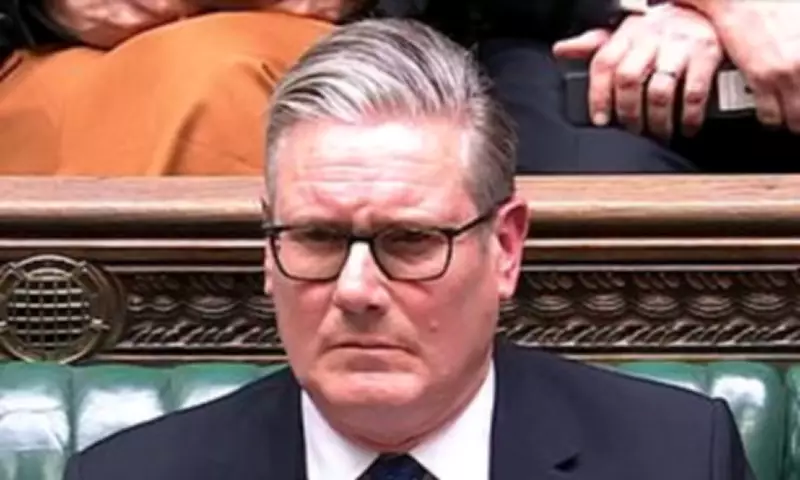
Labour could lose nearly 1,600 council seats at the upcoming local elections even in a best-case scenario, according to new research that paints a grim picture for Sir Keir Starmer's party. The polling suggests Labour's position is weakening dramatically across England, with potentially catastrophic consequences for the Prime Minister's political future.
Projected Seat Losses Across England
In what would represent a significant setback for Labour, the research indicates the party could lose 1,597 council seats across England in a best-case outcome. The situation appears even more dire in worst-case projections, with Labour potentially facing losses approaching 2,000 seats. These local election results could effectively determine Sir Keir Starmer's fate as Prime Minister, according to political analysts.
Labour currently maintains 2,196 councillors across the seats that will be contested in the upcoming elections. This means even a relatively positive result would still leave the party with hundreds fewer locally elected representatives than it currently holds. The scale of potential losses represents a substantial erosion of Labour's local government presence.

Reform UK Poised for Major Gains
Nigel Farage's Reform UK stands to benefit significantly from Labour's declining popularity, with projections suggesting the party could gain between 1,273 and 1,603 council seats. This dramatic increase would represent a substantial breakthrough for Reform UK, which currently holds just 78 local councillors across the seats to be contested next month.
The research from polling firm More in Common indicates Reform UK's surge could fundamentally reshape local politics across England. The party's projected gains highlight the shifting political landscape and growing dissatisfaction with traditional parties.
Key Council Battlegrounds at Risk
The polling reveals several critical council strongholds where Labour faces particular vulnerability. Sunderland City Council, which has been under Labour control since its formation, could potentially fall out of the party's hands. The research shows Reform UK would win the Sunderland Central constituency with 37 percent of the vote if a general election were held tomorrow, with Labour trailing by 12 percentage points.
Education Secretary Bridget Phillipson would also lose her Houghton and Sunderland South parliamentary seat under current polling projections. This represents a significant threat to senior Labour figures in traditionally safe constituencies.
Birmingham and London Challenges
Labour may also struggle to maintain control of Birmingham City Council, which the party has held since 2011. The research indicates 55 percent of Birmingham residents believe the council is heading in the wrong direction, suggesting significant local dissatisfaction with Labour's governance.
If a general election were conducted tomorrow, Labour would secure just four of Birmingham's nine parliamentary constituencies according to More in Common's polling. Home Secretary Shabana Mahmood's seat would be among those at risk in this scenario.
Even in London, traditionally a Labour stronghold, the party faces challenges. Hackney, long considered a safe Labour area, could see its council representation reduced to single digits according to the research findings.
Broader Political Context and Leadership Concerns
The polling shows Labour is on track to come third in both Scottish and Welsh elections, further compounding the party's difficulties across the United Kingdom. With less than one month remaining until voters head to the polls, three in four Britons believe things are getting worse under Labour's governance.
Sir Keir Starmer remains by far the least popular political leader among voters, according to the research, with a net approval score of -43. This compares unfavorably to Kemi Badenoch, who emerges as the most admired leader with a net approval score of -13.

The Prime Minister is fighting for his political survival amid additional controversies, including the revelation that Peter Mandelson failed security vetting for the position of US Ambassador but was appointed regardless. Scottish Secretary Douglas Alexander offered only lukewarm support for the embattled leader yesterday, stating he expected Sir Keir to lead Labour into the next general election but acknowledging "there are no certainties" in politics.
Election Details and National Implications
Local elections will be held on May 7, with 5,014 council seats up for election across 136 local authorities in England. This includes all London boroughs, making these elections a crucial test of Labour's popularity ahead of the next general election.
The projected losses for Labour and corresponding gains for Reform UK suggest a potential realignment in British politics. These local election results could have significant implications for national policy direction and the balance of power across England's local authorities.





