

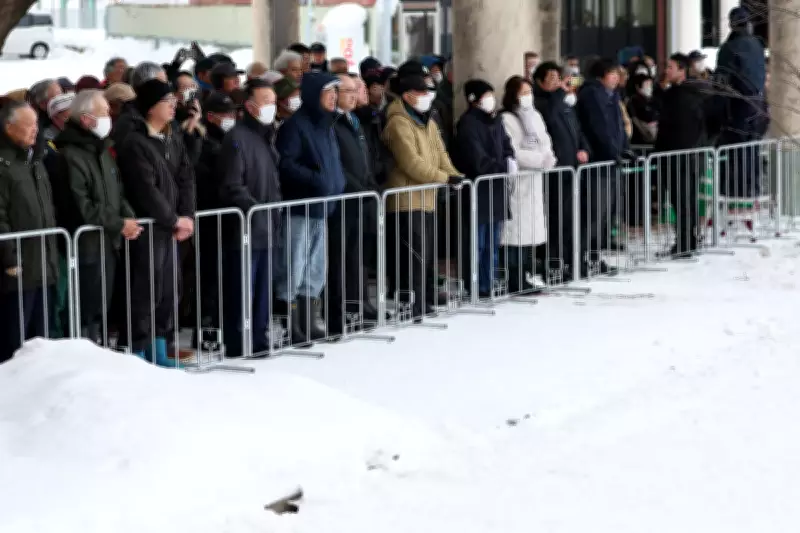
Japan's Historic Winter Election Confronts Severe Weather Challenges
Japan is preparing for significant snowfall and extreme cold temperatures as the nation heads towards its first lower house winter election in over three decades. Meteorological authorities have issued warnings about substantial snow accumulation and plunging temperatures that could directly impact political campaigning and electoral participation.
Unprecedented Winter Election Conditions
This marks Japan's inaugural winter lower house election in 36 years, scheduled for 8 February 2026. Prime Minister Sanae Takaichi called the snap election less than four months after assuming office, seeking to strengthen her mandate and stabilise a fragile governing coalition. The timing coincides with what forecasters describe as particularly severe winter conditions across multiple regions.
Severe Weather Forecast and Regional Impact
The Japan Meteorological Agency has predicted substantial snowfall accumulations, with up to 70 centimetres expected in parts of the Hokuriku region and 60 centimetres forecast for the Kansai area by Friday. Northern districts face particularly harsh conditions, with temperatures anticipated to plummet to as low as minus 23 degrees Celsius.

Officials have expressed concerns about multiple weather-related challenges:
- Transport disruptions affecting campaign activities and voter access
- Avalanche risks in mountainous regions
- Potential power outages that could impact polling station operations
- Safety concerns for election officials conducting voting procedures
Campaigning Complications and Regional Adjustments
Weather conditions are already creating significant obstacles for election preparations across snowbound regions. In Fukui and Aomori prefectures, election billboards displaying candidate posters have become buried under accumulating snow. Several municipalities have reportedly reduced the number of official signboards because conventional installation sites have become inaccessible due to weather conditions.
Sapporo experienced remarkable snowfall, with 54 centimetres accumulating in a single day - the highest January total ever recorded for the city. Campaign teams reported delays in distributing flyers and operating campaign vehicles due to transport disruptions, with some expressing concerns that candidates may struggle to begin campaigning according to their original schedules.
Voting Procedure Modifications and Safety Measures
Election authorities in Fukushima prefecture have implemented practical adjustments to voting procedures in response to the challenging conditions. Several towns will see modified polling station hours, with delayed openings to allow time for snow clearance and earlier closings to ensure safe transportation of ballot boxes. These measures aim to balance electoral accessibility with participant safety during the severe weather period.
Political Implications and Voter Turnout Concerns
While polls suggest Prime Minister Takaichi's Liberal Democratic Party remains on course to maintain its position as parliament's largest force, officials and political analysts have warned that severe winter weather could significantly depress voter turnout. This concern particularly applies to rural and snowbound regions that traditionally play decisive roles in Japanese elections.
Prime Minister Takaichi acknowledged the additional challenges facing voters in affected regions, stating: "For those in snowy regions in particular, I am truly grateful for the considerable effort it will take to reach the polling stations, as there may be challenging conditions underfoot."
Recent Weather Impact and Safety Statistics
The current weather system follows recent storms that brought parts of Hokkaido to a standstill, stranding thousands of passengers overnight at the island's main airport after dozens of flight cancellations. According to public broadcaster NHK, ten people have died in weather-related incidents over the past week, highlighting the seriousness of the conditions.

In northern Japan, temperatures have already plunged well below freezing, with the town of Rikubetsu in Hokkaido recording a low of minus 22.9 degrees Celsius this week. Campaign workers have been observed shovelling snow at their offices, with one 59-year-old secretary for a candidate in Aomori Constituency telling The Japan News: "An election at this time of year is just too much to handle."
The combination of historic electoral timing and exceptional winter conditions creates unprecedented challenges for Japan's democratic process, with authorities working to ensure both safety and electoral integrity during this critical period.





