The 2026 US midterm elections delivered a major victory for the gun violence prevention movement, with more than 200 candidates endorsed by Everytown for Gun Safety winning state and federal races, according to data the non-profit shared with the Guardian. This result marks a significant shift in the balance of power, signaling the declining dominance of the once-influential gun lobby.
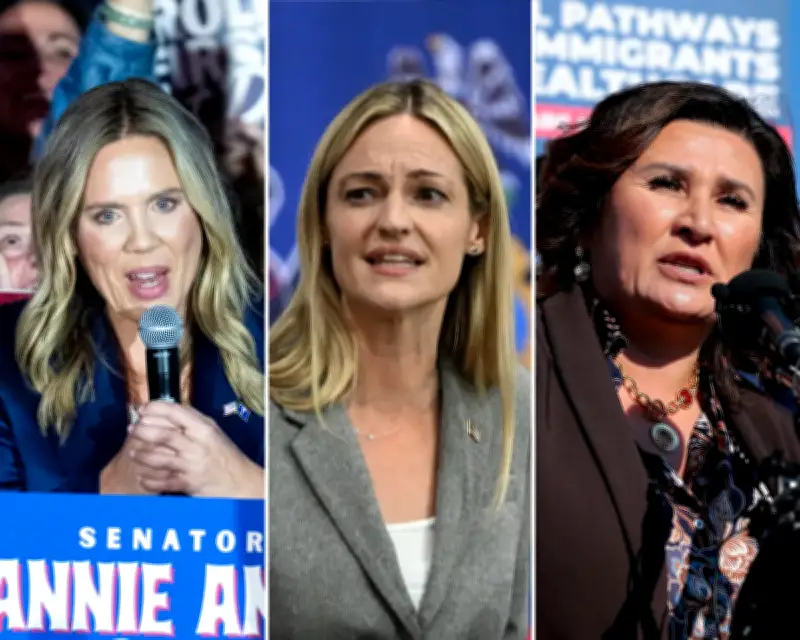
Nearly 550 former volunteers for Moms Demand Action, a group within the Everytown network, ran for office as incumbents or first-time candidates. Among the notable winners are Annie Andrews, South Carolina senator-elect; JoAnna Mendoza, Arizona representative-elect; and Paige Cognetti, Pennsylvania representative-elect.
A Decade of Political Change
This success reflects a nearly decade-long transformation in how gun violence is addressed in politics. Once considered a third-rail issue rarely mentioned on the campaign trail, it has become a central theme for many candidates, most of them Democrats. This shift aligns with public opinion, as more than half of US adults now favor stricter gun laws.
“People are lining up with us because they want this problem to be fixed,” said Angela Ferrell-Zabala, executive director of Moms Demand Action. “They’ve seen us do our work and now it’s expanding and people are getting into office.”
The new elected officials follow a path blazed by figures such as Maxwell Frost, the Florida representative who began his career as organizing director for March for Our Lives, the gun-safety group founded by survivors of the 2018 mass shooting at Marjory Stoneman Douglas high school in Parkland, Florida. Others include Lucy McBath, a Georgia representative and former Moms Demand Action volunteer whose son, Jordan Davis, was shot and killed in 2012, and Abigail Spanberger, Virginia governor, also a former volunteer for the group.
Spending Power Shifts
The financial landscape has also reversed. In previous decades, the National Rifle Association (NRA) outspent gun control groups, mostly to support Republican candidates. Now, according to analysis by the Trace, gun control groups have eclipsed gun rights organizations in spending.
In 2026, Everytown spent $53m on state and federal races, according to Ferrell-Zabala, while pro-second amendment and gun industry organizations spent just under $3m.
One of the candidates Everytown supported was Sandra Jauregui, who was elected Nevada’s lieutenant governor. For Jauregui, gun violence has been a personal issue for nearly a decade. In October 2017, she survived the nation’s deadliest mass shooting at the Route 91 music festival in Las Vegas, where 58 people were killed and nearly 870 were injured. Despite being a member of the Nevada state assembly at the time, she did not publicly discuss the experience until nearly two years later.
“I didn’t want to have to share my story. And then Parkland happened,” she said, referring to the shooting at Marjory Stoneman Douglas high school where 17 students and school administrators were fatally shot. “And these high school students were resilient and strong. They had to deal with the same post-traumatic stress I did, but they weren’t staying silent. So I drew strength from these students.”
After sharing her story in 2019, Jauregui worked with groups such as Everytown to pass new laws, including a ban on bumpstocks, the gun accessory used in the Route 91 shooting, and a red flag law.
Challenges Ahead
“We can’t fight gun violence if we don’t get elected,” Jauregui added. “And I did that by having tough conversations with people who don’t agree with me.”
Having people such as Jauregui in office is especially important, Ferrell-Zabala said. Though homicides have been declining in recent years, guns remain a deeply polarizing topic. Since Donald Trump took office again in 2024, the Bureau of Alcohol, Tobacco, Firearms and Explosives has started rolling back restrictions on transporting guns and accessories. The agency also lost 2.5% in funding, and the administration has eliminated funding for community violence prevention and cut off grants for research.
Making up for lost ground will require newly elected officials to tailor their work to the specific needs of their constituents, especially those who own guns. “Every community needs something different,” Ferrell-Zabala said. “Organizers and people advocating for gun safety already understand how to work across different experiences. They’ll know how to build those relationships. This isn’t a zero-sum game.”