

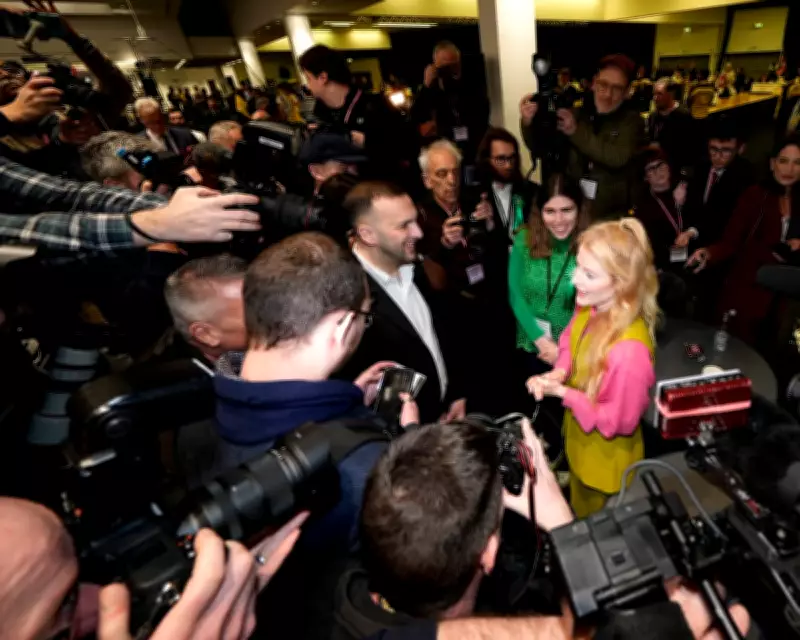
Green Party's Gorton and Denton Byelection Triumph Sends Shockwaves Through Labour
The Green Party's remarkable victory in the Gorton and Denton byelection represents far more than a mere protest vote. It serves as a stark warning signal that Labour's moral language and electoral coalition are now up for grabs, even in what were once considered its safest strongholds. This seismic shift in Manchester politics underscores a profound crisis of confidence in Sir Keir Starmer's leadership and the party's direction.
A Historic Upset in Labour's Birthplace
From a standing start in a Manchester constituency, the Green Party, led by Zack Polanski's team, managed to triple its vote share to capture a seat that had effectively voted Labour in every election but one since 1906 – the very year the Labour Party itself was founded. For Labour to finish third behind Reform UK is not routine midterm turbulence; it is an extraordinary collapse, with the party's vote plummeting by approximately 20 percentage points.
Sir Keir Starmer was abandoned by a broad coalition that included young progressives, working-class former Labour voters, and Muslim communities. With crucial Scottish and Welsh parliamentary elections, as well as English council elections, scheduled for May, this result suggests the political map could be painted in many colours, with very little of it appearing red if current trends continue. Labour's much-vaunted ground game cannot salvage its fortunes if the very ground upon which it stands has shifted irrevocably. The party simply cannot turn out voters who have already decisively tuned out.

The Unexpected Nature of the Green Victory
It was not merely the size of the win that shocked observers, nor the fact that turnout remained as high as it was in the 2024 general election. The Green Party had not even listed Gorton and Denton among its top one hundred target seats. What truly surprised political commentators was the manner in which they achieved this victory.
By selecting Hannah Spencer, a young plumber, as its candidate, the Green Party successfully punctured the longstanding caricature of it as a party of metropolitan radicals. Campaigning relentlessly on issues of affordability and everyday economic concerns, Spencer articulated a message that resonated deeply, sounding reminiscent of Labour before the party lost its moral cadence and connection to ordinary voters. This result stands as a significant narrative success for the Greens, offering tangible proof that they can reach ordinary voters, hold minority communities, and speak Labour's historic language of social justice – despite Sir Keir Starmer's recent attempts to dismiss them as sectarian and extreme.
The Broader Political Landscape Fractures
While national elections present a different challenge, requiring infrastructure and financial resources that the Greens currently lack, the implications of this byelection are profound. If the party cannot replicate this winning formula elsewhere, Gorton and Denton may remain largely symbolic. However, the performance of Reform UK, which captured 29% of the vote in inner Manchester despite Nigel Farage's absence, should set alarm bells ringing loudly in Downing Street. It indicates that the anti-government mood is both broad and deep, and Labour's traditional coalition risks splitting decisively in two.
Beyond the immediate Green surge lies something even larger: the steady fracturing of Britain into a genuine five-party system. The Liberal Democrats and Conservatives were non-factors in this race, both losing their deposits. Yet, the two major parties now find themselves squeezed from multiple directions simultaneously. Under the first-past-the-post electoral system, this dynamic leads to lower winning thresholds, hyper-localised contests, increased tactical voting, and a significantly more unstable and unpredictable electoral landscape.

Leadership and National Brand Weakness Exposed
The fact that Labour can now be replaced in its own historic heartlands by a left-wing party places direct responsibility on Sir Keir Starmer's shoulders. His decision to block the popular Greater Manchester mayor, Andy Burnham, from standing, prioritising his own interests over those of his party, has backfired spectacularly. While it is not certain that Mr. Burnham would have been a shoo-in, given Labour's struggles in national polls and the damaging Mandelson-Epstein revelations, he would have been the clear favourite, polling well with Labour, Reform, and Green voters alike.
However, if Labour now requires a charismatic local candidate merely to hold onto what were once considered safe seats, it suggests a very real and profound weakness in the party's national brand. Clinging to rigid fiscal rules and deadened, managerial rhetoric will not save Labour from this crisis. A mere change of leader means little without a fundamental shift from defensive managerialism to genuine economic optimism and a clear, compelling programme for government.
Under Sir Keir Starmer's leadership, voters cannot discern who benefits from Labour's policies or what tangible improvements would occur. In this policy vacuum, prudence feels like purposeless pain – a sentiment that, as Labour has now discovered to its cost, relentlessly corrodes authority, loyalty, and belief among the electorate it seeks to represent.





