

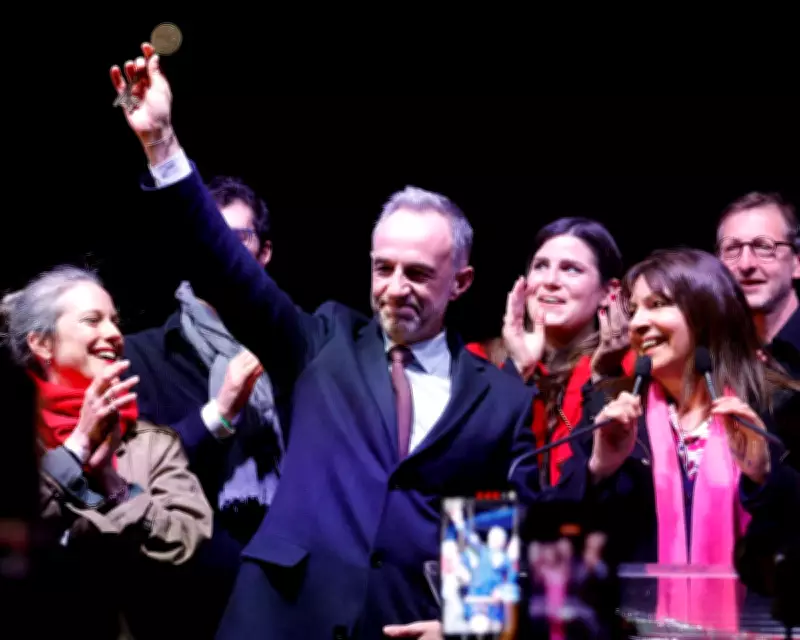
Socialist Victories in Paris and Marseille Offer Blueprint for Left Unity
The second round of France's municipal elections on 22 March delivered a significant outcome, with Socialist candidate Emmanuel Grégoire securing the key to Paris city hall. This victory, achieved at the head of a broad left coalition including Greens and Communists, underscores the potential for progressive forces to reclaim centre-ground voters. However, the political landscape is becoming increasingly complex as Emmanuel Macron's presidency nears its end, leaving a void that both the centre-left and centre-right are scrambling to fill.
Lessons from the Past: The Jospin Legacy and Far-Right Dangers
The shadow of Lionel Jospin, the former Socialist candidate whose death was announced on Monday, looms large over these results. In 2002, divisions on the left allowed Jean-Marie Le Pen to shock France by reaching the presidential run-off. Jospin later emphasised the humiliation as a reminder of the need for unity against the far-right threat. As analysts pore over the local election results for clues to the 2027 presidential contest, where Marine Le Pen believes she can win, it is clear that alliances—or their absence—will be decisive.
In Paris, Grégoire's victory was particularly impressive, given it was achieved against both a united right opposition and the radical left France Unbowed party (LFI) candidate, who refused to stand down. Similarly, in Marseille, Socialist candidates won handsome mayoral victories. Yet, outside major conurbations, progressive outcomes were less stellar. Traditional strongholds like Clermont Ferrand were lost to a mildly resurgent centre-right, highlighting regional disparities.

Far-Right Gains and Conservative Alliances
Marine Le Pen's Rassemblement National party (RN) failed to achieve coveted trophy wins in southern cities such as Marseille and Toulon. However, the success of conservative candidate Éric Ciotti in Nice, who was backed by the RN after calling to "unite the right" ahead of the presidential election, may tempt others to abandon the "republican front" that has historically thwarted far-right ambitions. Le Pen and RN president Jordan Bardella can also point to breakthroughs in smaller towns, indicating growing roots across southern France.
After much talk of deepening polarisation, these results suggest a more nuanced political landscape. While France remains divided and fractious, the demise of Macronism—which hollowed out mainstream parties—offers opportunities. In the country's three biggest cities, Socialists and Greens hold sway, while Les Républicains are reviving in more prosperous towns. Meanwhile, LFI continues to dominate in the banlieues and performs well among university-educated youth.
Looking Ahead to the 2027 Presidential Race
Presidential elections, culminating in a second-round head-to-head, deliver clarity rather than nuance. Given national polls, one of the final two candidates in 2027 is overwhelmingly likely to be Bardella or, if she can overturn a conviction, Le Pen. Keeping either out of the Élysée will depend on Les Républicains holding onto voters tempted by far-right siren calls and the left's capacity to unite around a candidate with broad appeal encompassing the post-Macron centre ground.
Jospin's warnings remain as relevant as ever. Though divisive figure Jean-Luc Mélenchon has outperformed less radical rivals in past presidential contests, he is not the unifying candidate needed. The most significant takeaway from Sunday's polls may be that progressive forces won, and won well, without him, offering a potential blueprint for future electoral success.






