Democratic Triumph in Florida District Signals Potential Political Shift
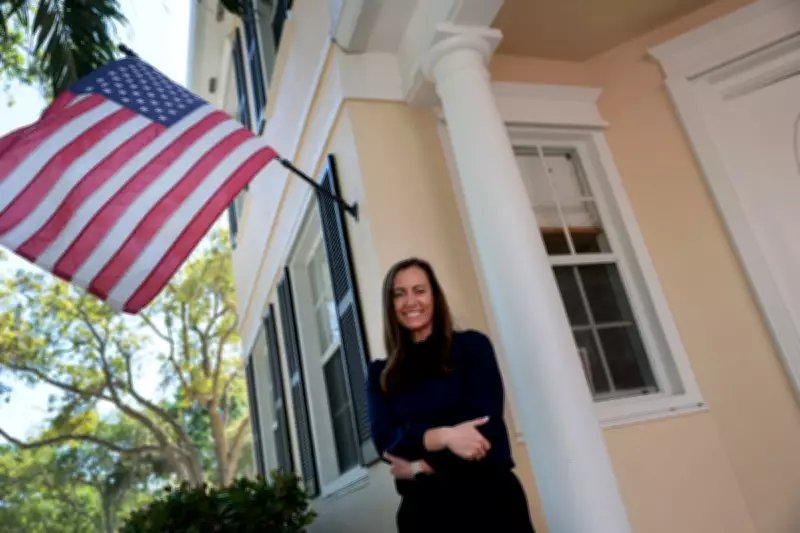
In a surprising political development, Democratic newcomer Emily Gregory secured a narrow victory over her Republican challenger in Florida's 87th state house district on March 25, 2026. The district notably encompasses Donald Trump's Mar-a-Lago estate in Palm Beach County, making the win particularly symbolic for Democrats who have struggled in Florida for nearly a decade.
A Bellwether for Broader Democratic Gains?
Gregory's triumph, coupled with fellow Democrat Brian Nathan's victory in the 14th state senate district byelection, has sparked renewed optimism within Democratic circles about their prospects in the upcoming November midterm elections. These wins represent part of a broader pattern where Democrats have flipped more than two dozen legislative districts nationwide since Trump returned to the White House in January 2025.
The 40-year-old fitness center owner focused her campaign on kitchen-table economic issues, particularly the skyrocketing costs of property insurance and healthcare that have burdened many Floridians. "We're seeing a return to the political center," Gregory explained in the aftermath of her victory. "I've never seen Florida as this fixed, ruby-red state, and we've seen a state legislature that doesn't even attempt to tackle the kitchen table issues facing Floridians."

Florida's Changing Political Landscape
For years, Florida has presented significant challenges for Democrats. No Democratic candidate has won a statewide office since 2018, and Republicans currently hold twenty of Florida's twenty-eight congressional seats. Governor Ron DeSantis has enjoyed supermajorities exceeding sixty percent in both legislative chambers throughout most of his term. Once considered a crucial swing state that voted for Barack Obama, Florida has delivered for Donald Trump in three consecutive presidential elections with expanding margins of victory.
However, recent developments suggest potential cracks in Republican dominance. The election of Miami's first Democratic mayor in twenty-eight years last December, combined with the legislative victories, indicates changing political dynamics. Rick Wilson, a former Republican strategist and Trump critic who co-founded the Lincoln Project, observed: "Florida is a red state, but there couldn't be a better year for Democratic candidates who talk about affordability to run for office and win."
National Implications and Strategic Planning
The Democratic Legislative Campaign Committee (DLCC) is capitalizing on this momentum by targeting hundreds of legislative seats across forty-two state chambers this fall. The committee plans to raise fifty million dollars to fund Democratic campaigns and recently added the legislatures of Arizona and New Hampshire as potential targets for Democratic gains.
An internal DLCC strategy memo from late last year initially limited Democratic ambitions in Florida to reducing Republican supermajorities in both legislative houses. However, Gregory's victory in a district that includes Trump's own estate has prompted reevaluation of what might be possible in the Sunshine State.
Republican Response and Electoral Realities
Republicans have downplayed the significance of these Democratic victories. Danielle Alvarez, a senior adviser at the Republican National Committee, stated: "A low-turnout state house special election is a snapshot of local quirks, candidate dynamics and turnout math. It is not some grand verdict."
Registered Republican voters still outnumber registered Democrats by nearly 1.5 million in Florida, and outside major urban centers like Miami, Orlando, and Tampa, the state remains largely Republican territory. Political science professor Kevin Wagner of Florida Atlantic University cautioned: "You have to be very careful about reading too much into a special election result. The state has trended Republican for the last twenty years, and that isn't likely to be reversed in a single year."

The Independent Voter Factor
The wild card in Florida's political equation remains the state's substantial independent voter population, which now exceeds 3.3 million registered voters. If these independent voters predominantly support Democratic candidates in November, and if Trump's absence from the ballot reduces Republican turnout as occurred in the 2018 and 2022 midterms, Democrats could potentially flip congressional districts and gain additional legislative seats.
Democratic candidate Pia Dandiya, who is seeking to unseat Republican incumbent Brian Mast in Florida's 21st congressional district, expressed optimism about this shifting landscape. "The tide is turning," said the Harvard-educated former high school principal. "There is an appetite for a pragmatic, commonsense Democrat who is committed to delivering results quickly, and our party has an opportunity to write a new chapter for what it means to be a Democrat in Florida."
Economic Discontent as Political Catalyst
A new Reuters/Ipsos poll released last Tuesday found President Trump's approval rating at a new low of thirty-six percent, with only twenty-nine percent of respondents supporting his economic management. This economic dissatisfaction appears to be driving Democratic gains in traditionally Republican areas, with candidates focusing on affordability issues that resonate with voters struggling with inflation and rising living costs.
The Democratic Congressional Campaign Committee has identified specific Republican representatives as vulnerable, including Latina lawmakers Maria Elvira Salazar and Anna Paulina Luna, whose support among Hispanic voters may be eroding due to the administration's immigration policies and failure to control inflation.
As the November midterms approach, Emily Gregory's victory in a district that includes the symbolic heart of Trump's political identity serves as both inspiration for Democrats and a warning for Republicans that even their strongest bastions may not be immune to political change driven by economic concerns and shifting voter priorities.