

Nigel Farage Exposes Deep-Seated Flaws in British Electoral Integrity
For many years, Great Britain has proudly proclaimed the legitimacy and fairness of its elections, with political leaders often boasting of a gold standard electoral system compared to other nations. However, a closer examination reveals that such lofty claims are far from reality. According to Reform UK leader Nigel Farage, the system is not a beacon of decency and integrity but is instead riddled with corruption, intimidation, bribery, and abuse on an epic scale.
Longstanding Concerns Over Electoral Conduct
Farage has long argued that there is something fundamentally wrong with how British elections are conducted. Since 2015, he has highlighted that electoral fraud is commonplace in many cities, particularly in areas with large Pakistani and Kashmiri communities. Despite this, the Electoral Commission has paid little attention, and police involvement has been minimal. Critics have dismissed these claims as sour grapes, while voters have largely remained indifferent—until recently.
The Gorton and Denton by-election in Greater Manchester last month served as a turning point, with evidence of electoral cheating so prevalent and flagrant that it has become irrefutable. The Green Party's victory over Reform UK by 4,000 votes exposed several gaping flaws in procedures that, if not addressed urgently, threaten to turn British elections into a worldwide laughing stock and a national disgrace.

The Scourge of Family Voting
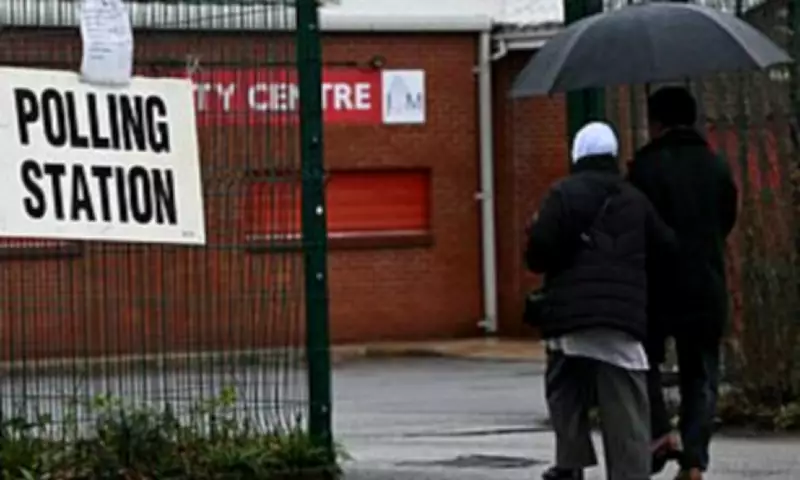
One major issue uncovered is 'family voting,' a practice where someone, typically a dominant male, accompanies a woman into the polling booth to ensure she votes a certain way, blatantly violating the 1872 Ballot Act. According to Democracy Volunteers, an independent group monitoring the by-election, family voting occurred in a staggering 68% of polling stations visited. In the 2024 General Election, they detected it in 116 of 204 constituencies monitored.
Farage condemns this as collective coercion rather than democracy, noting that returning officers present in polling stations failed to intervene or call the police. He accuses the Westminster establishment of ignoring this disturbing trend for fear of being labeled racist, drawing parallels to past failures in addressing Asian grooming gangs in northern cities.
Despite overwhelming evidence, Greater Manchester Police recently announced they found no intent to influence voting, a decision Farage describes as contemptible and indicative of systemic negligence.
Postal Voting: A System Ripe for Abuse
Mass postal voting, introduced by Tony Blair 25 years ago to increase turnout, has transformed elections into a farce, according to Farage. Originally requiring valid reasons like ill health or travel, Labour's 2001 'postal voting on demand' policy allows anyone to apply with minimal checks. This has drastically altered voting patterns: before 2001, proxy and postal votes accounted for about 2% of turnout, but in the 2025 English county council elections, 34% of votes were cast by post.
Farage argues this system is wide open to abuse, with opportunities for undue influence from family members, community figures, or activists undermining ballot secrecy. He cites cases of forged signatures, votes from deceased individuals, and incidents like the 2019 Peterborough by-election, where someone arrived with over 1,000 postal votes in a shopping bag. In Wythenshawe, Greater Manchester, he witnessed a trade union official following a postman to collect votes, highlighting how manipulation and intimidation can easily occur.
The 2015 Tower Hamlets mayoral election, where Lutfur Rahman was removed for vote-rigging and religious intimidation, further illustrates the problem. Despite a five-year ban, Rahman was re-elected in 2022, showing that fundamental changes are lacking.
Commonwealth Voting: An Unjustifiable Anachronism
Another alarming revelation from the by-election is Commonwealth voting, which allows citizens of Commonwealth nations resident in the UK to vote in British elections while retaining political rights in their home countries. Farage argues this is unfair, especially in an era of mass immigration, as it grants a say to individuals who may have recently arrived, with little grasp of English and different priorities.

He points out that in Gorton and Denton, up to 10% of the population was born in Pakistan, suggesting that if only UK-born citizens could vote, Reform UK candidate Matt Goodwin would have won. Farage believes this practice worsens sectarianism, political divisions, and alienation of Jewish communities, calling for its abolition.
A Call for Urgent Reform
Farage asserts that the Gorton and Denton by-election should serve as a wake-up call, urging a serious crackdown on electoral fraud. He proposes ending family voting, scrapping mass postal voting (with allowances only for genuine needs like infirmity or travel), and abolishing Commonwealth voting. This, he argues, would restore election day as a special event and uphold the principle of free, secure, and secret voting—a tradition won through centuries of struggle.
He criticizes both Labour and the Conservatives for benefiting from systemic flaws, with the latter failing to address issues during 14 years in government, and even the Liberal Democrats accused of gaming the system. Farage vows to campaign for fundamental change, warning that without action, trust in British democracy will be permanently poisoned.
In conclusion, Farage emphasizes that Britain once set the global standard for clean elections and must reclaim that status to preserve its proud democratic heritage.





