

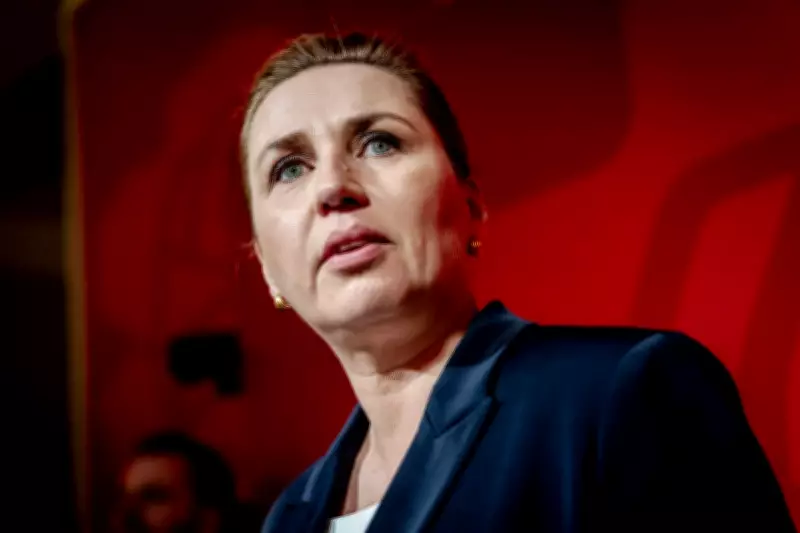
Denmark's parliamentary election has concluded without a decisive outcome, casting significant uncertainty over Prime Minister Mette Frederiksen's political future. The vote, held on Tuesday, failed to deliver a parliamentary majority to either the left-leaning or right-leaning blocs, creating a complex political landscape that will require delicate negotiations.
Election Results Leave Government Formation in Limbo
Official results confirmed that Prime Minister Frederiksen's centre-left Social Democrats, along with her two coalition partners from the outgoing government, lost substantial ground compared to their performance in the 2022 election. The Social Democrats remained Denmark's largest single party with 21.9 percent of the vote, but this represented a significant decline from the 27.5 percent they achieved four years earlier.
The Rise of the Kingmaker
This political stalemate has propelled experienced Foreign Minister Lars Løkke Rasmussen into a pivotal position as potential kingmaker. His centrist Moderate party secured 14 lawmakers in the 179-seat parliament, placing him in a powerful position to determine whether Frederiksen can secure a third term leading this European Union and NATO member nation.

Rasmussen called on political rivals from both sides to moderate their campaign positions and "come and play with us." He emphasized Denmark's position as "a small country of 6 million people in a world of 8 billion, which is in upheaval" and argued that "we are one tribe. We must come together. We must not be divided."
Frederiksen's Bid for Continued Leadership
Prime Minister Frederiksen declared her readiness to continue leading Denmark, stating that "the world is unsettled. There are strong winds around us. Denmark needs a stable government, a competent government. We are ready to take the lead."
The 48-year-old leader compared Tuesday's result with the 25.9 percent her party achieved in 2019 when she first became prime minister, noting that "I have been in charge of this wonderful country for nearly seven years. We have weathered the pandemic; we have had to deal with war. We have been threatened by the American president, and in those nearly seven years, we have seen a four percent decline."
Domestic Issues Dominate Campaign
The election campaign focused primarily on domestic concerns rather than international affairs, despite Frederiksen's recent high-profile handling of tensions with former U.S. President Donald Trump over Greenland. Rising living costs, pension reforms, and potential wealth tax measures emerged as prominent issues that resonated with voters.
Social Democrat lawmaker Morten Klessen acknowledged that while the outgoing government had performed well internationally, "there's been a lot of trouble in Europe and I think our government has had a lot of focus about Ukraine and I think we have lost a little bit in domestic votes for that."
Political Landscape and Constitutional Framework
Denmark's system of proportional representation typically produces coalition governments, traditionally comprising several parties from either the "red bloc" on the left or the "blue bloc" on the right. Frederiksen's outgoing administration was notable as the first in decades to straddle this left-right divide.
Defense Minister Troels Lund Poulsen, the best-placed center-right challenger to Frederiksen, made clear that his Liberal party does not intend to enter government with her Social Democrats again, further complicating potential coalition mathematics.
Greenland's Diminished Role in Campaign
Despite occupying much governmental attention in recent months, Greenland did not emerge as a significant campaign issue due to broad political consensus about its place within the Danish kingdom. Frederiksen had warned in January that an American takeover of Greenland would amount to the end of NATO, but tensions have since subsided.
Following Trump's retreat from threats to impose tariffs on Denmark and other European countries opposing U.S. control of the Arctic island, technical talks began between the United States, Denmark, and Greenland regarding an Arctic security agreement.

Electoral Mechanics and Participation
Denmark's single-chamber parliament, the Folketing, is elected for a four-year term. Of its 179 seats, 175 are held by lawmakers from Denmark proper, while two seats each go to representatives from Greenland and the Faroe Islands, the kingdom's two semiautonomous territories.
More than 4.3 million people were eligible to participate in this democratic exercise, which Frederiksen called several months earlier than required in February, apparently hoping her resolute handling of international crises would bolster her domestic standing.





