

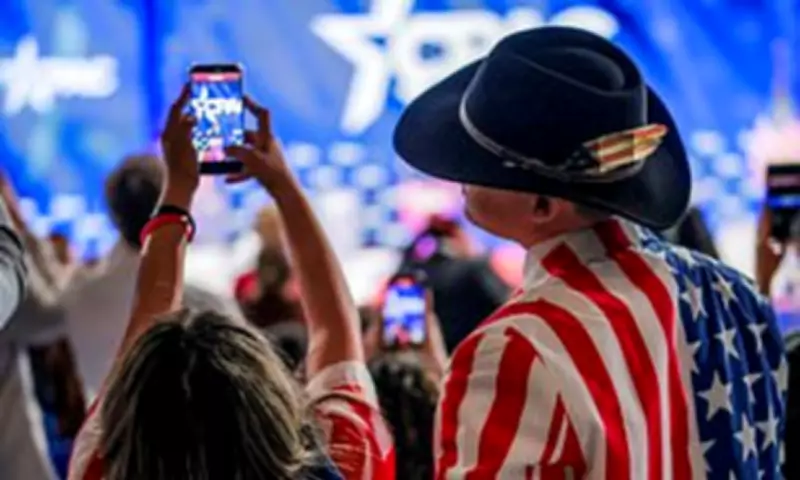
A significant majority of grassroots activists attending this year's Conservative Political Action Conference (CPAC) have signalled their strong preference for Vice President JD Vance as the Republican nominee for president in the 2028 election. The influential annual straw poll, which provides a crucial snapshot of the sentiments among conservative activists, showed a clear lead for Vance, underscoring his enduring appeal within the party's base.
Straw Poll Results Highlight Vance's Dominance
In the detailed results from the CPAC straw poll, an impressive 53 percent of participating activists selected Vice President JD Vance as their favoured candidate for the 2028 presidential nomination. This outcome places him firmly ahead of his closest competitor, Secretary of State Marco Rubio, who garnered 35 percent of the vote. The poll, conducted among attendees at the conference, serves as a vital indicator of the preferences of grassroots conservatives who actively engage in the political process each year.
Rubio's Remarkable Surge in Support
Secretary of State Marco Rubio experienced a substantial increase in support compared to previous years, rising from a mere 3 percent in 2025 to 35 percent in the latest poll. This notable surge is largely attributed to his dedicated work on foreign policy issues under President Donald Trump, which has resonated strongly with conservative activists. Rubio's enhanced standing reflects a growing appreciation for his contributions to the administration's international agenda.

Other Candidates Trail Behind
Further down the list, Florida Governor Ron DeSantis received only 2 percent of the vote, tying with Donald Trump Jr., the son of former President Donald Trump. Governor DeSantis, who has hinted at considering another presidential run after his unsuccessful challenge to Trump in the 2024 primary, did not make an appearance at this year's conference. Additionally, several other prominent figures, including Texas Senator Ted Cruz, Secretary of War Pete Hegseth, Kentucky Senator Rand Paul, and Director of National Intelligence Tulsi Gabbard, each secured just 1 percent of the vote, indicating limited traction among the activist base.
Vance's Previous Performance and Current Standing
Interestingly, Vice President JD Vance, who did not speak at the conference this year, actually saw a decrease in support from the previous year, when he earned 61 percent in the straw poll. Despite this slight dip, his continued dominance in the poll highlights his strong connection with conservative activists and positions him as a frontrunner for the 2028 nomination. The shift in his support levels may reflect evolving dynamics within the party as other candidates gain visibility.
Conference Location and Trump's Absence
This year's CPAC was held at the Gaylord Texan hotel and convention centre in Grapevine, Texas, a suburb of Dallas, marking a departure from its usual venue near Washington, D.C. The change in location did not deter activist participation, with the event drawing significant attention. Notably, former President Donald Trump was absent from the conference, opting instead to spend the weekend at his Mar-a-Lago club as the ongoing conflict in Iran continues to unfold.
Insights from CPAC Leadership
CPAC chairman Matt Schlapp shared his perspective with the Daily Mail, emphasising that any potential successors to President Trump must emulate his approach to engaging with activists. Schlapp stated, 'If you want to follow in Trump's footsteps, you have to have these virtues of being available, being quotable, being interactive with media, being interactive with activists, being interactive with leaders in the community.' This advice underscores the importance of accessibility and media savvy for aspiring Republican leaders, as demonstrated by Trump's own political style.
The straw poll results from CPAC offer a compelling glimpse into the early preferences of conservative activists as they look ahead to the 2028 presidential race. With JD Vance leading the pack and Marco Rubio making significant gains, the political landscape within the Republican Party is shaping up to be highly competitive. As activists continue to voice their opinions, these early indicators will likely influence the strategies and campaigns of potential candidates in the coming years.






