
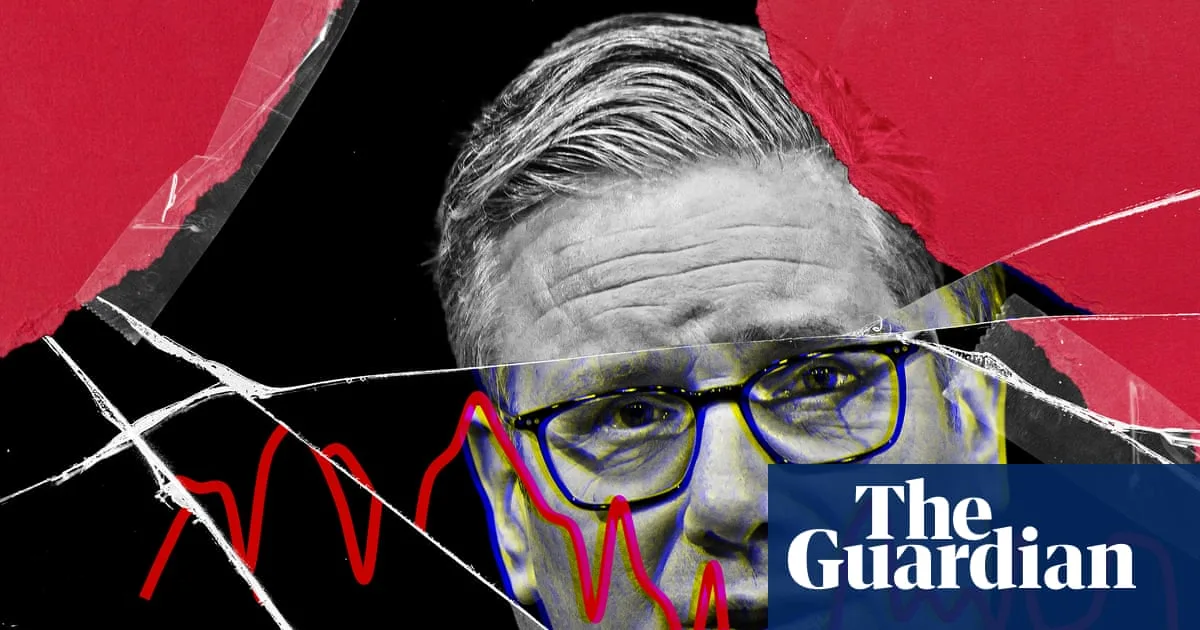
Labour is on course for its worst local election performance in history next Thursday, according to data analysed by the Guardian, piling pressure on Prime Minister Keir Starmer's leadership. Polling indicates Labour's vote share could fall to historic lows across council elections in England and devolved parliaments in Wales and Scotland on 7 May, with Reform UK, the Greens, and nationalist parties making significant gains.
In Wales, Labour's vote share is projected to drop by more than half, potentially pushing the party into third place behind Reform and Plaid Cymru. The party has dominated the Welsh Parliament, the Senedd, since its creation in 1999, making the collapse particularly existential. In Scotland, Labour's long-term decline is expected to continue, with the Scottish National Party likely to retain power in Holyrood and Reform heading for second place.
In England, Labour faces threats from Reform, the Greens, the Liberal Democrats, and independents across 136 council races, including in its strongholds in London and the north. Professor Stephen Fisher of the University of Oxford estimates Labour could lose 1,900 councillors—74% of the seats it currently holds that are up for re-election—which would be the worst local election performance for any prime minister since comparable data began.
Fisher projects Reform will gain 2,260 councillors, tripling its local representation overnight, while the Greens gain 450 and the Liberal Democrats 200. The Conservatives are also set for a net loss of 1,010 councillors, reflecting widespread voter dissatisfaction with the two main parties. Fisher noted that Reform's gains last year were record-breaking, and with an extended polling lead, they could achieve even greater success this year.
A catastrophic result could reignite leadership challenges against Starmer, who has faced pressure over the appointment of Peter Mandelson as US ambassador. While some ministers downplay the risk of removal due to the international crisis over the Iran war, the Guardian's revelation that Mandelson failed vetting for the role has intensified scrutiny. Record-breaking losses would add to concerns within Labour, though Starmer's refusal to involve the UK directly in the Iran war may have temporarily improved his approval ratings.




