
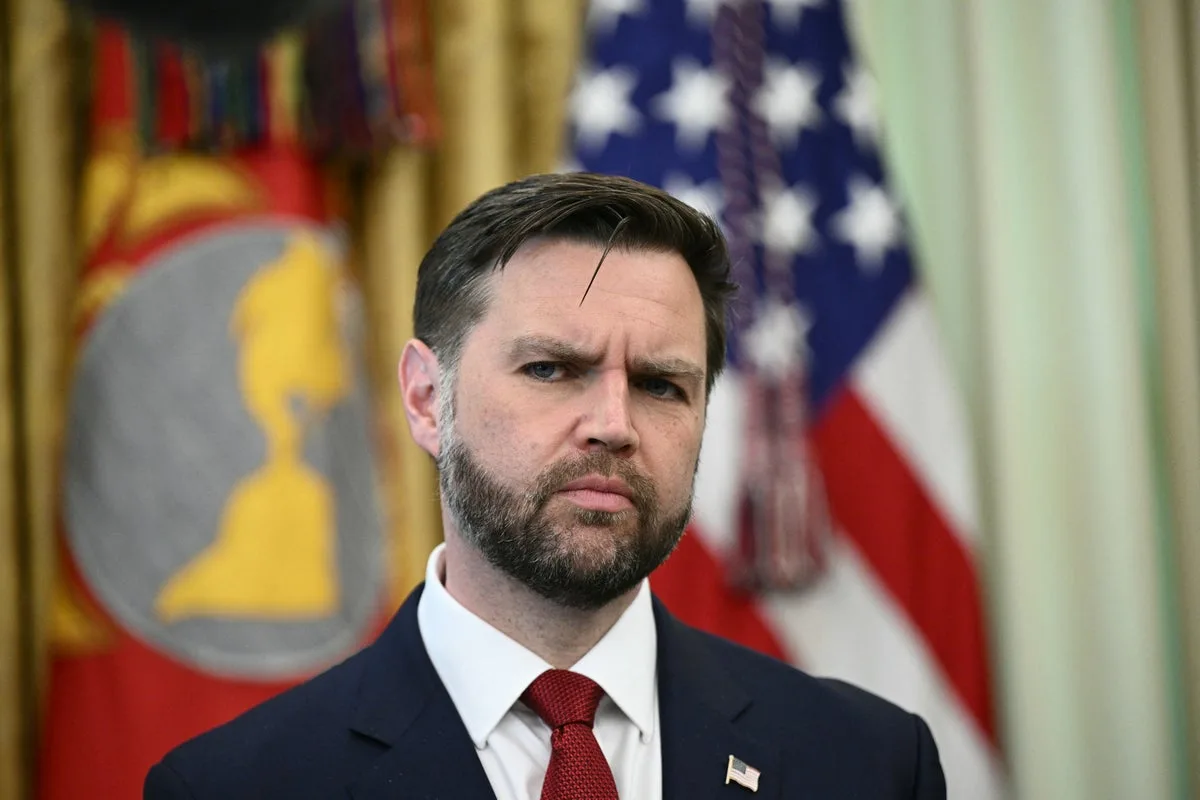
Vice-President JD Vance has reportedly challenged the accuracy of military briefings given to President Donald Trump on the eight-week-old conflict with Iran, amid concerns that the Pentagon is presenting an overly optimistic picture.
According to The Atlantic, Mr Vance has repeatedly questioned whether the glowing accounts of US military performance offered by Defence Secretary Pete Hegseth and General Dan Caine reflect reality. He has raised worries about the depletion of specific missile systems and the potential consequences for future confrontations with China, North Korea or Russia.
The vice-president has reportedly sought to keep his doubts personal rather than accusing Mr Hegseth or General Caine of misleading the president. However, some of his confidantes believe the defence secretary's portrayal has been so positive as to be misleading. Officials suggested Mr Hegseth's upbeat messaging and combative press conferences are tailored to appeal to Mr Trump, with briefings scheduled for 8 a.m. when the president watches Fox News.
Internal intelligence assessments present a starkly different picture, indicating that Iran retains two-thirds of its air force, most of its missile-launching capability and the majority of its small boats used in the Strait of Hormuz. The Center for Strategic and International Studies has estimated that the US has consumed more than half of its stocks of four key munitions.
In response, Pentagon spokesman Sean Parnell said Mr Hegseth and other leaders "consistently provide the president with the complete, unvarnished picture." A White House official said Mr Vance "asks a lot of probing questions about our strategic planning, as do all of the members of the president's national security team."
Mr Vance had reportedly opposed Operation Epic Fury before its launch, but later pledged support while reiterating his belief that the war would bring mass casualties and regional chaos. He has since been dispatched to lead unsuccessful peace negotiations in Islamabad, with Mr Trump joking he would blame the vice-president if a deal failed.




