
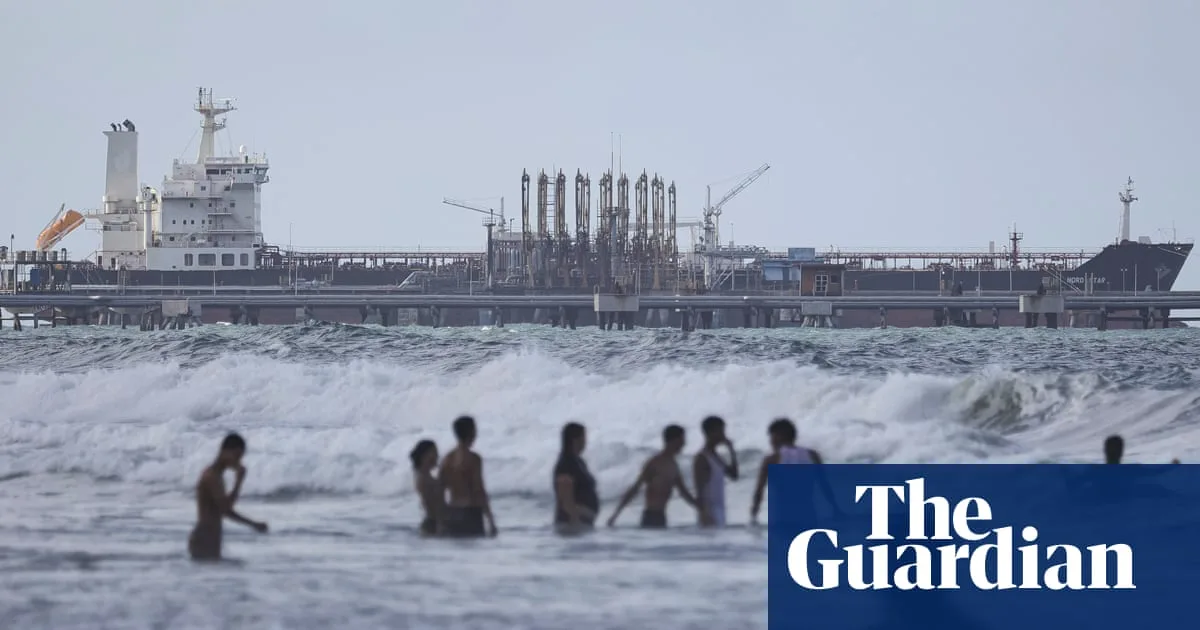
US forces intercepted a second merchant vessel carrying oil off the coast of Venezuela in international waters on Saturday, according to the US Department of Homeland Security. The vessel, believed to be the Panama-flagged Centuries, was stopped east of Barbados in the Caribbean Sea and does not appear on the US list of sanctioned vessels, marking a potential escalation in the American blockade.
The seizure follows the capture of another oil tanker on 10 December, which the White House described as a “sanctioned shadow vessel known for carrying black-market sanctioned oil”. Both tankers were heading to Asia. Homeland Security Secretary Kristi Noem said the US Coast Guard and defence department carried out the operation in a “pre-dawn action”.
“The United States will continue to pursue the illicit movement of sanctioned oil that is used to fund narco-terrorism in the region,” Noem said on social media. “We will find you, and we will stop you.” The Trump administration has suggested that any vessel carrying Venezuelan oil could be subject to the blockade and has been expanding its sanctions list.
The development comes as President Donald Trump has refused to rule out open conflict with Venezuela. In an interview on Friday, Trump told NBC News: “I don’t rule it out, no.” The US has accused Venezuela of illegally taking US oil and energy rights, and on Tuesday Trump ordered a “total and complete” blockade of all sanctioned oil tankers entering and leaving Venezuela.
Venezuelan President Nicolás Maduro has urged his navy to escort oil tankers in defiance of the US fleet. After the first seizure, his government condemned the action as “blatant theft” and “an act of international piracy”. Mexican President Claudia Sheinbaum called on the United Nations to step in and “prevent any bloodshed”.
Since the first seizure, Venezuelan crude exports have fallen sharply. China is the largest buyer of Venezuelan oil, accounting for about 4% of its imports. While the oil market remains well-supplied, analysts warn that a sustained embargo could push prices higher if nearly one million barrels per day of crude are removed from the market.




