
The continuing US-Israel war on Iran has compounded other global disasters to drive record numbers of people into hunger at a time when funding to combat famine has fallen dramatically, the deputy head of the UN World Food Programme (WFP) has said.
The WFP says 363 million people around the world are now at risk of acute hunger, 45 million of them as a result of conflict in the Middle East and the consequent oil price spike. The surge in need comes against the backdrop of a cut in funding last year by a third, with the US, the largest donor by far, cutting its contribution by more than half.
Carl Skau, who will become the WFP’s acting executive director on Monday when Cindy McCain steps down for health reasons, said the huge gap between needs and funding had forced the organisation to cut programmes supporting populations in food emergencies so as to focus on those already facing catastrophic famine. “We take from the hungry to give to the starving. That’s the reality,” Skau told the Guardian. “Much of this is driven by conflict. Last year, we had two famines declared. That hasn’t happened in decades, so these are historic levels of hunger.”
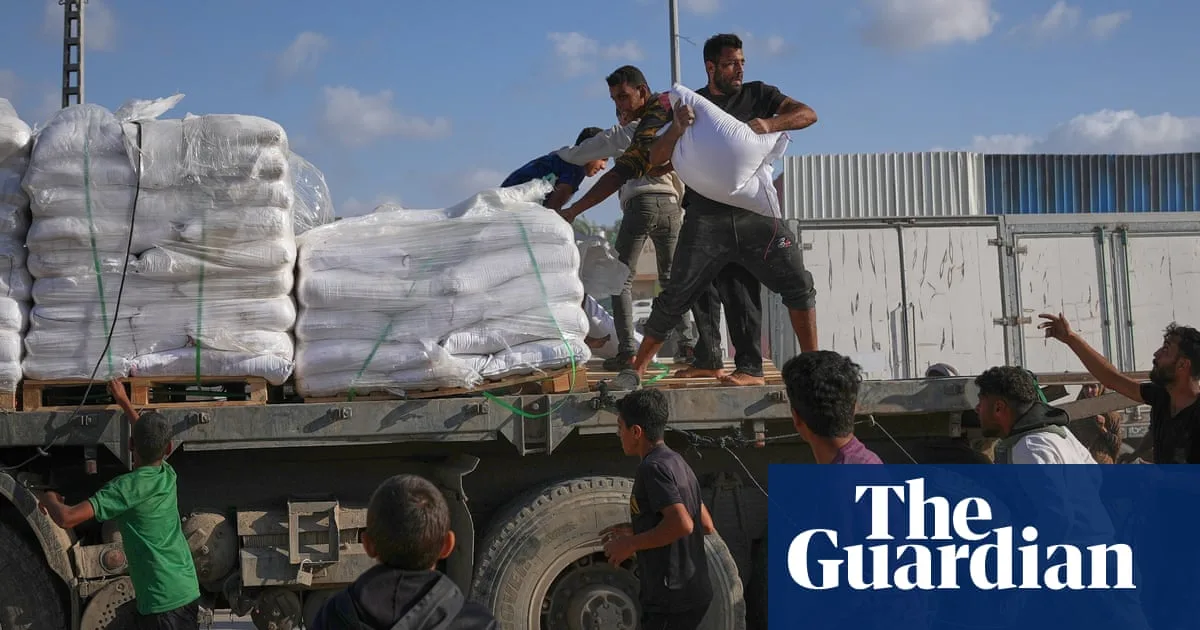
The two famines declared in 2025 were in Gaza and Sudan. The situation in Gaza has improved slightly since the October ceasefire, while Sudan continues to be the world’s worst humanitarian crisis, with pockets of famine persisting in parts of Darfur and South Kordofan.
“On the funding side, we had a drop of nearly 40% year on year,” Skau said, adding that it immediately affected staffing levels, particularly in Afghanistan and Yemen, where the Trump administration has cut off all emergency food funding. “We had to let go of 5,000 people. In Afghanistan, it’s meant we went from supporting 10 million to 2 million. It was a huge, huge drop last year.”
More than 300 million people were already facing acute hunger globally before the US and Israel started a war with Iran in February, which led to Tehran closing the strait of Hormuz and then a US counterblockade on Iranian shipping. The WFP estimated earlier in the Iran war that if oil prices remained above $100, 45 million more people would face acute food shortages. The price of Brent crude fell below that benchmark in mid-May, but only after weeks in March and May when it was well above $100. It still costs 30% more than its prewar average and could rise again.




