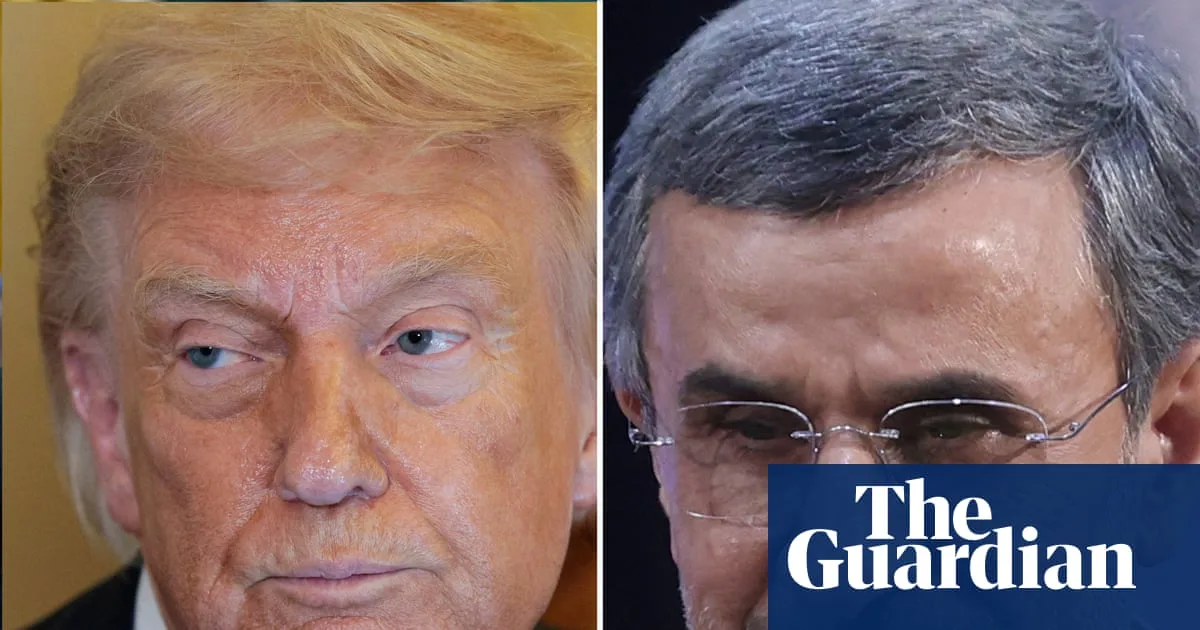
US and Israel Allegedly Sought to Install Ahmadinejad as Iran's Leader
US and Israel Allegedly Sought to Install Ahmadinejad as Leader

Fresh questions have been raised over the US and Israeli effort to depose the Iranian regime after it was claimed that Israel wanted to put the populist Mahmoud Ahmadinejad in power. Ahmadinejad, who served as Iran's president from 2005 to 2013, was known for his incendiary attacks on Israel but later recast himself as a critic of the regime and champion of the poor after falling out with Supreme Leader Ali Khamenei.

Alleged Plot to Free Ahmadinejad

According to a report by the New York Times, Israel bombed a security building close to Ahmadinejad's Tehran home to help him escape house arrest. However, Ahmadinejad reportedly became uneasy about the operation. The plans were widely seen as implausible or as disinformation put out by Ahmadinejad's supporters or Israeli intelligence services. Nevertheless, the episode demonstrates that the US and Israel overestimated opposition to the Iranian regime and their own ability to bring it down with airstrikes.

Trump's Stance and Ongoing Conflict

US President Donald Trump, facing domestic anger over rising gas prices, has been seeking to extricate himself from the conflict but is considering more airstrikes to force Tehran to meet his terms. Trump said on Monday that he had delayed a fresh attack after an intervention by Gulf leaders. However, on Tuesday he held a lengthy phone call with Israel's Prime Minister Benjamin Netanyahu, covering the potential resumption of hostilities. When asked if Israel could be stopped from attacking Iran, Trump told reporters: "Netanyahu will do whatever I want him to do. He's a great guy. To me, he is a great guy." Trump also expressed a desire to see the Strait of Hormuz opened but denied being under pressure, adding: "I am in no hurry. Everyone says 'oh the midterms', I am in no hurry. Ideally I would like to see a few people killed as opposed to a lot. We can do it either way."

Wide Pickt banner — collaborative shopping lists app for Telegram, phone mockup with grocery list

Iran's Position and Counter-Blockade

Tehran, which believes its stranglehold on Western economies is tightening, refuses to agree to Washington's demands on domestic uranium enrichment. It wants to delay negotiations on the future of its nuclear programme and instead focus on lifting sanctions in return for ending its blockade of the Strait of Hormuz. The US has mounted a counter-blockade of Iran's ports in an attempt to stop its oil shipments, which primarily go to China as Iran's single biggest source of export revenue. The Islamic Revolutionary Guard Corps warns they will widen the war beyond the region if Trump resumes his assaults.

Reactions and Skepticism

Iranian media treated the New York Times report with skepticism, stating that the former president had not been under house arrest. At the time of the initial Israeli attacks on Tehran on 28 February, there were reports in Iranian media that Ahmadinejad had been killed in a strike on his home. It later emerged that a security outpost outside his home in Narmak, north-east Tehran, had been hit—an attack confirmed by satellite images. It was speculated that Ahmadinejad would use the mayhem to make a bid for power. In the days following the airstrikes, official news agencies reported that he suffered minor injuries but his bodyguards were killed.

Ahmadinejad's Unlikely Alliance with Netanyahu

Ahmadinejad would be an unlikely ally for Netanyahu due to his Holocaust denial and virulently anti-Israeli policies. Trump had made it clear at the outset of the attacks on Iran that he wanted to follow the model of Venezuela, where US troops captured the country's leader, Nicolás Maduro, but left the regime in Caracas intact. Maduro's deputy, Delcy Rodriguez, is largely cooperating with Washington, but Ahmadinejad's fraught relationship with the regime in Tehran makes a similar arrangement in Iran less likely.

Pickt after-article banner — collaborative shopping lists app with family illustration

Ahmadinejad's Decline and Arrest

Ahmadinejad's authority declined markedly when he fell out with Khamenei in 2011, and a year later, his rival Ali Larijani was elected parliament's speaker. Their disputes centered on ministerial appointments, economic policy, and Ahmadinejad's nationalism, which included the glorification of ancient Iran. He was arrested in 2018 after criticizing the government led by his successor, Hassan Rouhani. He was reported as saying: "Some of the current leaders live detached from the problems and concerns of the people, and do not know anything about the reality of society." Ahmadinejad has been repeatedly blocked from standing again for the presidency, including in 2024. After that, he fell largely silent and issued only the mildest criticism of the Israeli strikes on Iran in 2025.

Recent Activities

In a sign of how far his views have changed, he was reported to have visited pro-Israel Hungary to give a talk last June. It was one of the few foreign trips he has made since ending his presidency, and the visit would have been sanctioned by the government.




