
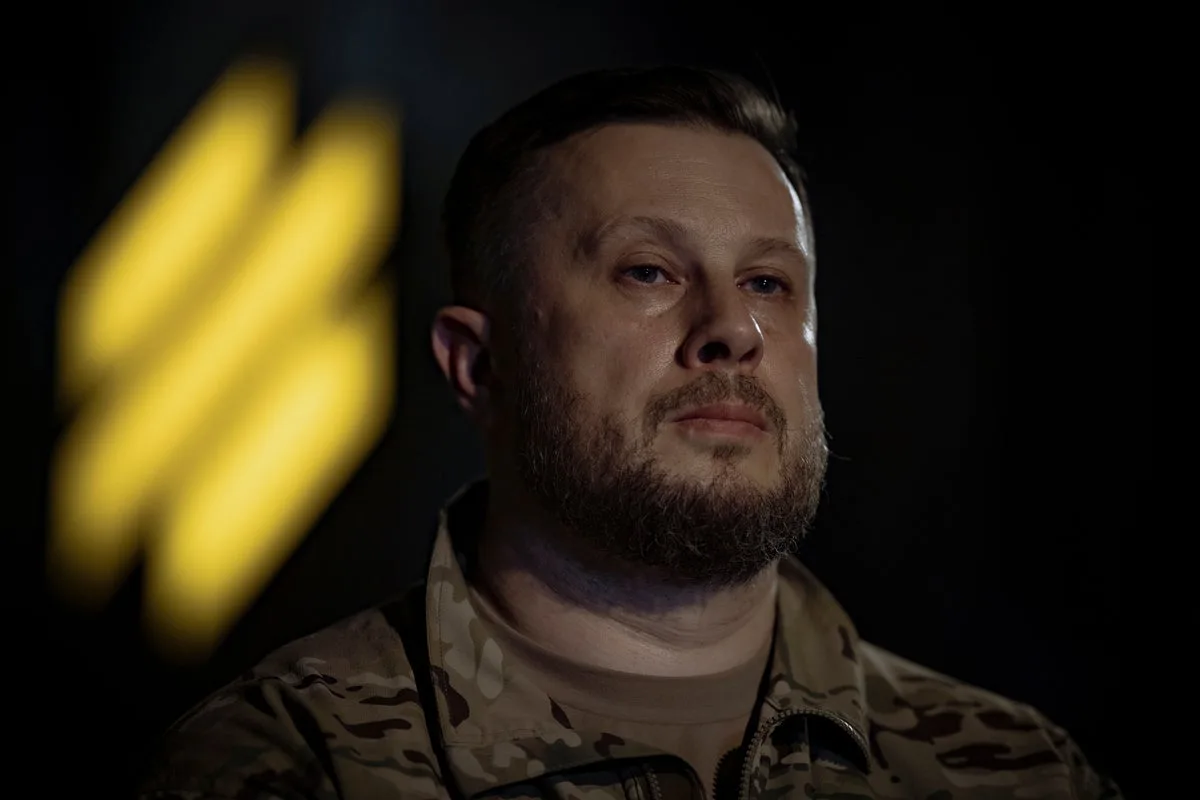
Ukraine faces a critical six-month window to seize the battlefield initiative from Russia and strengthen its position for potential peace negotiations, a senior commander has said, predicting an imminent 'turning point' in the conflict now in its fifth year.
Brigadier General Andriy Biletsky, who commands Ukraine's Third Army Corps, told Reuters in an interview that he believes Russia's military is exhausted and incapable of achieving significant breakthroughs. 'I believe the next six to nine months are a turning point,' he stated from an undisclosed location in the Kharkiv region. 'More precisely, I think the next six are the most critical.'
Should Ukraine's military successfully build and sustain momentum, it could gain the upper hand along the frontline, compelling Russia to abandon its ambitions for the last remaining part of the Donetsk region it does not yet occupy, General Biletsky explained. He added that Ukraine needs to improve its positions and take strategic points to negotiate from a position of strength.
Russia's advances have been complicated by Elon Musk's decision to deny Moscow's forces access to his Starlink satellite internet service, which General Biletsky said had reduced Russian strike capabilities by up to 40 per cent. Concurrently, Kyiv has escalated drone attacks on Russian air defences and logistics, facilitating more long-range strikes inside Russia.
President Volodymyr Zelenskiy claimed last week that Ukraine had retaken nearly 600 square kilometres of territory in 2026, though Reuters could not independently verify this. Moscow currently controls almost one-fifth of Ukrainian territory. John Helin of the Black Bird conflict-analysis group echoed General Biletsky's assessment that fatigue is a problem for Russian forces, while Ukraine's war effort is hampered by a manpower shortage.
General Biletsky, whose forces hold over one-tenth of the total front line, stated that his troops are firmly holding the flank around Sloviansk, forcing Russia into costly head-on attacks. Such assaults have depleted Russian forces and led to heavy losses among field commanders, contributing to what he described as a professional degradation of Moscow's military.




