
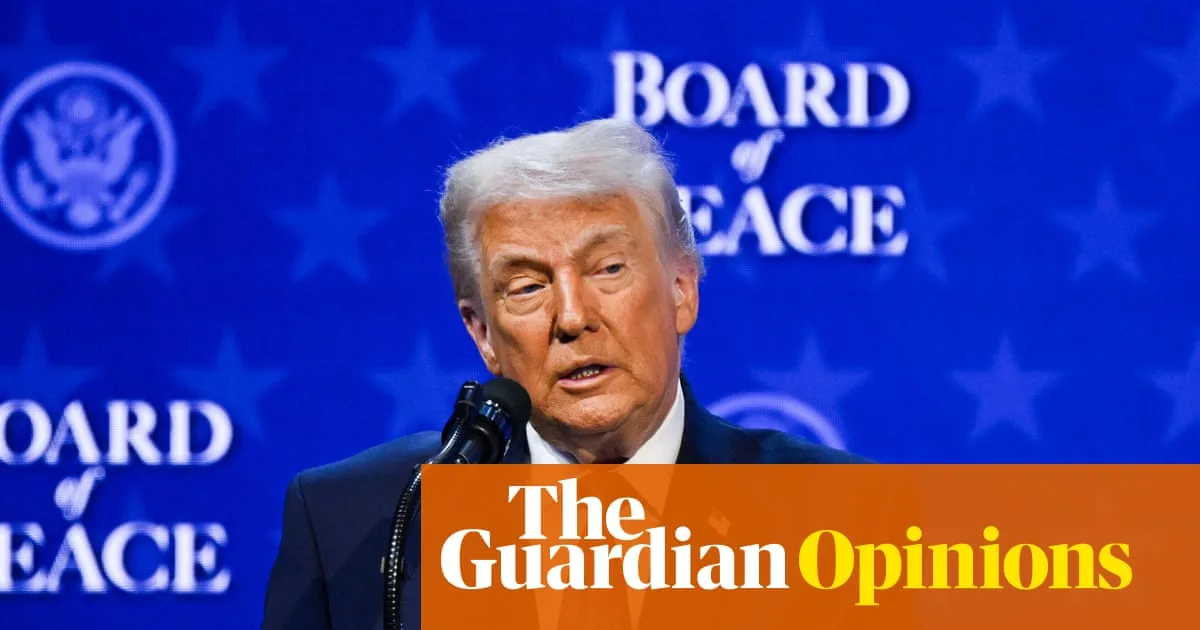
Donald Trump's decision to back down over Greenland, after days of refusing to rule out military force to annex the Arctic island, has been described as a spectacular U-turn. In his Davos speech, the US president repeated his desire to own Greenland, saying that one cannot defend what one does not own, before announcing he would not seize it by force. Hours later, he claimed an unspecified deal had been reached and that he would refrain from imposing additional tariffs on European countries that took part in a joint military exercise in Greenland at Denmark's invitation.
The framework agreement with Nato secretary general Mark Rutte is reported to preserve Greenland's sovereignty within the Kingdom of Denmark, while remaining open to discussion on Arctic security, mineral rights and the status of US bases. The details remain unclear, and the US president's reliability is uncertain. Analysts point to a combination of factors behind the reversal, including unease among Republicans and the American public over attacking an ally, turbulence in global markets, and Mr Rutte's deferential approach.
Writing in a commentary, Nathalie Tocci argues that the market reaction was decisive. She notes that markets did not react strongly to US attacks on Venezuela or threats against Iran, but did react this time because Europe signalled it would not be pushed over. "Europe does have some leverage," she writes. Even the hint of a trade war, she says, "sent shivers through markets, pushing Trump to step back from the brink."
Tocci says Europe's year of "genuflection" to the US president has been a spectacular failure. She lists attempts to appease him, including gifts, royal invitations, golf games, a trade deal, and a pledge to raise defence spending to 5% of GDP. Yet, she argues, Mr Trump has humiliated Ukrainians, mocked Europeans, and refused to pressure Russia. His comment that "no one defends what they don't own" raised doubts about the US commitment to Nato's collective defence clause, Article 5.
The lesson, Tocci concludes, is that strongmen understand only strength. Europeans have stood firm on Greenland, and while conflict has been averted for now, the next crisis is likely to come. The challenge for European leaders is to resist retreating to their "comfort zone of cowardice" and to recognise that only by demonstrating resolve will they command respect from the US president.




