
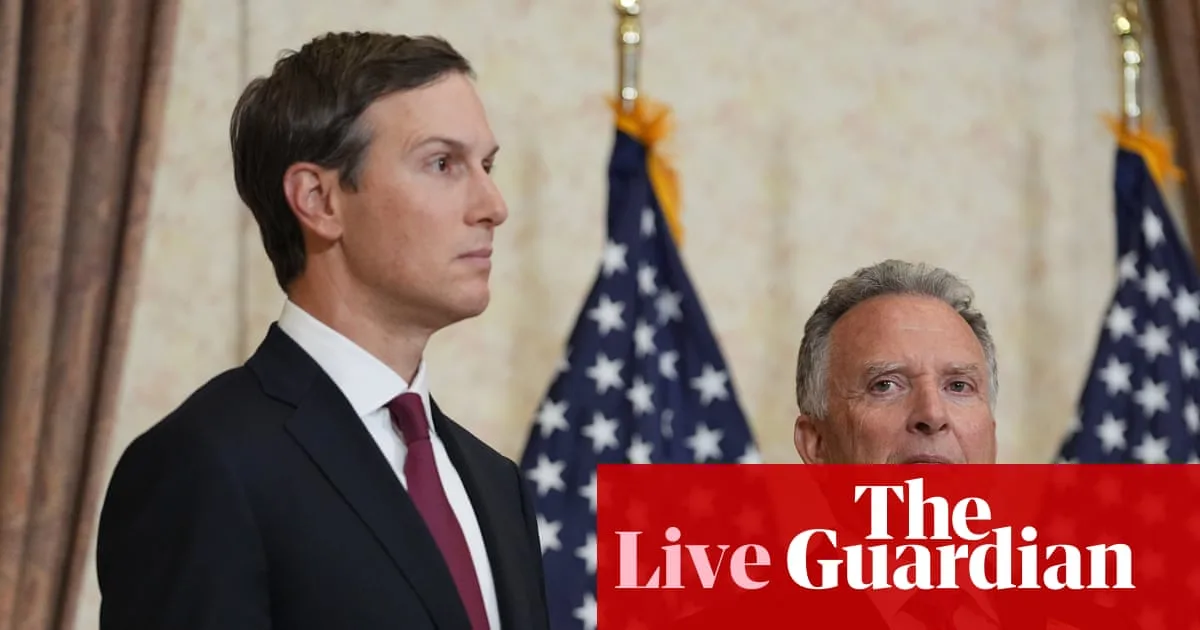
White House special envoy Steve Witkoff and Jared Kushner, President Donald Trump's son-in-law, are to travel to Islamabad on Saturday for talks with Iran's foreign minister, with Pakistan mediating. The White House confirmed the trip, with press secretary Karoline Leavitt telling Fox News: “Everyone will be on standby to fly to Pakistan if necessary, but first, Steve and Jared will be going over there to report back to the president, the vice president and the rest of the team.”
Iranian Foreign Minister Abbas Araqchi is expected in Islamabad on Friday to discuss proposals for restarting peace talks with the United States. While the White House said it had “seen progress” from the Iranian side, Iranian state media rejected claims that Tehran requested the meeting, saying Iran had made no request for talks and had “completely rejected” American demands. President Trump had earlier told Reuters that Iran planned to make an offer that would satisfy US demands, a claim Iran also denied.
International leaders are pressing for a resumption of talks. Russia, the United Arab Emirates and Qatar discussed the Iran ceasefire agreement on Friday. European Council President Antonio Costa said the immediate opening of the Strait of Hormuz without restrictions was “vital” for the world. Meanwhile, a World Food Programme representative warned that 45 million people would face food insecurity and malnutrition if the strait remained blocked. German Chancellor Friedrich Merz called on coalition nations to ease sanctions on Iran as part of a ceasefire deal, but other EU leaders, including the European Commission president, distanced themselves from the proposal as premature.
Elsewhere, Indonesia condemned an Israeli attack in Lebanon that killed a fourth Indonesian peacekeeper, with the foreign ministry announcing the death on Friday. The Israeli military said it killed six Hezbollah fighters during a clash in Lebanon, after Prime Minister Benjamin Netanyahu accused Hezbollah of trying to “sabotage” efforts to reach a peace deal. Human Rights Watch called on Lebanon to join the International Criminal Court after Israeli forces killed Lebanese journalist Amal Khalil and wounded her colleague Zainab Faraj. Iraq's prime minister ordered an investigation into two drones launched from Iraqi territory that attacked Kuwaiti border posts on Friday. US Defence Secretary Pete Hegseth said transit through the Strait of Hormuz was occurring but limited and risky, blaming Iran for threatening vessels.




