Donald Trump's visit to China, aimed at reinforcing America's status as the world's leading technology power, has been overshadowed by a series of technical outages back home that have left the administration scrambling to calm the American public.
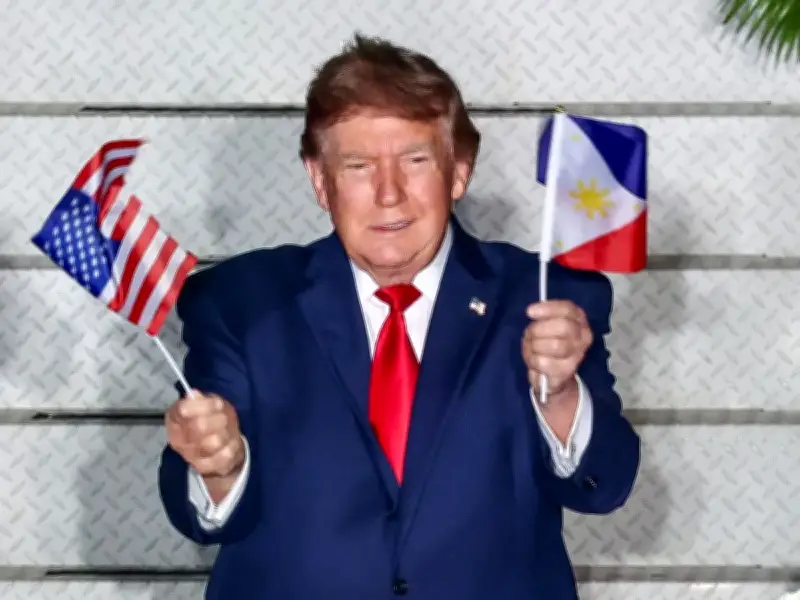
Trump was nonchalant on his first day in Asia about the outages that left people in the United States worried about accessing email, checking bank accounts or safely flying on an airplane. "It's fine," Trump said on Tuesday from the Philippine capital of Manila, suggesting it was all a consequence of being a nation that is "big and powerful."
Outages hit Microsoft, FAA, JPMorgan and NSA
The outages involving Microsoft, the Federal Aviation Administration, JPMorgan Chase and the National Security Agency's communications network are starting to overshadow Trump's visit. They raised the specter that artificial intelligence can disrupt daily life, as new cyber vulnerabilities require software to be constantly upgraded to fix flaws or other security holes, known as patching.
At the start of the second day of Trump's trip, Secretary of State Marco Rubio stepped in to reassure Americans on Trump's behalf. He told reporters there was "zero" evidence that the outages are connected or tied to rival nations, cyber hackers or criminals.
"Sometimes when you are going in to fix your system because you've identified a vulnerability, it creates a short-term disruption," said Rubio, who is also Trump's national security adviser. "That's how it's been described to me in terms of the role" that AI "might have played in it."
Trilateral meeting with Xi and Putin
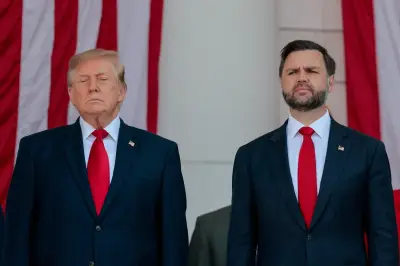
The issues put the administration on the defensive at a moment when the president wants to project strength and certainty at a potentially complicated trilateral meeting in China with President Xi Jinping and Russian leader Vladimir Putin. Trump has signaled he wants an improvised approach during his time in Shenzhen, the tech hub hosting the Asia-Pacific Economic Cooperation summit.
Trump said he plans to talk with Xi and Putin about limiting nuclear weapons and ending the war in Ukraine, which began in 2022 with Russia's invasion. Analysts are not expecting substantive breakthroughs, despite the unprecedented nature of the meeting. Before the trip, Trump's aides had told reporters the war would not be part of the trilateral meeting, but the president said on Tuesday that the deaths of tens of thousands of Russian troops every month had created an opening to resolve the conflict.
"I think it's very close to getting it done," Trump said. "We're going to have a good meeting on that."
Trump also teased the possibility of a private meeting with Putin and a separate sit-down with North Korean leader Kim Jong Un, though neither event has been confirmed beyond his own musings. Rubio clarified on Wednesday that Trump was "serious" about meeting with Kim, but suggested no meeting was scheduled for Thursday. "I'm not telling you that there will be a meeting tomorrow," Rubio said. "I'm just saying that" the president "is willing to meet and discuss, as he did during his first term."
Manila stop and trade deal
The U.S. president started his day in Manila, where he had lunch with President Ferdinand Marcos Jr. at the Malacanang Presidential Palace. Marcos noted he had sent fast food from the Philippine chain Jollibee to the U.S. delegation for a late-night snack Tuesday and complimented Trump for "working very hard."
Trump praised the U.S. bond with the Philippines and the palace's interior decoration. "Our people share common history, common values, common interests, common architectural tastes," Trump said. "I love what you've done here." He said after their meeting that the two nations had reached a trade deal on Wednesday, though he had also said last year that an agreement had been reached. The U.S. trade deficit in goods with the Philippines has risen under Trump, climbing from $4.9 billion in 2024 to $12.8 billion during the first 9 months of this year, according to the Census Bureau.
Trump also had a short reunion with Imelda Marcos, the former first lady and mother of the Philippines' current president. Trump called her "always the most beautiful" and the 97-year-old matriarch appeared to hand him a gift, according to a video posted by the White House.
AI concerns loom over summit
The president departed in the afternoon for Shenzhen, expressing excitement about the arrival ceremony. "I am the guest of President Xi and I hear we're going to have quite a landing," he told reporters. "It's going to be a beautiful thing." Trump will participate on Thursday in the APEC summit and then hold his meeting with Xi and Putin, before returning to the U.S.
The prospect of Trump meeting with two of America's largest geopolitical rivals has been a source of unease as he has been less welcoming of historic allies such as Canada and NATO partners. His tariffs intended to curb China's trade surplus have done little to stop the world's dominant manufacturer, which for the second straight year will have exported $1 trillion more in goods than it imported.
Even without the digital outages, questions about how to handle AI loom over the summit. The technology is viewed as key to faster economic growth, but its rapid development poses national security risks and could evolve beyond human control. Trump's close tech industry ally Jensen Huang was recently removed as CEO of Nvidia after he admitted to an affair with a woman alleged to be an agent of the Chinese government. Beijing has denied she was a spy, yet the affair raised concerns about China's access to Nvidia computer chips to develop its own AI models.
When asked why the U.S. had not been more aggressive in cutting off China's access to advanced computer chips, Trump said there were differences of opinion inside his administration and that "We have a very good relationship with China, and you don't want to insult them." Both Russia and China have provided support to Iran after Trump launched a war there in late February to halt its nuclear weapons development, which has pushed up inflation and slowed global growth as energy prices swung.
Trump has said he intends to talk about the Iran war and reducing nuclear weapons, but does not plan to bring up Taiwan, a self-governing island that China claims. Taiwan is the leading manufacturer of advanced computer chips, including those designed by U.S. companies. Trump expects Xi will push him on Taiwan's sovereignty. "I'm sure he'll raise it," Trump said. "I won't have to raise it."