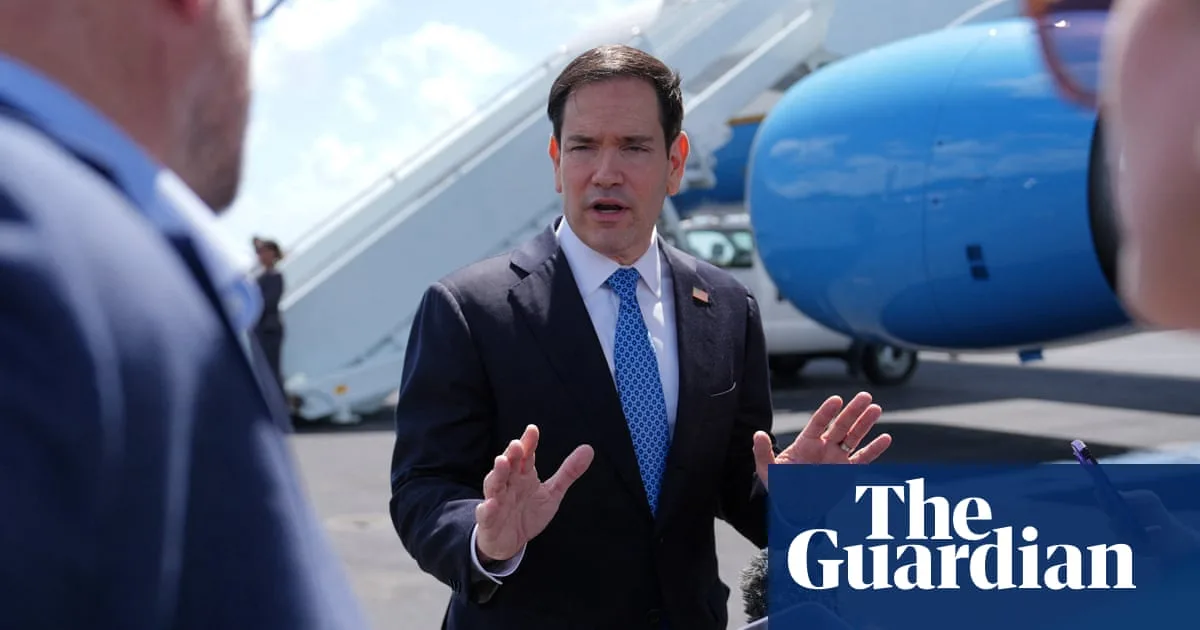
US Secretary of State Marco Rubio has expressed scepticism about reaching a diplomatic resolution with Cuba, as President Donald Trump renews threats of military intervention. Speaking in Miami on Thursday, Rubio said the Trump administration would prefer a negotiated agreement but described the likelihood as 'not high' given the current Cuban leadership.
The comments come a day after the US Department of Justice announced criminal charges against former Cuban leader Raúl Castro, accusing him of ordering the 1996 shooting down of civilian planes operated by Miami-based exiles. The indictment, filed under seal in April, includes charges of murder and destruction of an aircraft. Cuban President Miguel Díaz-Canel condemned the move as a political stunt to 'justify the folly of a military aggression against Cuba'.
Trump told reporters in the Oval Office that other presidents had considered action against Cuba for decades, adding: 'It looks like I’ll be the one that does it. So I would be happy to do it.' Rubio, a long-time hardliner on Cuba, emphasised that the island had been a national security threat due to its ties to US adversaries, and that the administration was 'very serious, very focused'.
The US military has also deployed the USS Nimitz aircraft carrier and accompanying ships to the Caribbean Sea for maritime exercises that began in March. Rubio declined to discuss how the US might enforce the indictment against Castro, who turns 95 next month. The administration has imposed fresh sanctions, including against Grupo de Administración Empresarial SA (Gaesa), a business conglomerate run by the Cuban military.
Rubio dismissed comparisons to nation-building, insisting the actions were aimed at addressing a national security threat. He also confirmed that the sister of Gaesa’s executive president had her green card revoked and was taken into ICE custody, accusing past administrations of allowing 'families of Cuban military elites' to enjoy lavish lifestyles in the US.