
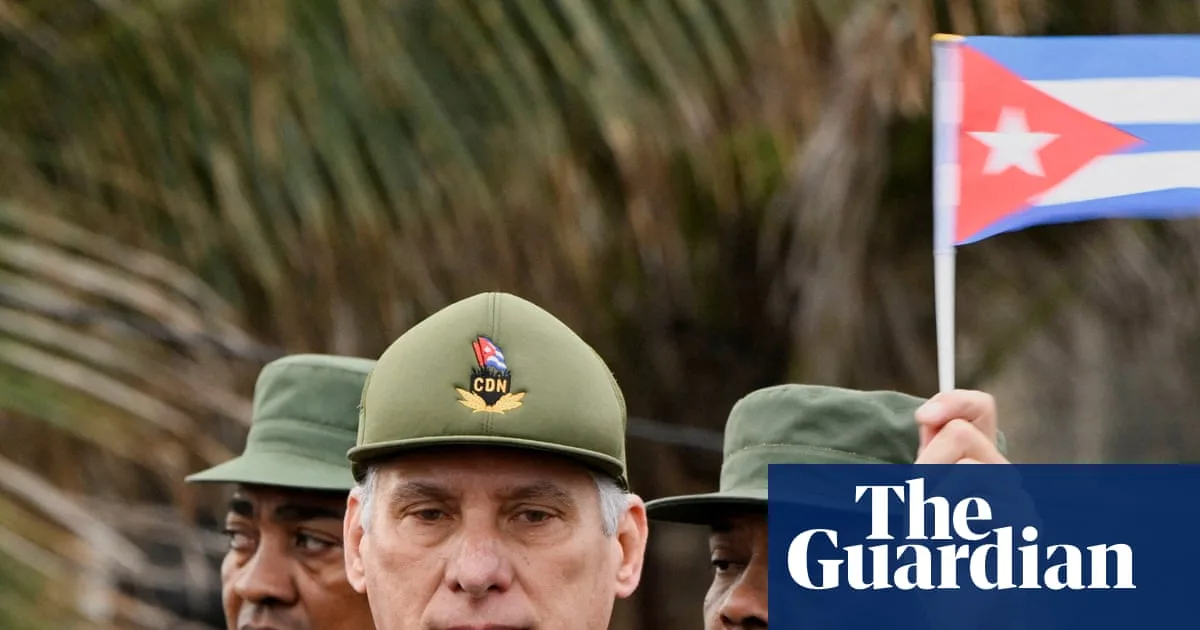
Cuban President Miguel Díaz-Canel has confirmed that officials from his government have held talks with the United States, seeking to address bilateral differences as a punishing US fuel blockade deepens the island’s economic crisis. In a prerecorded statement to senior Communist Party officials, Díaz-Canel said the discussions were aimed at finding solutions through dialogue.
The confirmation comes amid heightened tensions, with US Secretary of State Marco Rubio calling for regime change in Havana and President Donald Trump repeating calls for a 'friendly takeover' of Cuba. Trump has imposed an executive order effectively blockading oil shipments to the Caribbean nation, and Díaz-Canel noted that no fuel has entered Cuba for three months.
The fuel shortage has sparked public frustration, with nightly pan-banging protests and a student sit-in at Havana University. Díaz-Canel’s remarks were also notable for the presence of Raúl Guillermo Rodríguez Castro, the grandson of former President Raúl Castro, who has reportedly met with US officials. Former Cuban ambassador Carlos Alzugaray said this signalled government unity, countering US narratives of panic.
Cuba separately announced it will release 51 prisoners under a Vatican-brokered agreement, though identities remain undisclosed. Michael Bustamante of the University of Miami noted that the number is fewer than the 53 freed during talks with the Obama administration in 2014, and that the conditions of release will be critical. He added that praising Obama-era negotiations could be a misstep given Trump’s disdain for his predecessor.
The US government has not yet responded to Díaz-Canel’s statement.




