
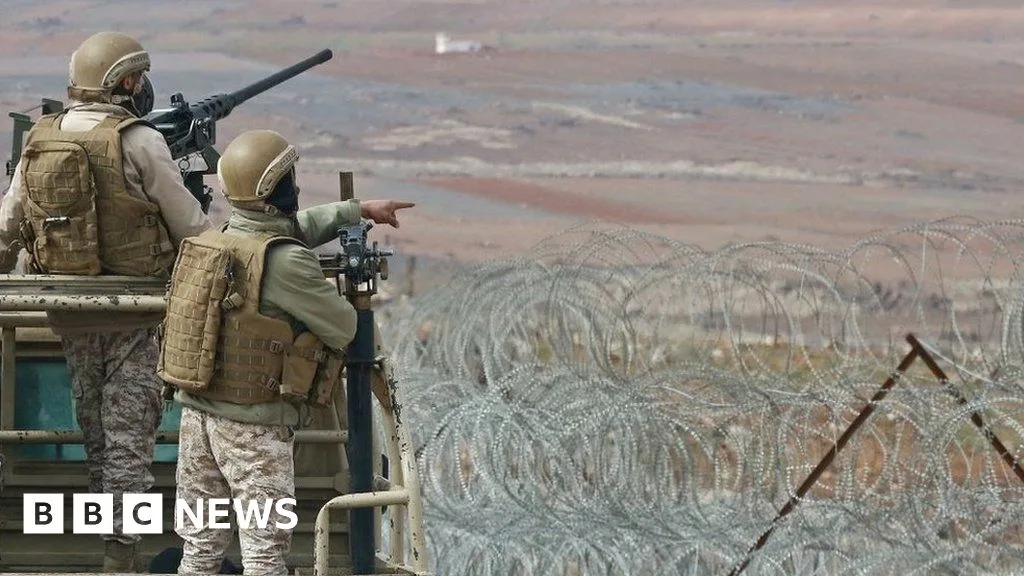
Jordan has reported a sharp increase in the interception of Captagon, a cheap amphetamine manufactured in Syria and Lebanon, as the kingdom's military steps up what one officer calls "an undeclared war" against drug traffickers along its border.
According to Jordanian army figures, more than 17 million Captagon pills and 17,000 packets of hashish have been seized since the start of 2022. That compares with 15.5 million pills intercepted in all of 2021 and 1.4 million in 2020. The drugs are primarily destined for Gulf states, particularly Saudi Arabia, with Jordan serving as a transit route.
The trade has flourished in the aftermath of Syria's decade-long conflict, with the country's economy shattered and international sanctions still in place. Analyst Ian Larson of the Cyprus-based Centre for Operational Analysis and Research (COAR) said production was most pronounced in areas controlled by the Assad regime and its close associates. A 2021 report he authored valued the previous year's Captagon market at about $3.5bn (£2.7bn), based on intercepted quantities. The Syrian government has denied involvement.
The influx has had a devastating impact on communities across the region. At the Al-Rashid Hospital in Amman, medical staff treat patients from Jordan and Gulf states for addiction. "The consequences of taking it are very serious," said consultant psychiatrist Dr Ali al-Qam. "They can include violence and psychosis. It's very addictive as well. People start with one tablet and then increase by two or three, then shift into a more serious drug like crystal meth."
The Jordanian military has responded by changing its rules of engagement, introducing a shoot-to-kill policy after the killing of a soldier. Colonel Zaid al-Dabbas said some 160 armed groups were operating in southern Syria, employing "new tactics, like those of organised crime" and using drones and customised vehicles. On 27 January, the military said 27 traffickers were killed as it foiled a co-ordinated attempt to cross into Jordan at several points; four others have been killed in separate operations. Colonel Mustafa al-Hiyari said: "We're fighting on behalf of other countries in the region and the world at large. Drugs are destroying our families, morals and values."




