
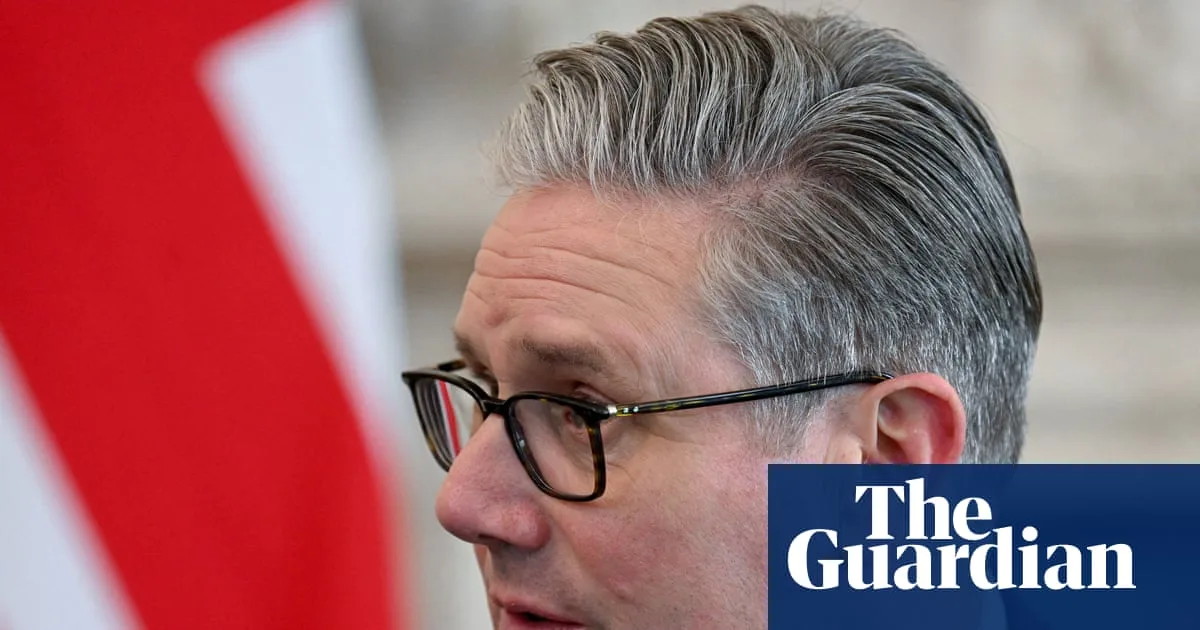
Keir Starmer has insisted that the UK will only authorise the use of British bases by the United States for “defensive” strikes on Iranian military targets, even as Donald Trump threatens to bomb civilian infrastructure. The US president said on Monday that he was “not at all” worried about committing war crimes and warned that “a whole civilisation will die” if Iran ignores American demands.
The UK government has released a summary of its legal position, arguing that it is acting “in the collective self-defence of regional allies who have requested support”. However, the distinction between defensive and offensive operations has been questioned by legal experts, particularly as Trump’s rhetoric has escalated.
Susan Breau, a professor of international law at the Institute of Advanced Legal Studies, said it would be “extremely complicated” for the UK to maintain that distinction given Trump’s stated intention to attack civilian infrastructure. “Trump’s whole battle plan now is to attack civilian infrastructure,” she said. Breau added that allowing the US to use UK bases was the main issue, noting that while she could understand the UK opening its bases after attacks on allies, the changing rules of engagement were problematic.
Victor Kattan, an assistant professor of public international law at the University of Nottingham, said the UK’s existing legal position could still be defended. He argued that while knowingly allowing British planes, missiles or bases to be used for unlawful purposes would itself be unlawful, a “fine but tenable” distinction could be drawn between shooting down rockets aimed at Gulf allies and participating in attacks on bridges, infrastructure or bunkers.
Both experts agreed that the UK would need to keep its legal position under constant review. Breau said the government should reconsider its stance, while Kattan said it was “a given” that the position would be reassessed as the situation evolves.




