
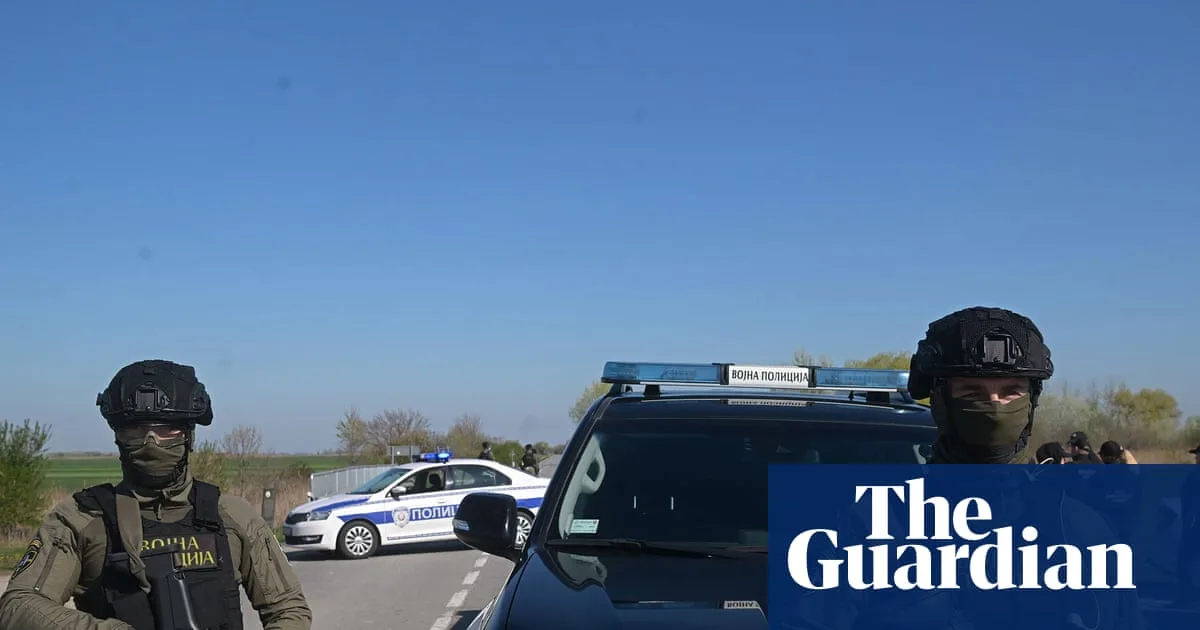
Serbia has announced the discovery of powerful explosives near a pipeline carrying Russian natural gas to Hungary, sparking claims of a possible 'false flag' operation aimed at influencing Hungary's upcoming elections. The incident, which occurred in the northern Serbian municipality of Kanjiža, was reported by Serbian President Aleksandar Vučić to Hungarian Prime Minister Viktor Orbán.
Vučić stated that the Serbian army and police found two backpacks containing 'two large packages of explosives with detonators' just a few hundred metres from the gas pipeline. He described the find as a 'threat to the critical gas infrastructure' that could have 'endangered many lives' and caused significant damage. The origins of the explosives remain undisclosed, though Vučić mentioned 'certain traces' that could not be revealed.
The discovery comes one week before Hungary's parliamentary election, where Orbán's 16-year rule faces a strong challenge from Péter Magyar, a former Fidesz insider now leading the Tisza party. Magyar alleged on social media that he had been warned by multiple sources of a possible incident involving the gas pipeline, potentially orchestrated with Serbian and Russian assistance. He accused Orbán of attempting to 'instil fear in his own people through false-flag operations' to disrupt the election.
Political analysts have echoed these suspicions. Mujtaba Rahman of Eurasia Group described the incident as a 'seemingly convenient threat of terrorist action' designed to whip up fear of military action against Hungary, for which Ukraine would likely be blamed. He noted that EU capitals had been expecting a false-flag operation by Orbán to cite a national security risk as grounds to postpone the election.
Orbán, who has previously accused Ukraine of plotting to disrupt Hungary's energy system, convened an emergency meeting of the country's defence council. Following the meeting, he described the incident as a prepared 'act of sabotage' but stopped short of directly blaming Ukraine. Hungary's foreign minister, Péter Szijjártó, singled out Ukraine, referencing recent disputes over oil and energy blockades, though he did not explicitly accuse Kyiv of the pipeline incident.




