
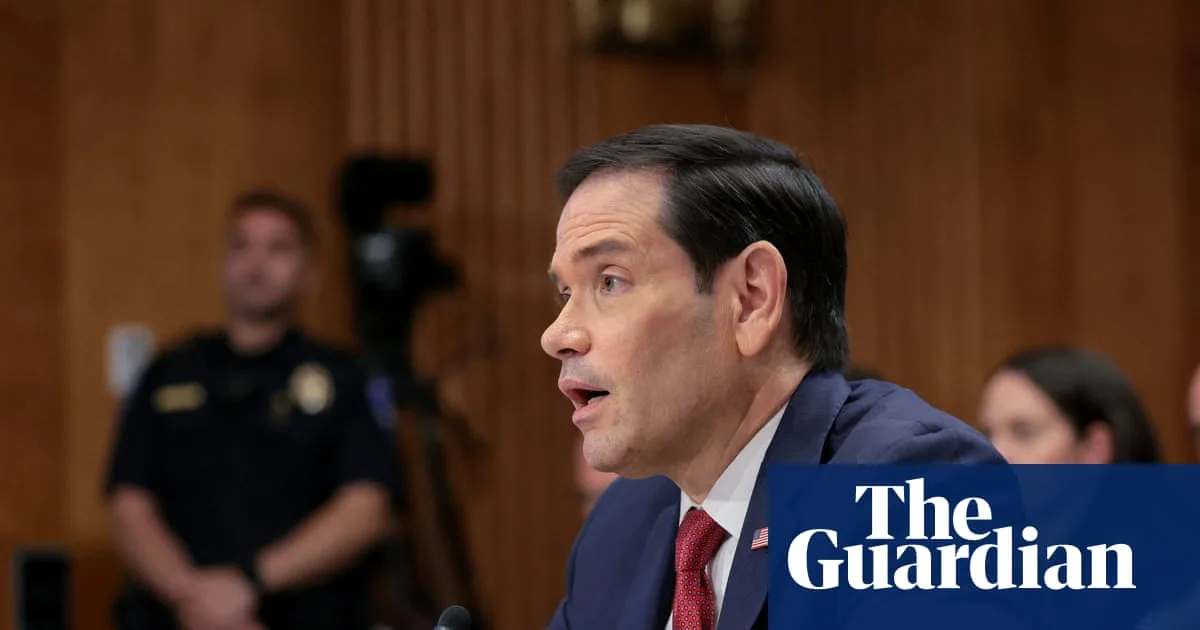
US Secretary of State Marco Rubio has told Congress that Iran has agreed to negotiate aspects of its nuclear programme that it had refused to discuss just a month ago, even as Tehran announced it was halting peace talks. Appearing before the Senate Foreign Relations Committee, Rubio repeated the Trump administration's claim that a deal is within reach, stating progress could happen 'today, tomorrow, or next week'.
Rubio's testimony came a day after Iran's Tasnim News Agency reported that Tehran would stop exchanging messages with Washington through intermediaries, citing Israeli operations in Lebanon as a ceasefire violation. However, President Donald Trump later insisted conversations were 'going on continuously'.
On Iran's military capabilities, Rubio claimed the missile programme had been 'substantially degraded', its launcher capacity reduced, and drone-building capability 'eroded'. He also stated there is 'no Iranian navy', adding it lies at the bottom of the ocean. These claims have been contested; The New York Times reported in May that Iran retained roughly 70% of its prewar missile stockpile.
Rubio outlined a two-phase framework for negotiations. Reopening the Strait of Hormuz is a precondition for talks, requiring Iran to announce it will not charge tolls, remove mines, and commit not to fire on ships. Phase two would require Iran to dispose of its highly enriched uranium stockpile and negotiate severe limitations on enrichment activity.
Rubio ruled out offering sanctions relief simply for reopening the strait, stating any relief is condition-based and tied to Iran's nuclear programme. The US has maintained a counter-blockade on Iranian ports since April, which Rubio said costs Tehran 'hundreds of millions of dollars a day' in lost oil revenue.




