

Pope Leo Issues Forceful Ceasefire Demand After Deadly Iran School Strike
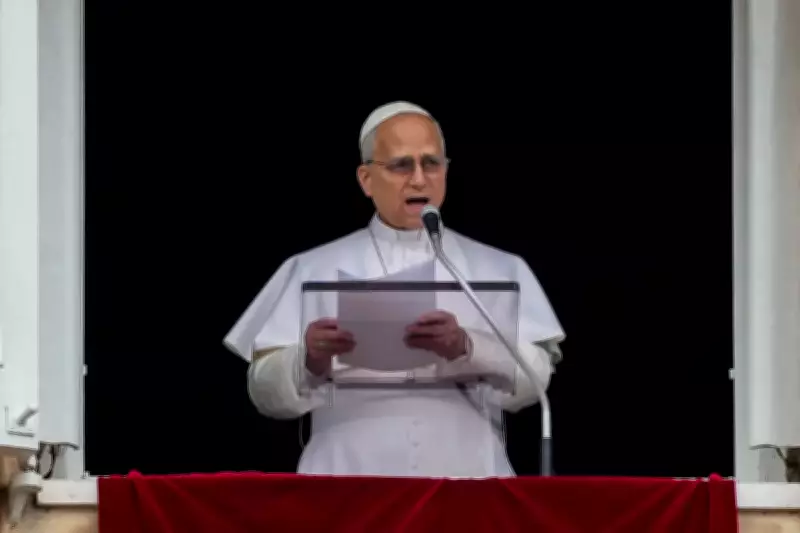
Pope Leo XIV delivered his most powerful and direct appeal for a ceasefire in the Middle East on Sunday, specifically addressing the leaders responsible for the ongoing conflict in Iran. The pontiff made these forceful comments during his Sunday noon blessing, marking a significant escalation in his public statements regarding the war.
Direct Appeal to Conflict Leaders
"On behalf of the Christians of the Middle East and all women and men of good will, I appeal to those responsible for this conflict," declared Pope Leo. "Cease fire so that avenues for dialogue may be reopened. Violence can never lead to the justice, stability, and peace that the people are waiting for."
The Pope's statement contained a clear reference to attacks targeting educational institutions, seemingly alluding to the missile strike on an elementary school in Iran during the war's initial phase. That devastating attack claimed the lives of over 165 individuals, with many victims being children.

Vatican Highlights Humanitarian Tragedy
The Vatican has prominently featured the aftermath of the Minab strike, placing an aerial photograph of the mass grave being prepared for young victims on the front page of its official newspaper, L'Osservatore Romano, on 6 March. The publication carried the stark headline "The Face of War" alongside the disturbing imagery.
Pope Leo expressed solidarity with families affected by attacks that have "hit schools, hospitals and residential centres." He voiced particular concern about the war's impact in Lebanon, where aid organizations are warning of an escalating humanitarian crisis. The Vatican maintains specific concern for Christian communities in southern Lebanon, given their historical role as a bulwark for Christians across the predominantly Muslim region.
Diplomatic Neutrality and Strategic Messaging
Notably, Pope Leo refrained from explicitly naming the United States or Israel during his address, despite being the first US-born pontiff. This approach aligns with the Vatican's long-standing tradition of diplomatic neutrality. For the initial two weeks following the commencement of the US-Israeli conflict, the Pope had limited his public statements to more muted calls for diplomacy and dialogue.
This earlier restraint appeared to be an effort to avoid positioning himself as a political counterweight to former US President Donald Trump. On Friday, during an address to priests attending a Vatican class on confession, Leo suggested the sacrament served as a workshop for restoring unity and peace. He posed a poignant question: "One might well ask: do those Christians who bear grave responsibility in armed conflicts have the humility and courage to make a serious examination of conscience and to go to confession?"
US Cardinals Adopt More Outspoken Positions
While Pope Leo has sought to maintain an indirect and apolitical message to prevent inflaming tensions, some of his US cardinals and the Vatican secretary of state have adopted more confrontational stances:
- Cardinal Robert McElroy, Archbishop of Washington, declared the war morally unjustifiable
- Chicago Cardinal Blase Cupich described as "sickening" the White House's use of video game imagery in its social media communications about the conflict
- Cardinal Pietro Parolin, Vatican Secretary of State, rejected Washington's assertion of a "preventive war" while affirming the Holy See's commitment to open dialogue with all parties
US officials have indicated that outdated intelligence likely led to the school strike in Iran, with an investigation into the incident currently underway. Cardinal Parolin emphasized this week that "The Holy See speaks with everyone, and when necessary we speak also with the Americans, with the Israelis and show them what to us are the solutions."






