The diplomatic spat between Japan and Russia following Vladimir Putin’s visit to an archipelago of disputed islands north of Hokkaido continues to escalate, after Moscow summoned the Japanese ambassador on Tuesday.
On Thursday Sanae Takaichi, Japan’s prime minister, called Putin’s actions “absolutely unacceptable” and Russia’s ambassador in Tokyo was immediately called in for a dressing down. Russia countered that it was Japan making unfounded claims on its territory.
Why the islands matter
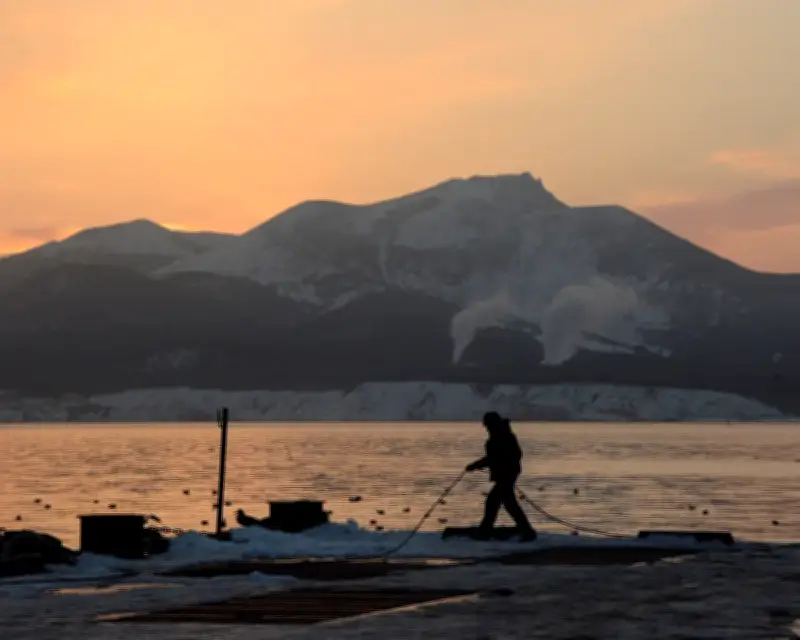
Stretching about 1,200km from the tip of the Kamchatka peninsula in Russia to the north-eastern edge of Hokkaido in Japan, the Kurils are a volcanic archipelago of 56 islands. The southernmost island is less than 4km from Hokkaido.

The disputed territory consists of just the four islands closest to Japan which were seized by the Soviet Union in the dying days of the second world war. Known in Japanese as Hopporyodo, or the Northern Territories, in Russia they are simply referred to as part of the Kurils.
Historical claims
Their history is complex and predates claims from the Japanese and the Russians: they were the indigenous home of the Ainu, whose lands spanned the Kurils, Sakhalin and Hokkaido.
When Japan annexed Hokkaido in 1869, it took control of the four currently disputed isles, though it had already codified its sovereignty in an 1855 treaty with Russia. Another treaty, in 1875, gave Japan the whole Kuril chain in exchange for uncontested Russian control of Sakhalin, an island directly north of Japan.
In the 1951 San Francisco peace treaty to resolve postwar territorial disputes, Japan renounced the Kurils, but maintained the four southernmost islands were part of its territory. The Soviet Union never signed the treaty.
Putin's visit and its symbolism
Putin is only the second Russian leader to visit the islands, with Dmitry Medvedev visiting the islands four times between 2010 and 2015 as either prime minister or president.
But there is political symbolism in Putin – who has effectively held power since 2000 – setting foot on the islands for the first time, with Takaichi saying it would make it “more difficult to restore relations” between the countries.
The late Japanese prime minister Shinzo Abe and the Russian president appeared to be edging towards rapprochement over the islands during the 2010s. But Russian deployment of anti-air missile systems in 2020 and a visit by the current prime minister in 2021 put paid to this.
Japan has hardened its stance since Russia launched its full-scale invasion of Ukraine in 2022, imposing sanctions on Russia.
Strategic and economic value
The disputed territories give access to rich fishing grounds – Japan paid Russia for the right to fish there until agreement broke down in 2022 – and potentially valuable mineral deposits. But they also have strategic and symbolic importance.
Russia has bolstered its military presence on the isles, which sit astride the line between the Sea of Okhotsk and the Pacific Ocean. Control of the islands gives Russia year-round access to the Pacific for its fleet based in Vladivostok, because the strait between the southern islands does not freeze in winter.
Impact on bilateral ties
Bilateral relations have taken a distinct downward turn in recent years. Moscow will have foreseen the almost inevitable reaction of Takaichi, a foreign policy hawk from the right of her party, to Putin’s visit to the islands. And the incident comes hot on the heels of revelations that an extensive Russian spy and military component procurement network was operating mostly unhindered in Japan.
The Northern Territories issue has long been a cause célèbre for Japanese ultra-nationalist groups that protest aggressively outside the Russian embassy in Tokyo. While the Japanese government’s response will be more measured, Takaichi will be under pressure to continue taking a hard line against Moscow.