
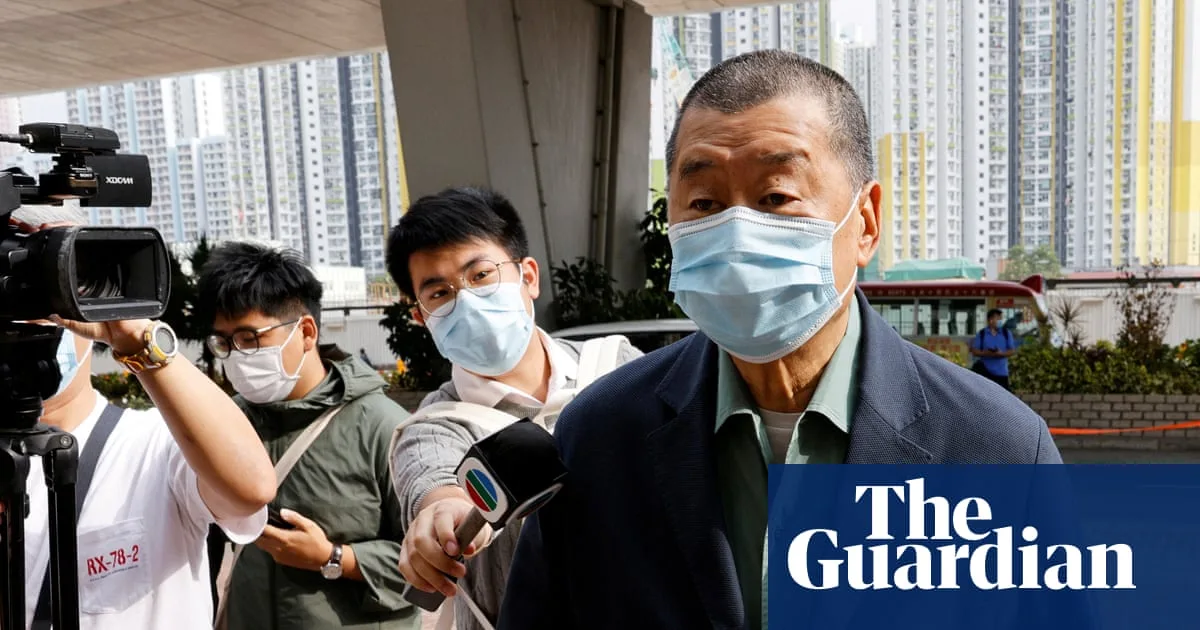
A Hong Kong appellate court has overturned fraud convictions against the media mogul Jimmy Lai, a rare legal victory for the pro-democracy activist who remains in prison under a national security sentence. The 78-year-old, who founded the now-defunct Apple Daily, was convicted in 2022 of two fraud charges linked to lease violations and sentenced to five years and nine months.
The higher court ruled that prosecutors had failed to prove beyond reasonable doubt that Lai and his co-defendant Wong Wai-keung made false representations. A lower court had found they concealed that a consultancy firm controlled by Lai was using office space rented by his media business, imposing a fine of HK$2m. The ruling could slightly reduce Lai's total prison time, as judges in his national security case allowed two years of the fraud sentence to run concurrently.
Lai, a British citizen, was sentenced in November to 20 years for offences under the China-imposed national security law, prompting concerns he may spend the rest of his life behind bars. The UK foreign secretary, Yvette Cooper, has said he was punished for exercising freedom of expression and called for his release on humanitarian grounds. His children have expressed hope that Donald Trump could help secure his release during the US president's visit to Beijing from 31 March to 2 April.
Chinese and Hong Kong authorities have defended the national security sentence, saying it reflected the rule of law and was necessary for the city's stability. Lai's arrest more than five years ago was part of a broader crackdown on activists, and his case has drawn international criticism over press freedom in Hong Kong.
In a separate case on Thursday, a Hong Kong court sentenced the father of wanted activist Anna Kwok to eight months in prison for attempting to withdraw funds from an insurance policy held by his daughter. Kwok Yin-sang, 69, was found guilty of attempting to deal with assets belonging to an “absconder” under the national security law, the first such conviction in the city.
The court heard he tried to withdraw HK$88,609 from an education savings policy he bought when Anna Kwok, who leads the Hong Kong Democracy Council, was a child. Anna Kwok, one of 34 overseas activists wanted by Hong Kong police, called the prosecution “utterly despicable” before the sentence was handed down.




