

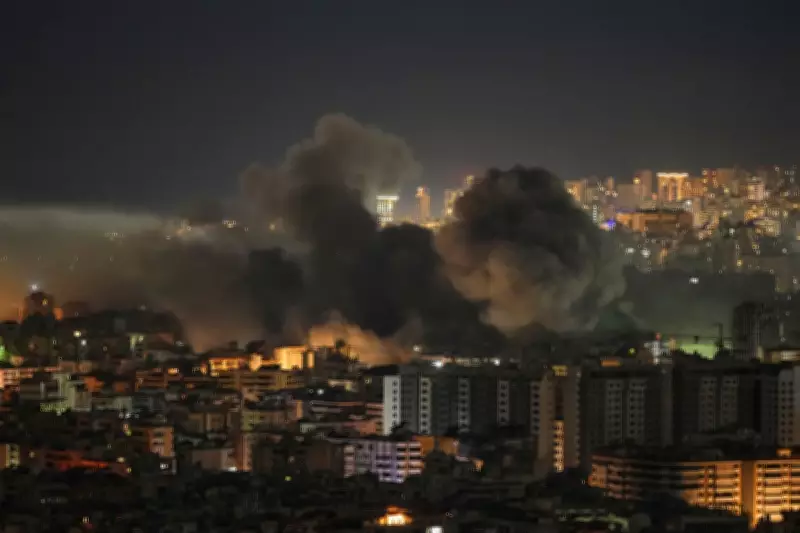
Israeli Airstrikes Intensify Against Iran and Lebanon as US Warns of Dramatic Surge
Israeli airstrikes have pounded the capitals of Iran and Lebanon in a significant escalation of hostilities, while the United States has apparently struck an Iranian drone carrier at sea. This dual-pronged assault intensifies the ongoing campaign targeting the Islamic Republic's fleet of warships, marking a full week of attacks that have rippled across the Middle East.
Retaliatory Strikes and Military Assessments
In response, Iran launched new retaliatory attacks early Friday against neighboring countries that host U.S. forces. Fortunately, there were no immediate reports of casualties from these latest exchanges. The Israeli military has claimed that the fighting has destroyed most of Iran's air defenses and missile launchers, a significant blow to Tehran's military infrastructure.
U.S. Defense Secretary Pete Hegseth issued a stark warning, stating that strikes against Tehran were "about to surge dramatically." This statement underscores the potential for further escalation in the coming days.

Regional Fallout and Economic Impact
Tehran has warned of the destruction of the Middle East's military and economic infrastructure, and the protracted conflict has already rattled global financial markets. The uncertainty surrounding the war's duration and scope continues to fuel economic anxiety internationally.
Saudi Arabia Intercepts Threats
In related developments, Saudi Arabia reported intercepting threats to its airspace. The Saudi Defense Ministry stated it destroyed three drones in the eastern areas of Riyadh and had earlier intercepted a cruise missile over the city of Kharj, highlighting the regional spread of the conflict.
Iran's Internal Political Maneuvering
Amid the external pressure, Iranian state television reported that a leadership council, including President Masoud Pezeshkian and judiciary chief Gholam Hossein Mohseni Ejehi, met to discuss convening the Assembly of Experts. This 88-member clerical panel is responsible for selecting the nation's new supreme leader. The statement provided no timeline for this critical selection, nor details on whether the assembly would meet in person or remotely. Notably, buildings associated with the Assembly of Experts have been attacked during the Israeli-U.S. airstrike campaign.
Gulf States Issue Security Warnings
The conflict has prompted heightened security measures in the Gulf region. Residents of Dubai have received mass text messages, attributed to Dubai police, warning that photographing or sharing information about security sites or posting unreliable information could lead to legal action for compromising national security. Bahrain issued a similar, but reportedly sterner, warning as the war with Iran intensifies.
The United Arab Emirates, a federation including Dubai and Abu Dhabi, maintains strict laws governing expression despite its socially liberal reputation compared to some neighbors, including bans on political parties and labor unions.






