Iran War Delays International Stabilization Force for Gaza
Iran War Delays Gaza Stabilization Force Plans

The international stabilization force promised for Gaza has yet to materialize three months after it was announced at an event hosted by U.S. President Donald Trump. The Iran war has complicated plans, making it difficult for Arab and Muslim leaders to openly cooperate with the United States and Israel.

Force Announcement and Current Stalemate

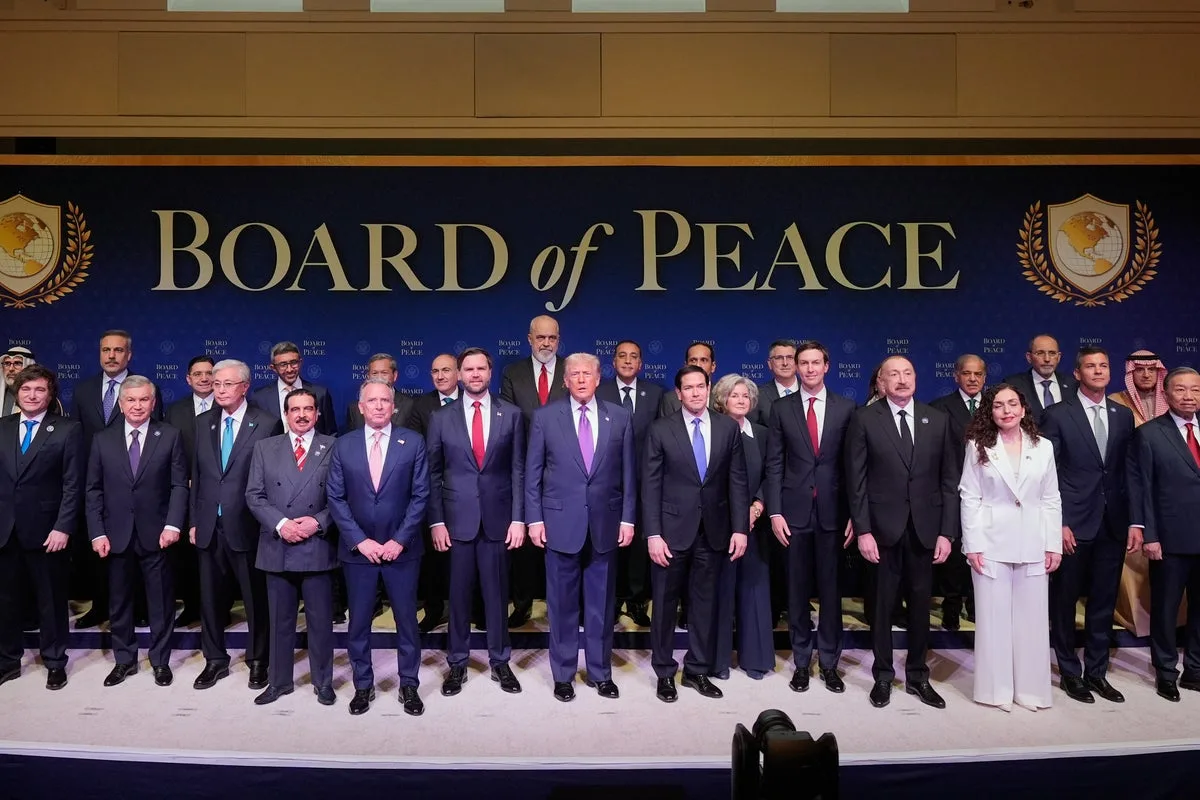
The International Stabilization Force for Gaza was announced with great fanfare at the inaugural meeting of the Board of Peace in February. U.S. Major General Jasper Jeffers, tapped to lead the 20,000-strong force, stated it would ensure “future prosperity and enduring peace” after the devastating Israel-Hamas war. However, three months later, he still has no force to lead, as none of the five countries that pledged troops have made significant contributions.

Efforts to shore up the fragile ceasefire have stalled, with Hamas refusing to disarm and Israel seizing more territory while continuing strikes on militant targets, often killing civilians. The Iran war has further complicated matters, as the resulting global energy crisis has sapped resources.

Wide Pickt banner — collaborative shopping lists app for Telegram, phone mockup with grocery list

Indonesia Indefinitely Holds Troop Commitment

The biggest blow to the planned force came about a week after the U.S. and Israel attacked Iran on February 28, when Indonesia put its commitment of 8,000 troops on indefinite hold. Some 1,000 troops were to have been sent in April, followed by the remainder in June. Indonesia’s pledge was the largest among contributing countries, which also include Morocco, Kazakhstan, Kosovo, and Albania.

Indonesia suspended its plans over what Defense Minister Sjafrie Sjamsoeddin described as a lack of commitment from a distracted Washington. “We have not yet received any implementation guidelines,” he told parliament. “New dynamics have emerged. Because the intensity of the conflict between U.S. and Iranian forces remains very high, the BoP has tended to be left behind. Since the BoP has been left behind, the ISF has also been left behind.”

Domestic Factors Influencing Indonesia’s Decision

Domestic issues may have factored into Indonesia’s decision, according to Muhammad Zulfikar Rakhmat, director of the Indonesia-Middle East/North Africa desk at Jakarta’s Center for Economic and Law Studies. The Iran war is highly unpopular in Indonesia, the most populous Muslim country, and the economy is suffering from soaring prices due to the conflict. There is widespread skepticism of the Board of Peace. “If you talk to the people on the street, I don’t think they believe that the Board of Peace will actually help the people of Gaza,” Rakhmat said. Concerns about sending troops to the Middle East while the economy is faltering also play a role.

Additionally, Indonesia lost four peacekeepers who were part of the United Nations mission in Lebanon during fighting between Israel and Iran-backed Hezbollah, further souring public opinion on international commitments.

Board of Peace Blames Hamas for Stalled Ceasefire

The U.S. military’s Central Command declined to comment or make Jeffers available for an interview, referring queries to the Board of Peace. Board of Peace spokesman Brad Klapper also declined to comment on Indonesia’s decision or the force’s future, instead pointing to remarks made at the U.N. by Nickolay Mladenov, a former Bulgarian defense minister appointed by Trump as director of the Board of Peace.

Mladenov stated that the international force would not begin operations until a second phase of the ceasefire is agreed and implemented, requiring Hamas to disarm and Israel to begin withdrawal. Israeli troops currently control about 60% of Gaza. Mladenov blamed the deadlock on Hamas, calling disarmament “non-negotiable” and saying it holds up progress on other fronts. “You cannot build a future with armed groups running the streets, hiding in tunnels and stockpiling weapons,” he said in Jerusalem this month. “You cannot deliver reconstruction with militias on every corner.”

Pickt after-article banner — collaborative shopping lists app with family illustration

Hamas Blames Delays on Israel

Hamas accuses Israel of repeatedly violating the ceasefire, holding up further implementation, and claims Mladenov is siding with Israel. Israeli strikes have killed more than 880 Palestinians since the ceasefire, according to local health officials. Israel says it is responding to truce violations. Hamas is also demanding Israel withdraw from areas seized since the ceasefire began, according to an Egyptian official with knowledge of the discussions. Egypt has long served as a mediator with Hamas. Many countries that pledged forces refuse to send troops without a deal on Hamas disarming, the official said.

Token Forces Committed, None on the Ground

Kazakhstan stated its support would be limited to “the humanitarian component,” including medical units with a field hospital. Its Foreign Ministry did not respond to a request for comment. Albania’s Defense Ministry declined to comment on its troop commitment, calling it a “dynamic and ongoing process.” Earlier this month, Chief of Staff Lt. Gen. Arben Kingji told reporters that while the military had “participated in reconnaissance activities,” no troops had been sent. Only a few would be dispatched as part of the stabilization force headquarters, without specific numbers, and further contributions would be considered.

Kosovo, expected to send 20 troops, said in April it was in the “final phase of preparations.” The Defense Ministry did not reply to a request for an update. Morocco’s Foreign Ministry also did not reply. At the Board of Peace inaugural meeting, Foreign Minister Nasser Bourita said Morocco would deploy “high-level military officers to the joint military command of the ISF.”

Indonesian Turnaround Not Ruled Out

Despite delays, Rakhmat said it is too early to rule out eventual Indonesian participation. President Prabowo Subianto, a former army general keen to raise Indonesia’s global profile and avoid jeopardizing economic ties with the U.S., may still contribute. “Prabowo wants to strengthen ties to Washington and sign different agreements with the U.S., so to completely withdraw and completely cancel the plan, I don't think it's on the table,” Rakhmat said.

Associated Press reporters Samy Magdy in Cairo, Edna Tarigan in Jakarta, Yuras Karmanau in Tallinn, Estonia, Akram Oubachir in Casablanca, Morocco, and Zana Cimili in Pristina, Kosovo, contributed.



