
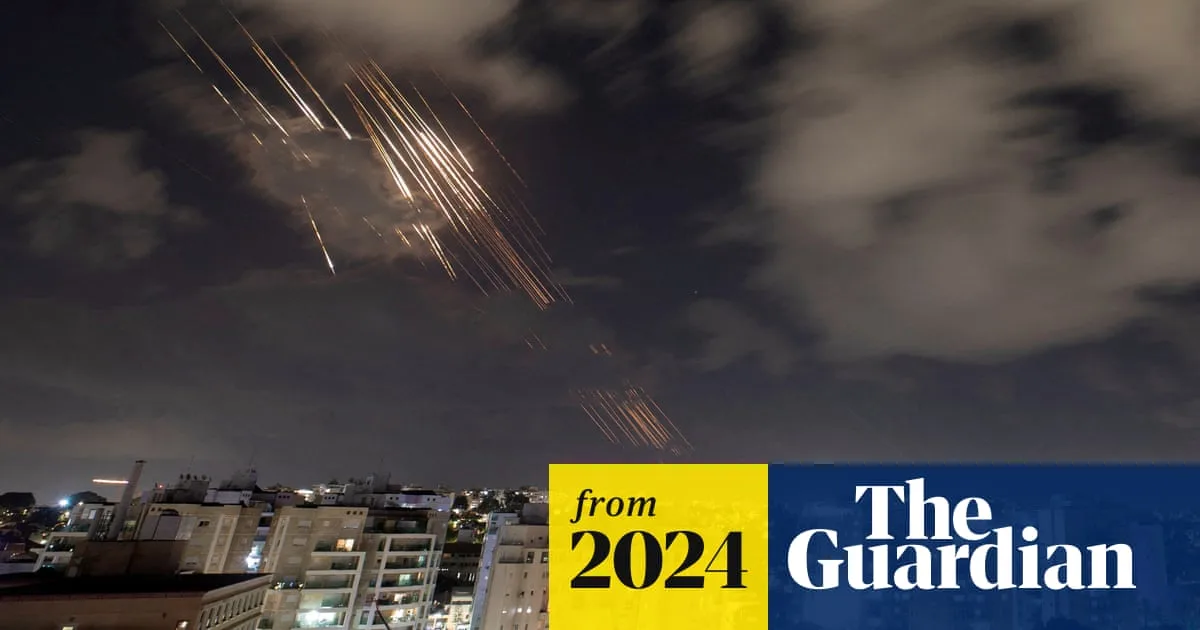
Israel has vowed to retaliate after Iran launched more than 180 ballistic missiles at targets across the country in a dramatic escalation of the ongoing conflict. Prime Minister Benjamin Netanyahu told his security cabinet late on Tuesday that 'Iran made a big mistake tonight – and it will pay for it,' adding that the regime in Tehran does not understand Israel's determination to defend itself.
The unprecedented Iranian salvo came less than 24 hours after Netanyahu ordered the largest ground incursion into southern Lebanon in a generation. Air sirens sounded across Israel as the missiles, many intercepted by Israeli air defences, streaked across the night sky. In the early hours of Wednesday, at least five Israeli strikes hit Beirut's southern suburbs, targeting Hezbollah sites.
Iran said it launched the missiles at three Israeli military bases as retaliation for Israeli strikes against its proxy Hezbollah, including the killing of Hezbollah leader Hassan Nasrallah on Friday. Iran's president, Masoud Pezeshkian, hailed the attack as 'a decisive response to the aggression of the Zionist regime.'
World leaders called for restraint, with UN Secretary General António Guterres condemning 'escalation after escalation.' French President Emmanuel Macron condemned Iran's attack and called on Israel to end its military operations in Lebanon 'as soon as possible.' The US also warned Iran would face consequences, raising the spectre of a direct confrontation between Tehran and Washington.




