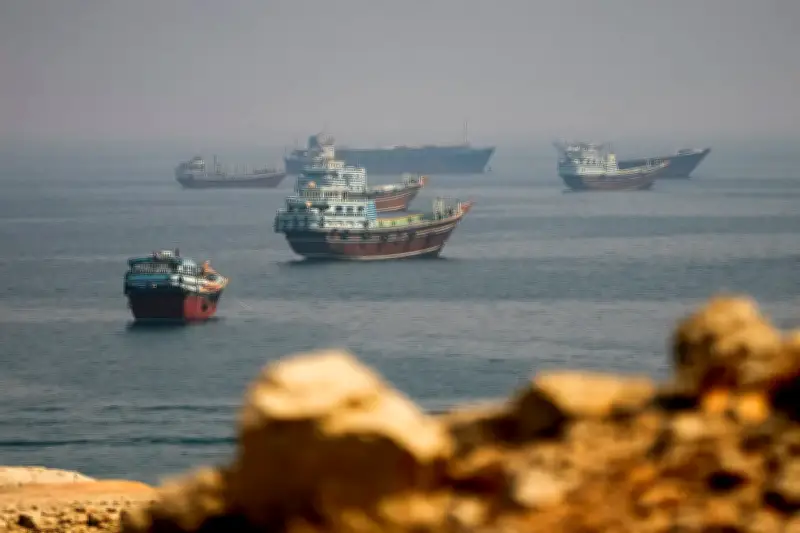
Iran has said it told Donald Trump it is willing to open the strait of Hormuz in six days and start talks on its nuclear program the day after, provided the US lifts sanctions on Iran's oil exports, ends the war on all fronts – including in Lebanon – and releases some of Iran's frozen assets.
Proposal accelerates June memorandum
The proposal is designed to accelerate steps first laid down in the memorandum of understanding signed by the US and Iran in June, particularly by helping talks on Iran's nuclear program start much more quickly than previously agreed. Iran says a deal on the temporary route through the strait of Hormuz has been agreed with Oman, describing it as a done deal, and is ready to register the details with the International Maritime Organisation.
Abbas Araghchi, the Iranian foreign minister, said he was waiting to hear a response from the Americans to the proposal. He added that he had consulted on the plan with China, which fully supported it. Saudi Arabia had been expected to endorse the Oman-Iran route through the strait last week, but pulled back partly due to anger that Iranian-backed Houthis had started attacking Saudi Arabia as part of their dispute over the future of Yemen.
Araghchi awaits US response in New York
Iran claims it has urged the Houthis to cease the attacks on Saudi Arabia but that it does not have control over Houthi decision-making. Araghchi, speaking to reporters in New York, said: “We have introduced a plan to the US through the mediators that if certain conditions are met, the strait will be open within seven days and talks will start.” He said the Iranian preconditions were not new and were contained in the Islamabad memorandum of understanding signed by Trump.
The advantage of the proposal, apart from opening the strait and lifting the chokehold on the world economy, would be bringing the US to talks on Iran's nuclear program much more quickly. Talks under the MoU would not have started for 60 days. Araghchi said he was staying in New York over the weekend to await an American response, but added he was not in a hurry.
Concerns over Israel and Saudi hurdles
Privately, Iranian officials believe they could reach a deal with the Americans, and the Saudi hurdle over aspects of the route could be overcome, but fear Israel will use its influence to pull the US president away from the proposal. Araghchi added he would like the deal to go through before the midterm elections, by which he meant the strait could be opened and energy prices reduced, something Trump badly needs for the Republican party to survive a political mauling.
For the US, there are difficulties related to forcing Israel to end the war in Lebanon. Israel may object to giving Iran such clear control over the route through which ships would travel through the strait. Iran also wants to retain control of shipping to prevent some US military shipping going through the strait. Issues such as whether tolls or navigational fees could be imposed by littoral states Oman and Iran would be settled later in the process.
UK and US diplomatic contacts
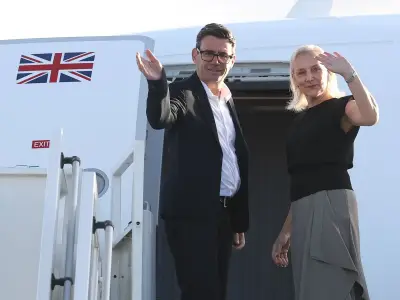
Earlier in the day, the UK foreign secretary, Ed Miliband, met Araghchi for the first time in New York. It was also the first meeting between UK and Iranian ministers for a year, and the first exchange since the UK in July proscribed the Islamic Revolutionary Guards Corps (IRGC) as a terrorist organisation, a move that has worsened already sour relations. Miliband made clear the UK was committed to freedom of navigation in the strait and wanted a diplomatic solution, also stressing support for Saudi Arabia, a UK ally in Yemen. He warned Iran about its behaviour in the UK, including threats to Jewish communities, and called for consular access to the British couple sentenced to 10 years' imprisonment in Tehran.
Araghchi and the US's special envoy Steve Witkoff also met earlier this week on the sidelines of the general assembly to discuss Iran's terms for reopening the strait and the speed at which that may happen, as well as the time the US had been given to respond.
A faction inside Iran is arguing that Tehran should seek to escalate the conflict with a vulnerable US president, rather than let the crisis drift in its current deadlock. Brent crude was trading at about $107 (£81) a barrel on Thursday. Some IRGC officers have also linked the strait of Hormuz issue to the closure of the Bab al-Mandab strait, the narrow waterway close to the south-west of Yemen now under control of Iranian-backed Houthis.
Maj Gen Rahim Safavi, a senior Iranian military figure, said: “If the Americans start a new war, a new front centred on the Red Sea and the Bab al-Mandab strait may open before their eyes. Are they ready to enter the battle on this front? This is a question that they should pay more attention to.”
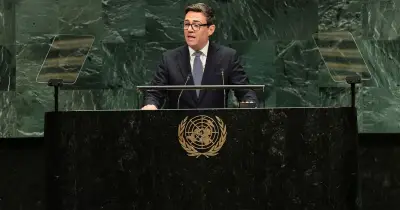
Domestically, Pezeshkian's defiant message to the UN general assembly on Wednesday was deemed a success overall in that it balanced a refusal to bend the knee to “the US bully” with a willingness to seek diplomatic talks. He also proposed a new security architecture for the future in partnership with Gulf states, including those it has been bombarding in an effort to dislodge the US from its military bases.
Maj Gen Ahmad Vahidi, commander-in-chief of the IRGC, praised Pezeshkian's speech, saying: “We are not afraid of war. It is the loud and firm call of the Iranian nation – a call that resonated from the United Nations podium, through the words of the esteemed president, and reached the ears of the world.”