European Allies Reject Trump's Iran War, Refusing Military Support and Airspace Access
Europe Rejects Trump's Iran War, Denies Military Support

European Allies Defy Trump's Iran War Demands, Citing Legal and Security Concerns

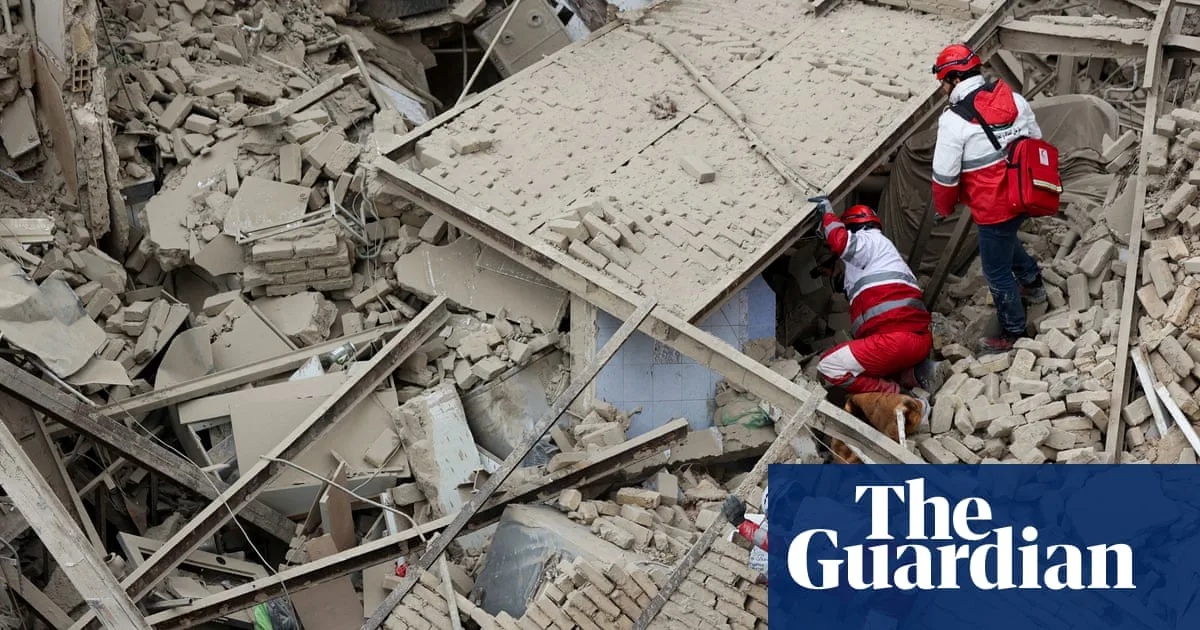
In a significant diplomatic rebuke, key European nations have turned their backs on Donald Trump's military campaign in the Middle East, refusing to provide support for American operations against Iran. The United States and Israel initiated attacks on Iran in late February, targeting the regime's leadership, nuclear facilities, ballistic missile programs, and armed forces. Since then, Washington has aggressively lobbied its European allies to rally behind these military actions, but much of Europe has firmly pushed back against these requests.

Italy, Spain, and Poland Lead Resistance to US Requests

Italy took a decisive step by barring an American bomber en route to the Middle East from landing at its Sigonella air base in Sicily. Defence Minister Guido Crosetto denied access after learning that some US warplanes planned to land without prior consultation with Italian authorities. Under treaties governing US military installations in Italy, permission must be granted from Rome's military leadership, but the decision to use Sicily as a temporary stop was only communicated once the bombers were already airborne.

Crosetto emphasized Italy's stance, stating, 'Italy is certainly not considering going to war with Iran. I don't think there will ever be Italian soldiers or planes capable of bombing Iran; this seems clear and obvious to me.' He added that Washington could only use Italian bases 'after explaining what it intends to use them for and only after authorisation from the Italian government.' Prime Minister Giorgia Meloni, despite her reputation as a reliable US ally, condemned the Israeli-US operation as 'outside the scope of international law,' while acknowledging Iran's threat to regional security.

Wide Pickt banner — collaborative shopping lists app for Telegram, phone mockup with grocery list

Spain escalated its opposition by closing its airspace to US warplanes involved in attacks on Iran, going beyond its previous denial of access to jointly-operated military bases. Defence Minister Margarita Robles declared, 'We don't authorise either the use of military bases or the use of airspace for actions related to the war in Iran.' This move forces military aircraft to bypass Spain, a NATO member, when heading to Middle Eastern targets, though emergency situations are exempted.

Poland also rejected US pressure, with Deputy Prime Minister Władysław Kosiniak-Kamysz denying reports that the nation would send Patriot missile batteries to the Middle East. He asserted on social media, 'Our Patriot batteries and their armament are used to protect Polish skies and NATO's eastern flank. Nothing is changing in this regard, and we are not planning to relocate them anywhere!' This decision underscores Poland's prioritization of its own security and NATO commitments over US demands.

Trump's Furious Response Targets UK and France

A furious Donald Trump lashed out at international partners in a series of Truth Social posts, specifically targeting the United Kingdom and France. Regarding the UK, he suggested, 'All of those countries that can’t get jet fuel because of the Strait of Hormuz, like the United Kingdom, which refused to get involved in the decapitation of Iran, I have a suggestion for you: Number 1, buy from the U.S., we have plenty, and Number 2, build up some delayed courage, go to the Strait, and just TAKE IT.' He added, 'You’ll have to start learning how to fight for yourself, the U.S.A. won’t be there to help you anymore, just like you weren’t there for us.'

Trump also criticized France, claiming, 'The Country of France wouldn’t let planes headed to Israel, loaded up with military supplies, fly over French territory. France has been VERY UNHELPFUL with respect to the “Butcher of Iran,” who has been successfully eliminated! The U.S.A. will REMEMBER!!!' While France has not formally banned US warplanes from its airspace, President Emmanuel Macron earlier condemned Trump's strikes on Iran as 'outside of international law' and stated that France 'cannot approve of them.'

Pickt after-article banner — collaborative shopping lists app with family illustration

Broader European Pushback and Diplomatic Fallout

Other European nations have joined in resisting US demands for assistance. Germany's President Frank-Walter Steinmeier condemned the war against Iran as illegal, stating, 'This war violates international law. There is little doubt that, in any case, the justification of an imminent attack on the US does not hold water.' France has indicated a willingness to support securing the Strait of Hormuz, but only after de-escalation. Finance Minister Roland Lescure explained, 'We are willing to do something to free the Strait of Hormuz, provided that this is not a war situation anymore... We need the conflict to de-escalate, and then we can imagine securing the Strait of Hormuz.'

The collective European resistance highlights deep divisions over the legality and strategy of Trump's military actions, with allies prioritizing international law and regional stability over unconditional support for US operations. This stance could strain transatlantic relations and reshape future diplomatic engagements in the Middle East.




