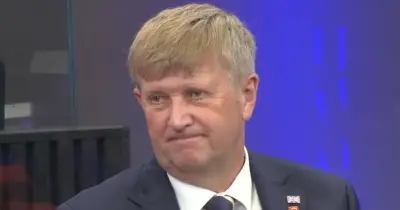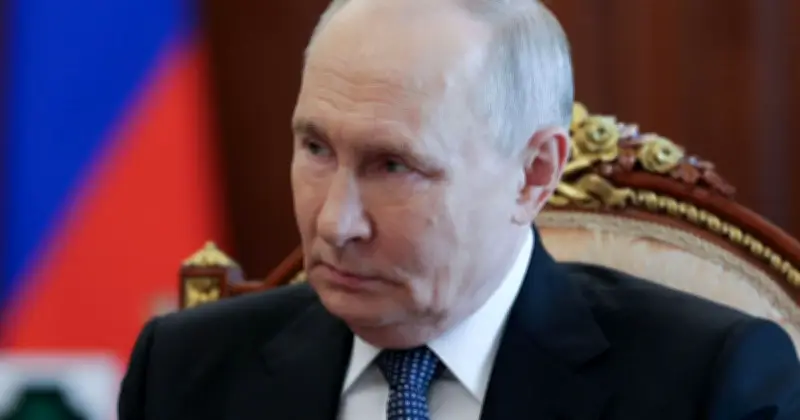
CIA Director John Ratcliffe made a surprise visit to Moscow after US intelligence discovered that Russia is planning to test NATO, according to reports. The trip, his first public visit to the Russian capital, took place on Tuesday amid fears the country is preparing for a possible military mobilisation in Ukraine, The Wall Street Journal reports.
Warning to Putin
According to US intelligence, Russia is planning to test NATO's resolve. Analysts suggested that Mr Ratcliffe may have met with Vladimir Putin to deliver a warning against any such action. He also reportedly asked Ukraine to halt strikes on Russia during the visit.
The visit was discovered after a US Air Force Boeing C-17A Globemaster III transport plane and diplomatic motorcade were spotted at a Moscow airport. Flight tracking site Flightradar24 reported that the US Air Force RCH4555 flight entered Russia from Latvia, adding that the C-17A Globemaster III flew from Riga to Moscow's Vnukovo Airport.

Drone incursions
Mr Ratcliffe's visit comes amid warnings that Moscow intends to normalise violations against NATO, experts say, after it violated the airspace of two European countries. Russian aerial drones penetrated Moldovan and Romanian airspace, and a naval drone was destroyed close to a natural gas platform in the latter on August 20.
This demonstrates that the Kremlin has "accepted the risk that its war against Ukraine will cause damage to other states, including NATO states", the Institute of the Study of War (ISW) said. The ISW wrote: "Romanian authorities did not specify the origin of the naval drone, but Romanian Defense Minister Radu-Dinel Miruță stated that the naval drone was not Ukrainian."
Normalising violations
"Such incidents are likely an intended consequence of Russian strike packages that now take Russian unmanned systems so close to the airspace or waters of NATO states and Moldova that the drones regularly cross these boundaries," the ISW added. Moldovan President Maia Sandu said on August 18 that the Kremlin deliberately launches some of its drones into Moldovan and NATO airspace and that intent can be assessed based on their trajectory.
Experts added: "ISW is unable to confirm the intent of Russian drone incursions into the airspace of other states, but the net effect of these incidents normalizes the incursion of Russian weapons into and damage within Moldovan and NATO territory. Russian forces could prevent such violations of other states’ sovereign airspace and waters by redesigning their strike packages and moving strike vehicle trajectories away from NATO and Moldovan territory. That Russian forces have not adjusted their strike campaigns, along with the increasing frequency of these incidents, indicates that the Kremlin intends to normalize these violations against NATO."