
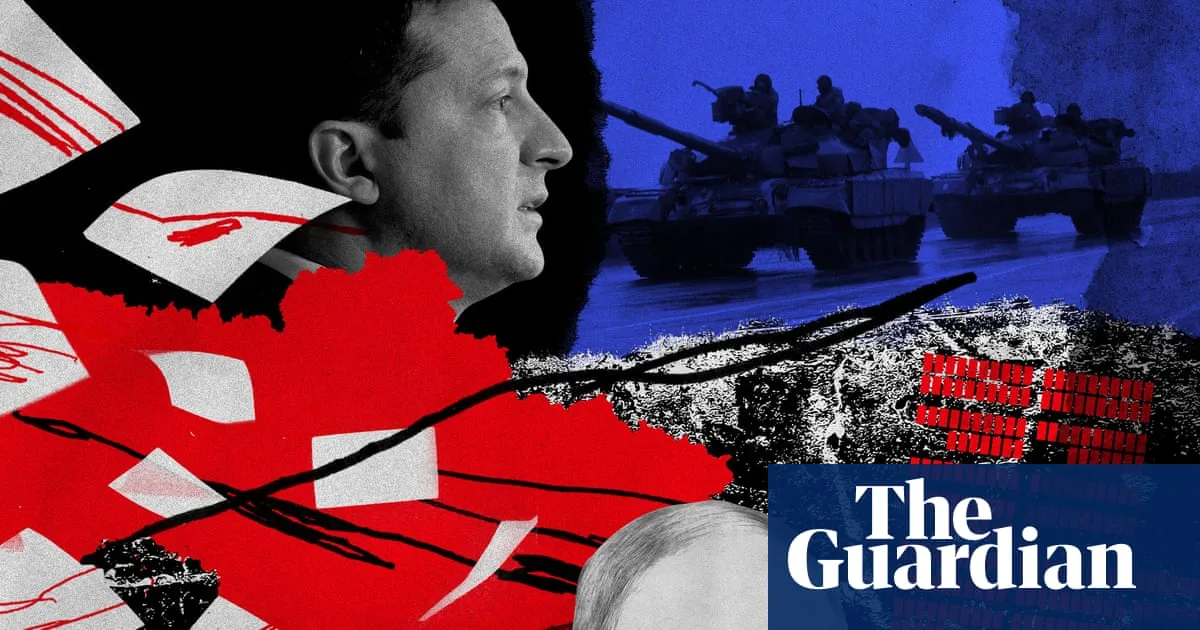
Drawing on more than 100 interviews with senior intelligence officials and insiders, a new account reveals how the US and Britain uncovered Vladimir Putin’s plans to invade Ukraine, and why most of Europe—including Ukrainian President Volodymyr Zelenskyy—dismissed them. As the fourth anniversary of the invasion approaches, lessons continue to be drawn from the intelligence failures of 2022.
In November 2021, CIA Director William Burns was dispatched by President Joe Biden to warn Putin against invasion. Burns, who had served as US ambassador in Moscow 15 years earlier, found Putin less accessible now, confined to his Black Sea residence. During a phone call, Burns outlined US intelligence that Russia was preparing an invasion, but Putin ignored him, instead complaining about an American warship in the Black Sea.
Burns left Moscow more convinced than ever that war was imminent. “Biden often asked yes/no questions, and when I got back, he asked if I thought Putin was going to do it,” Burns recalled. “I said: ‘Yes’.” Three and a half months later, Putin ordered the invasion.
The intelligence success was marred by failures: the CIA and MI6 assumed a swift Russian victory, while European services, wary after the Iraq war intelligence fiasco, refused to believe a full-scale war was possible. Most critically, Zelenskyy dismissed US warnings as scaremongering, and only in the final weeks did Ukrainian intelligence leaders begin to accept the threat, preparing behind his back.
“In the final weeks, the intelligence leaders were starting to get it, the mood was different. But the political leadership just refused to accept it until right at the end,” said one US intelligence official. Four years on, the episode offers lessons on intelligence collection and analysis in an increasingly uncertain geopolitical landscape.




